Author

admin

Browsing

Gold and silver’s historic price rises are raising questions about the broader state of the world.

For Mark Moss, the surges reflect a deeper breakdown of trust in sovereign currencies.

“The real driver is not inflation,” the investor and commentator emphasized during a fireside chat at the recent Vancouver Resource Investment Conference. “The real driver is trust.”

Many investors remain focused on short-term price signals and conventional indicators, such as real interest rates, while overlooking deeper forces shaping capital allocation. According to Moss, the current state of the market favors long-term allocation. In his view, conviction — not timing — should guide investment decisions.

“You can’t borrow someone else’s conviction,” he said. “You have to start to learn to build your own thesis, and then you have to learn to look to find things that either confirm that thesis or deny that thesis.”

Precious metals are continuing a powerful price rally that began last year.

The gold price broke above US$5,500 per ounce for the first time on Wednesday (January 28), while silver broke through the triple-digit level last week and has continued rising, passing US$119 per ounce.

These moves are happening amid escalating geopolitical and policy uncertainty. However, Moss cautioned against focusing on shorter-term gold and silver price drivers, instead pointing to what he described as a fundamental dilemma facing governments with rising debt burdens — a dynamic he said is reshaping global capital flows.

Referencing comments by hedge fund founder Ray Dalio at the World Economic Forum in Davos, Switzerland, Moss described a “rock and a hard place” scenario. Governments face a choice between allowing debt crises that risk defaults and asset collapses, or continuing to expand money supply in ways that erode purchasing power.

“Either they have option one, the rock, which is a sovereign debt crisis, asset prices plunging — that’s what everybody’s kind of thinking. The markets are going to crash. My home values, my retirement value is going to crash. But the problem with that is they lose everything. They get wiped out, they have massive civil unrest,’ he said.

“And then the hard place is they can print the money. And so of course, they’ll always choose to bring the money.’

As a result, large institutional and sovereign investors face losses whether governments default or inflate, prompting a reassessment of traditional reserve assets. Moss said gold has emerged as one response to that reassessment, alongside broader interest in commodities and critical minerals. He further pointed to continued central bank gold buying as a signal that confidence in fiat currencies and the post-war financial order is weakening.

According to the World Gold Council, central banks have been purchasing gold at record levels in recent years.

Moss cited Poland as a notable example, describing it as a close US ally that has nonetheless been accumulating gold aggressively. Other large entities are following the same strategy — Tether, the world’s largest stablecoin issuer, recently revealed that part of its long-term plan is the stockpiling of gold in a Swiss bunker.

Gold’s rally is built on a strong multi-year advance. After starting 2025 at around US$2,640, the price had climbed to roughly US$3,200 by April before trading in a narrow range through the summer.

Momentum returned in late August, carrying gold above US$4,300 by mid-October. While the price briefly dipped below US$4,000 during a subsequent pullback, the retracement proved shallower and shorter than many market watchers expected. Gold resumed its ascent in mid-November and accelerated sharply toward the end of 2025.

Right now, the status quo is in favor of precious metals.

Regardless, Moss returned to the importance of taking a long-term perspective, stating that investors who fixate on short-term price moves risk missing the broader shift underway as trust dynamics change across the global economy.

“If you’re trying to understand why the price of gold dipped from US$5,000 and now it’s US$4,800, I can’t really help you with that,” Moss said. “But we understand the direction that’s at hand.”

Securities Disclosure: I, Giann Liguid, hold no direct investment interest in any company mentioned in this article.

This post appeared first on investingnews.com

Investing in oil stocks can be a lucrative endeavor, but determining the right time to enter a sector known for volatile swings can be tricky.

Over the past five years, the oil market’s inherent volatility has been on clear display. Major declines in consumption brought on by the COVID-19 lockdowns was followed by oil prices surging to US$122 per barrel for Brent and US$115 per barrel for Western Texas Intermediate (WTI) in mid-2022, as the world economy began to recover and Russia’s invasion of Ukraine led to the consequent sanctions on Russian oil.

In 2023, oil prices experienced significant volatility. Fears of a global recession gave rise to bearish sentiment over much of the oil sector and pushed Brent prices as low as US$67 and WTI as low as US$64 per barrel in the first half of the year. Despite a Q3 spike in Brent above the US$98 level and WTI above US$90, oil prices trended back down in Q4 to dip below US$78 for Brent and US$71 for WTI even with conflict escalating in the Middle East.

In 2024, the oil market experienced a relatively stable but downward-trending year overall. As tensions flared up between Iran and Israel in the Middle East, prices for Brent and WTI respectively peaked at around US$93 and US$88 per barrel in mid-April. In the second half of the year, record US production and sluggish global demand growth, particularly in China, pushed prices down to below US$70 for Brent and US$65 for WTI.

In 2025, volatility was very much in play for global oil markets. Some of the biggest factors driving that volatility were OPEC+ production hikes, weaker demand from major economies like China and US President Donald Trump’s tariff wars. Brent and WTI crude both started the year above US$70 per barrel but late in the year, Brent dipped below US$60 per barrel and WTI fell as low as US$55 per barrel.

Since the start of 2026, the price of Brent crude oil has climbed by nearly 9 percent to US$66.37 per barrel and WTI crude oil is up by 8 percent to US$61.90 per barrel as of January 14 as geopolitical risks continue to threaten supply despite broader market oversupply pressures.

In this article:

    How do energy stocks compare to broader equities?

    Energy stocks performed positively in 2025, with the S&P 500 Energy index posting a gain of 4.96 percent for the year, although the sector lagged that of the broader S&P 500’s (INDEXSP:.INX) gain of 17.25 percent during the same period. Still, this was an improved performance over the 2.31 percent returns the energy sector posted in 2024 compared with the 23.3 percent gains made in the broader S&P 500.

    Oil stock prices typically track oil prices, but that was not the case in 2025. Many major oil stocks performed relatively well in the face of declining oil prices. Those oil companies seeing share price appreciation were more likely to be led by fiscally responsible management teams that were able to achieve debt minimization and strong cash flows even with lower oil prices.

    What will be the story in 2026?

    Trends impacting the oil market in 2026 and beyond

    In 2026, the outlook for the global oil market is looking bearish, as analysts are projecting a decline in oil prices due to a supply surplus.

    In mid-January, the US Energy Information Administration (EIA) put forward a forecast predicting an average WTI crude oil price of US$52 per barrel for this year, and US$50 per barrel in 2027. As for Brent crude oil, the EIA forecast average prices of US$56 in 2026 and US$54 in 2027.

    These forecasts predict oil prices will decrease due to a number of trends, mainly rising inventories as production exceeds demand, a slowdown in economic growth and the adoption of renewable energy technologies. In addition, the geopolitical conflicts in Venezuela and the Middle East are expected to cause oil price volatility this year.

    Year of the glut?

    Arguably the biggest factor influencing the oil market this year will be the outsized surplus, leading some analysts to call 2026 the “year of the glut.”

    Deloitte is forecasting the largest oversupply in the oil markets since the COVID-19 pandemic.

    “The oversupply is real, and while demand and economies are waking up and moving forward, they’re not moving forward at the robust rates that we might hope,” Andrew Botterill, a partner at Deloitte Canada and lead author of the report. “We see ourselves in a big oversupply situation right now of about three million barrels a day. We should expect downward pressure on prices, especially in the first half of the year.”

    OPEC has a differing outlook for this year. Rather than a supply glut, the group of oil exporting nations sees a near balance emerging between supply and demand for 2026. Regardless, OPEC+ plans to pause its planned production hikes for the first quarter of the year.

    China’s oil demand

    As the world’s second most populous country, China is unsurprisingly the world’s second largest consumer of oil (after the United States) and the largest net importer of the energy fuel. With well over half of its imports coming from OPEC member countries, Chinese demand can strongly influence the oil market.

    China’s oil demand is forecast to slow this year as its economy struggles, and electric vehicles continue to replace internal combustion engine (ICE) vehicles on its roads. The Asian nation’s economy is continuing to struggle with a beleaguered property sector, declining consumer confidence and debt-burdened local governments. Still, the World Bank is forecasting a 4.4 percent growth rate for China’s economy in 2026.

    Although China continues to import oil, a large portion is going toward strategic stockpiling rather than industrial consumption. Goldman Sachs (NYSE:GS) expects the nation to add 500,000 barrels per day to its inventories over the next five quarters in order to bolster its energy security, Bloomberg reported in September.

    Renewable energy’s market share

    Renewable energy sources are increasingly taking up a larger share of the overall energy mix, although oil and gas continue to represent the largest share of the pie.

    Another consideration is the continuing growth of electric vehicle sales. Global sales reached a record 20.7 million units in 2025, up 20 percent over 2024.

    However, the growth rate varied significantly by region. For example, the US market experienced a mere 1 percent growth rate, while the Canadian EV market saw a 41 percent decline in sales. On the other hand, EV sales in China grew 17 percent, and in Europe they grew by 33 percent.

    Despite the record growth, EVs still remain an economic luxury for the general North American consumer concerned with not only the price, but also the lack of charging infrastructure. US President Donald Trump’s negative stance toward the renewable energy sector is also hindering growth in the US market.

    As of 2026, ICE vehicles still dominate the global vehicle market compared to EVs, and that looks set to continue in the near future. In a late 2025 survey of potential car buyers from 28 countries, 50 percent of respondents said they plan to buy an ICE vehicle in the following 24 months, while 14 percent planned to buy an EV and 16 percent, a hybrid vehicle.

    US oil production

    After reaching record levels in 2025, US oil production is expected to decline this year. According to the EIA, the country’s oil production came in at 13.61 million barrels per day in 2025. That number is forecast to lower to 13.53 million barrels per day in 2026 as lower prices for the commodity are reducing the incentive for oil companies to drill new wells.

    US foreign policy and interventions in Venezuela and the Middle East are also likely to influence global oil markets this year.

    Venezuela, largest oil reserves in the world

    In January 2026, US forces removed Venezuelan President Nicolás Maduro from the country and the Trump administration seized control of Venezuela’s state oil company. The US government is now moving to liquidate up to 50 million barrels of heavy crude oil from Venezuela on global markets, with funds from the sales added to US accounts. It also said it plans to modernize and upgrade the country’s oil infrastructure and electricity grid to increase Venezuela’s oil production, which totaled 800,000 barrels per day in 2025.

    Venezuela holds an oil reserve of 303 billion barrels, and if the administration were to succeed in these plans it could have major implications for oil prices in the years ahead. Additionally, an influx of Venezuelan oil lowering global prices could further disincentivize domestic production in the United States.

    However, analysts warn it will take many years, tens of billions of dollars in capital expenditures and buy-in from US oil majors to restore the country’s once vibrant oil industry due to the state of the neglected infrastructure.

    This would also require US oil majors to take the risk of investing in these upgrades. Venezuela’s heavy crude is suited for US Gulf Coast refineries, including major refiners like ExxonMobil (NYSE:XOM). However, Exxon’s CEO commented that the country is currently ‘uninvestable’ and the company would require durable investment protections and buy-in from the Venezuelan people to begin operations in the country.

    “Industry estimates suggest production could recover toward 2 million barrels per day (up 500,000 – 1 million bpd from current levels) within one to two years under favorable conditions,” according to a report by TD Securities. “Beyond that, at least $20 billion worth of investment and a timeline spanning towards 10 years would be needed to add an incremental 500,000 bpd worth of production, with some $50 billion – $60 billion of investment required to return to 1998 levels.”

    Middle East conflict

    There are a number of major geopolitical conflicts playing out across the globe that have the potential to impact both oil production and transport, leading to higher prices for the commodity. Conflicts in the Middle East, responsible for a vast majority of global oil production, are of great consequence to the market.

    So far in 2026, Iran is the center of conflict in the Middle East due to widespread protests against the government, which the government has responded to by killing thousands of protestors. Initially, the US weighed military intervention in response, and threatened tariffs on countries doing business with Iran. The ramifications of the Iran-US tensions have the ability to impact other regions of the market, especially China.

    By the end of January, Trump was considering ‘airstrikes aimed at Iran’s leaders and the security officials believed to be responsible for the killings, as well as strikes on Iranian nuclear sites and government institutions,’ CNN reported.

    Is now a good time to invest in oil stocks?

    The investment landscape for oil stocks in 2026 is complicated by ongoing geopolitical and economic uncertainties. Another major complication is the projected supply glut that has the potential to depress prices.

    Whether analysts take a bearish or a bullish view on the outlook for global oil stocks in 2026, all would agree that investors will find the best value in high-quality companies with strong balance sheets that can weather lower pricing environments.

    Lower share prices can offer a buying opportunity for investors who believe oil stocks will eventually recover and are open to holding the stocks long-term.

    How to invest in oil stocks?

    Of course, investors will need to do their own due diligence to determine if oil stocks are right for their portfolio and which stocks are the best bet.

    Finally, exchange-traded funds (ETFs) offer an excellent avenue to investing in the oil sector as they allow for exposure to a diversified portfolio rather than a single stock. There are several oil ETFs available to investors, including options such as the iShares Global Energy Sector ETF (ARCA:IXC), the United States Oil Fund (ARCA:USO), and the SPDR S&P Oil & Gas Exploration & Production ETF (ARCA:XOP).

    Securities Disclosure: I, Melissa Pistilli, hold no direct investment interest in any company mentioned in this article.

    This post appeared first on investingnews.com

    Platinum may be rare, but it is the third most-traded precious metal in the world, behind gold and silver.

    The world’s platinum demand varies widely across many sectors. Most notably, platinum metal is used in autocatalysts and jewelry, as well as for medical and industrial purposes. Those interested in investing in platinum would do well to be aware of the many platinum uses. After all, by knowing which industries require platinum, it’s possible to understand supply and demand dynamics, and to be aware of how the precious metal’s price may move in the future.

    With that in mind, here’s a list of the four main platinum uses. Scroll on to learn more about platinum’s key applications.

    In this article

      1. Autocatalysts

      One of the main platinum uses is in the construction of autocatalysts. An autocatalyst is a “cylinder of circular or elliptical cross section made from ceramic or metal formed into a fine honeycomb and coated with a solution of chemicals and platinum group metals.” An autocatalyst mounted inside a stainless steel canister is known as a catalytic converter.

      Catalytic converters are installed in a vehicle’s exhaust lines, between the engine and muffler, where they are used to moderate the dangerous qualities of exhaust. Specifically, the autocatalysts that vehicles contain convert over 90 percent of hydrocarbons and carbon monoxide into carbon dioxide, nitrogen and water vapor. They can also convert pollutants from diesel exhaust into carbon dioxide and water vapor, which is immensely helpful in reducing pollution.

      Autocatalysts have been used in the US and Japan since 1974, and are now so common that over 95 percent of new vehicles sold each year have one. As a result, they are a significant source of platinum demand that is not likely to disappear in the future. Indeed, as pollution rules become more stringent, car companies are looking at creating even more efficient autocatalysts.

      According to data from the World Platinum Investment Council (WPIC), automotive demand is forecasted to fall 3 percent to 3.02 million ounces in 2025 before falling another 3 percent to 2.92 million ounces in 2026.

      2. Platinum jewelry

      Platinum has many qualities that make it ideal for use in jewelry, and that is the second largest source of platinum demand. The metal is strong, resists tarnish and can repeatedly be heated and cooled without hardening or oxidizing.

      When used to make jewelry, platinum is commonly alloyed with other platinum-group metals such as palladium, as well as copper and cobalt, so that it is easier to work with.

      The history of platinum jewelry is long. More than 2,000 years ago, Indigenous people in South America made rings and ornaments out of platinum. Egyptians used platinum for decoration as early as the 7th century BCE. Meanwhile, Europeans began to use the metal in jewelry in the 18th century. Currently, China is the largest market for platinum jewelry.

      The WPIC expected platinum demand for jewelry was expected to increase 7 percent year-over-year to 2.16 million ounces in 2025, then decline 6 percent in 2026 to 2.04 million ounces.

      3. Industrial applications

      Platinum’s industrial applications could fill a book all on their own. For instance, platinum catalysts are used to manufacture fertilizer ingredients, and the metal is a key component in silicones, hard disks, electronics, dental restoration, glass-manufacturing equipment and sensors in home safety devices.

      Another platinum use is in the construction of hard drives with extremely high storage densities. And, because it is reactive to oxygen, oxides of nitrogen and carbon monoxide, platinum can be used to detect changes in the amount of those materials in vehicles and buildings. For the same reason, platinum is also used in medical sensors, particularly medical instruments that measure blood gases, to detect oxygen.

      Among growing segments is platinum’s use as a catalyst in the production of green hydrogen. Similar to how the metal is used to convert automotive pollutants, it can also be used as an electrolyzer to convert water into hydrogen and oxygen, with the resulting hydrogen usable in emission-free fuel cell vehicles. In 2025, demand from hydrogen production is predicted to grow by 20 percent to 50 million ounces, then increasing another 36 percent in 2026 to 58,000 ounces.

      Overall, WPIC forecast that industrial demand for platinum, including medical demand, would fall 22 percent to 1.9 million ounces in 2025 before growing 9 percent to 2.08 million ounces in 2026.

      4. Medical applications

      Platinum is used in electronic medical devices like those mentioned above, as well as in catheters, stents and neuromodulation devices. It is ideal for these applications because of its durability, conductivity and biocompatibility. The metal is also inert within the body, making it safe for implantation.

      To meet other medical needs, platinum can be formed into rods, wires, ribbons, sheets and micromachined parts. Further, it helps fight cancer in the drugs cisplatin and carboplatin, which are widely used to treat testicular cancer, as well as ovarian, breast and lung cancer tumors.

      Medical demand for platinum has increased in recent years, and is forecast to rise 4 percent to 320,000 ounces in 2025 and another 4 percent to 322,000 ounces in 2026.

      FAQs about platinum

      How much is platinum worth?

      In 2026, the price of platinum has spiked significantly as part of a precious metals bull market trading as high as US$2,900. In 2025, the PGM ranged between US$960 and US$1,900 per ounce.

      Although the industry is facing a growing supply deficit, it is also dealing with lagging demand. The shortfall in supply is related to a hangover from COVID-19 lockdowns, Russia’s war in Ukraine and ongoing electricity shortages and railway issues in the top platinum producing country South Africa. Russia typically ranks as the world’s second largest platinum-producing country.

      Meanwhile, economic pressures worldwide have weighed on demand for platinum from the automotive industry. However, the same economic challenges have led to less demand for electric vehicles, which don’t require platinum-laden catalytic converters.

      Which is more valuable, gold or platinum? Why?

      Platinum in general has historically traded on par or at a premium to gold, but since 2015 the two metals have diverged in price, with gold taking the high road. This split has been attributed to gold’s safe-haven status and platinum’s reliance on the industrial and jewelry markets, which don’t fare well in times of economic uncertainty.

      This has led to increasing demand for platinum jewelry as a cheaper alternative to gold jewelry.

      Although platinum is 30 times rarer than gold, much harder to mine and in high demand due to its important industrial uses, precious metal gold has long been valued as a form of currency and a store of wealth. The gold price is almost double the price of platinum in 2026.

      What’s the best investment, gold or platinum?

      Both gold and platinum have wealth-generating potential, but it’s important to determine which precious metals fit your investment strategy; consider looking at supply, demand and prices for each option before making a decision.

      To learn more, check out our article What is the Best Precious Metal to Invest In?

      Securities Disclosure: I, Melissa Pistilli, hold no direct investment interest in any company mentioned in this article.

      This post appeared first on investingnews.com
      Investor Insight

      Mayfair Gold is progressing its 100 percent-owned Fenn-Gib gold project toward production, with a development plan anchored by a robust 2026 pre-feasibility study (PFS). The company’s strategy emphasizes a smaller scale mine designed to accelerate permitting through Ontario’s One Project One Process platform and exploit near surface high-margin ounces in a capital efficient manner. The PFS only corresponds to 24 percent of the indicated gold resource leaving meaningful optionality for long term growth coupled with exploration upside across a broader land package.

      Overview

      Mayfair Gold (TSXV:MFG,NYSE American:MINE) is a development-stage company with the primary objective of advancing the Fenn-Gib gold project — a large, bulk-tonnage open-pit deposit located in one of Canada’s most prolific gold districts. The company’s technical team is executing on provincial permitting, Indigenous consultation, engineering and ongoing exploration to expand mineralization beyond the current pit constraints.

      Mayfair Gold’s flagship Fenn-Gib gold project is located within the established Timmins Gold District in Ontario, which has produced more than 100 million ounces of gold historically.

      The PFS, prepared in accordance with NI 43-101 standards and filed in January 2026, outlines a base-case economic model with an after-tax NPV (5 percent) of C$652 million and an IRR of 24 percent, using conservative gold prices, and demonstrates rapid payback potential. Under a spot price scenario, project economics improve markedly, underscoring the asset’s leverage to higher gold prices. With over $200 million in annual free cash flow once in operation the company will have a robust source of capital to fund growth initiatives.

      Company Highlights

      • Robust Pre-feasibility Study: The 2026 PFS highlights compelling returns on a modest initial throughput design while leveraging a large resource base.
      • High-grade Early Focus: The staged plan targets higher-grade, near-surface material to optimize permitting timelines, construction risk, financing, and ultimately accelerate value capture.
      • Strategic Location: Fenn-Gib sits on the highly prospective Timmins Gold District, Ontario — a tier-one mining jurisdiction with established infrastructure and a long history of mining-related activity and supportive communities.
      • Strong Financial Backing: The company has a committed shareholder base, including Muddy Waters, Heeney Capital, Oaktree and Vestcor. With a tight share structure and strong Insider ownership of 35% there is clear alignment for long-term shareholder value creation.
      • Exploration Optionality: Mineralization at Fenn-Gib remains open at depth and along strike, with multiple underexplored targets identified across the property. This includes a Southern Block that has not been explored but sits directly on the prolific Porcupine-Destor fault.
      • Long-term optionality: With a truncated timeline to production the company will be in an advantageous spot for growth initiatives that can be funded with free cash flow.
      • CEO Nick Campbell, heads a technically strong and capital-markets-savvy team with a demonstrated ability to unlock value from high-quality gold assets (previously at Artemis Gold and Silvercrest Metals) and position projects for long-term growth.
      • COO Drew Anwyll is an experienced mine builder; he successfully permitted the Marathon PGM project in Ontario and was a senior executive during the construction, commissioning and start-up of Detour Lake, Canada’s largest gold mine.

      Key Project

      Fenn-Gib Gold Project

      Fenn-Gib is Mayfair’s flagship asset, encompassing a significant indicated mineral resource of 181.3 million tonnes grading 0.74 g/t gold for 4.3 million contained ounces, and additional inferred ounces. The project benefits from excellent access via Highway 101 and proximity to regional mining services.

      The 2026 PFS centers on a 4,800 tonnes-per-day open-pit operation designed to process approximately 1.04 million ounces of gold, representing 24 percent of the total resource and reflecting a conservative, execution-oriented approach. Highlights from the study include:

      • After-tax NPV of C$1.37 billion and IRR of 38 percent at current spot gold prices.
        2.7-year payback period on initial capital costs under the base case (1.7 year payback at January 2026 prices)

      In addition to economic studies and active dialogue with Indigenous stakeholders, the company has executed engineering contracts with industry providers to support mine planning, processing design, environmental baseline work, and tailings/water management — positioning the project for upcoming permitting and potential construction decision milestones.

      Exploration Potential

      Beyond the defined pit shell, Fenn-Gib hosts multiple zones including the Main Zone, Deformation Zone, and Footwall Zone, with geological continuity extending along strike and at depth. Newly identified targets such as the Southern Block along the Porcupine Destor-Fault present opportunities for future discovery drilling and resource expansion.

      Management Team

      Nicholas Campbell — Chief Executive Officer

      Nicholas Campbell is a mining executive with more than 20 years of experience across capital markets, corporate development, and mine development. Prior to joining Mayfair, he served as vice-president of Capital Markets at Artemis Gold, executive vice-president of business development at SilverCrest Metals, and chief financial officer of Goldsource Mines. Campbell leads Mayfair’s strategic vision and execution as the company transitions Fenn‑Gib into a defined development stage.

      Drew Anwyll — Chief Operating Officer

      Drew Anwyll is a professional engineer with over 30 years of global mining experience in both project and operations leadership. His background includes senior technical and operating roles at Generation Mining, Detour Gold, Barrick Gold and Placer Dome. Anwyll’s track record includes leadership through permitting, construction, commissioning, and operational phases, anchoring Mayfair’s operational planning and execution.

      Zayem Lakhani — Vice-president, Capital Markets

      Zayem Lakhani brings more than 17 years of expertise in investment management, equity research, and corporate development. Before joining Mayfair, he served as portfolio manager and head of Canadian equities at HSBC Global Asset Management, where he oversaw the investment process for approximately $4 billion in capital across diverse strategies. Lakhani brings a unique network and an investor’s perspective to help position the company’s story.

      Darren Prins — Interim Chief Financial Officer

      Darren Prins is a senior financial executive with extensive experience in corporate development, capital markets, mergers and acquisitions, financial reporting, risk management, budgeting, forecasting, and international tax planning. Prins has served as CFO for TSX, TSXV and NYSE‑listed companies across multiple industries, bringing strong financial stewardship to Mayfair’s funding and reporting functions.

      This post appeared first on investingnews.com

      John Feneck, portfolio manager and consultant at Feneck Consulting, weighs in on recent silver and gold price milestones and shares his next targets.

      He also discusses stocks he’s watching in sectors like silver, gold and ‘special situations.’

      Securities Disclosure: I, Charlotte McLeod, hold no direct investment interest in any company mentioned in this article.

      This post appeared first on investingnews.com
      Chen Lin of Lin Asset Management explains what’s behind silver’s move into the triple digits, weighing in China’s key role in the market.

      He also talks about taking profits in silver, and shares his outlook for gold and critical minerals.

      Securities Disclosure: I, Charlotte McLeod, hold no direct investment interest in any company mentioned in this article.

      This post appeared first on investingnews.com

      The US Federal Reserve’s January 23 decision to help support Japan’s beleaguered yen is believed to be behind gold’s historic price rise past the US$5,000 per ounce level.

      The New York Federal Reserve reportedly conducted a “rate check” with currency dealers regarding the US dollar/Japanese yen exchange rate. The procedure used by central banks involves inquiring about the current market quote for an exchange rate between a specific pair of currencies.

      The action typically precedes an intervention in the forex market by a central bank. In September 2025, the two countries issued a joint statement committing to cooperating on controlling volatility in the currency markets.

      The yen has experienced a weakening trend on a divergence in interest rates between its central bank and other leading economies, as well as fiscal concerns about its massive public debt.

      A weaker yen has indirectly led to higher US treasury yields, which the Fed seeks to stabilize to support a softer labor market and ease mortgage rates. Anticipating that the Fed plans to help the Bank of Japan support the yen, traders began selling the US dollar, resulting in a significant decline in its value.

      ‘There is potentially something larger at play here,’ said David Forrester, senior strategist at Credit Agricole in Singapore, as reported by Reuters. ‘The threat of intervention reflects a broader investor concern that Japanese and U.S. authorities would like a weaker USD. This combined with Trump’s erratic policy-making, including the threat of 100% tariffs on Canadian exports if it signs a trade deal with China, is weighing on the appeal of USD assets.’

      A weaker US dollar is a catalyst for a higher gold price as investors seek safe-haven assets.

      “There is comfort in holding an asset perceived as secure in a world where the global order may be shifting,” said Chris Weston, head of research at Pepperstone, a financial services company, as per the New York Times.

      The next Fed interest rate decision is scheduled for Wednesday (January 28), and market watchers are expecting the central bank to hold rates steady.

      Securities Disclosure: I, Melissa Pistilli, hold no direct investment interest in any company mentioned in this article.

      This post appeared first on investingnews.com
      DRILLING WILL TEST MULTIPLE HIGH PRIORITY TARGETS INCLUDING CONTINUITY OF MINERALIZATION BETWEEN THE MCINTOSH AND CASTLE DEPOSITS

      A2Gold Corp. (‘A2Gold’ or the ‘Company’) (TSXV: AUAU) (OTCQX: AUXXF) (FRA: RR7) is pleased to announce the commencement of its fully funded 30,000-metre reverse circulation (‘RC’) drill program at its flagship Eastside Gold Project, located in Nevada, USA.

      The drill program represents a significant expansion from the Company’s previously announced 18,000-metre program and is designed to systematically advance and grow the existing resources while testing multiple high-priority targets across the broader Eastside land package. Drilling is expected to continue throughout the year, subject to results and operational conditions.

      The 2026 drill campaign will focus on step-out and infill drilling in areas of known mineralization, as well as exploration drilling aimed at testing new targets generated through geological mapping, geophysics, and recent reinterpretation of historical data. The expanded program reflects A2 Gold’s strong technical conviction in the Eastside project and the Company’s robust financial position.

      Peter Gianulis, CEO of A2Gold, commented: ‘The start of this 30,000-metre drill program marks an important milestone for A2 Gold and underscores our commitment to aggressively advance Eastside. With a strong balance sheet and the program fully funded, we expect to be drilling consistently throughout the year. Our objective is clear: to continue expanding and upgrading the resource while unlocking the broader exploration potential of this highly prospective district-scale asset.’

      The drill program is being overseen by A2 Gold’s technical team and will be executed using multiple RC rigs to ensure steady progress and efficient delivery of results. Assay results will be released as they are received, analyzed, and validated.

      QUALIFIED PERSON

      John Marma is a Certified Professional Geologist (CPG) with the American Institute of Professional Geologists and is the Qualified Person under NI 43-101, Standards of Disclosure for Mineral Projects, who has reviewed and approved the scientific and technical content of this press release.

      ABOUT EASTSIDE

      The Eastside Gold-Silver Project is located in Esmeralda County, Nevada, approximately 20+ miles northwest of Tonopah, within the prolific Walker Lane Trend. The project hosts a current inferred resource of 1.4 million ounces of gold and 8.8 million ounces of silver, with mineralization open in all directions. Eastside covers a 92 km² land package that includes multiple high-priority zones such as McIntosh, Castle, and other exploration targets yet to be named.

      *Source: ‘Updated Resource Estimate and NI 43-101 Technical Report, Eastside and Castle Gold-Silver Project Technical Report, Esmeralda County, Nevada‘ conducted by Mine Development Associates of Reno, Nevada, with an effective date of July 30, 2021. Pit-constrained Inferred Resources (cut-off grade of 0.15 g/t Au) of 61,730,000 tonnes grading 0.55 g/t Au and 4.4 g/t Ag at the Original Pit Zone (1,090,000 ounces gold and 8,700,000 ounces silver) and 19,986,000 tonnes grading 0.49 g/t Au at the Castle Area (314,000 ounces gold) with a gold price of $1,725/ounce. A copy of the Eastside Technical Report can be found on SEDAR at www.sedar.com.

      ABOUT A2GOLD CORP

      A2Gold Corp. owns three highly prospective gold projects in the United States all of which are in the mining-friendly jurisdiction of Nevada. A2Gold’s flagship, district-scale Eastside Gold-Silver Project hosts a large and expanding gold and silver resource and is in an area of excellent infrastructure. Preliminary metallurgical testing indicates that both oxide and sulphide gold mineralization at Eastside is amenable to heap leaching.

      ON BEHALF OF THE BOARD

      Peter Gianulis, CEO

      Follow us:
      X
      LinkedIn

      Neither TSX Venture Exchange nor its Regulation Services Provider (as that term is defined in policies of the TSX Venture Exchange) accepts responsibility for the adequacy or accuracy of this release.

      Certain statements and information contained in this press release constitute ‘forward-looking statements’ within the meaning of applicable U.S. securities laws and ‘forward-looking information’ within the meaning of applicable Canadian securities laws, which are referred to collectively as ‘forward-looking statements’. The United States Private Securities Litigation Reform Act of 1995 provides a ‘safe harbor’ for certain forward-looking statements. A2Gold Corp.’s (‘A2Gold’) exploration plans for its gold exploration properties, the drill program at A2Gold’s Eastside project, the preparation and publication of an updated resource estimate in respect of the Original Zone at the Eastside project, A2Gold’s future exploration and development plans, including anticipated costs and timing thereof; A2Gold’s plans for growth through exploration activities, acquisitions or otherwise; and expectations regarding future maintenance and capital expenditures, and working capital requirements. Forward-looking statements are statements and information regarding possible events, conditions or results of operations that are based upon assumptions about future economic conditions and courses of action. All statements and information other than statements of historical fact may be forward-looking statements. In some cases, forward-looking statements can be identified by the use of words such as ‘seek’, ‘expect’, ‘anticipate’, ‘budget’, ‘plan’, ‘estimate’, ‘continue’, ‘forecast’, ‘intend’, ‘believe’, ‘predict’, ‘potential’, ‘target’, ‘may’, ‘could’, ‘would’, ‘might’, ‘will’ and similar words or phrases (including negative variations) suggesting future outcomes or statements regarding an outlook. Such forward-looking statements are based on a number of material factors and assumptions and involve known and unknown risks, uncertainties and other factors which may cause actual results, performance or achievements, or industry results, to differ materially from those anticipated in such forward-looking information. You are cautioned not to place undue reliance on forward-looking statements contained in this press release. Some of the known risks and other factors which could cause actual results to differ materially from those expressed in the forward-looking statements are described in the sections entitled ‘Risk Factors’ in A2Gold’s Listing Application, dated January 24, 2018, as filed with the TSX Venture Exchange and available on SEDAR under A2Gold’s profile at www.sedar.com. Actual results and future events could differ materially from those anticipated in such statements. A2Gold undertakes no obligation to update or revise any forward-looking statements included in this press release if these beliefs, estimates and opinions or other circumstances should change, except as otherwise required by applicable law.

      The securities referred to in this news release have not been, nor will they be, registered under the United States Securities Act of 1933, as amended, and may not be offered or sold within the United States or to, or for the account or benefit of, U.S. persons absent U.S. registration or an applicable exemption from the U.S. registration requirements.

      This news release does not constitute an offer for sale of securities for sale, nor a solicitation for offers to buy any securities. Any public offering of securities in the United States must be made by means of a prospectus containing detailed information about the company and management, as well as financial statements.

      View original content to download multimedia:https://www.prnewswire.com/news-releases/a2gold-commences-30-000-metre-drill-program-at-eastside-gold-silver-project-302669705.html

      SOURCE A2 Gold Corp

      View original content to download multimedia: http://www.newswire.ca/en/releases/archive/January2026/26/c8731.html

      News Provided by Canada Newswire via QuoteMedia

      This post appeared first on investingnews.com
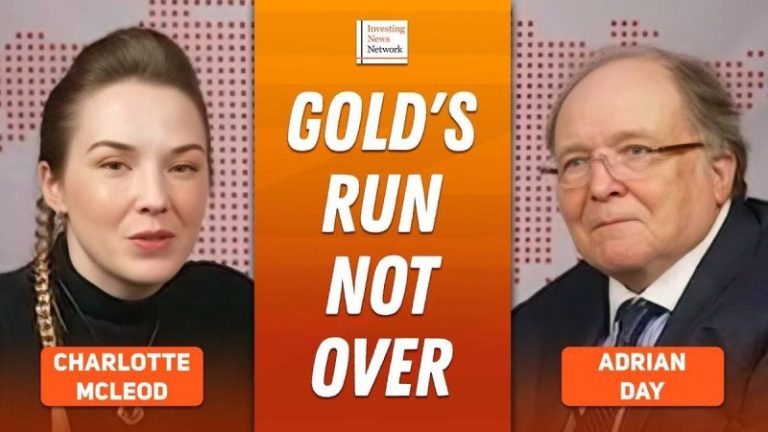
      Adrian Day, president of Adrian Day Asset Management, shares his thoughts on gold’s latest price activity, saying the metal is still ‘nowhere near a top.’

      In his view, its long-term drivers remain in place, and two new ones have now emerged.

      Securities Disclosure: I, Charlotte McLeod, hold no direct investment interest in any company mentioned in this article.

      This post appeared first on investingnews.com