Author

admin

Browsing

Newmont (TSX:NGT,NYSE:NEM,ASX:NEM) is preparing to withdraw from the TSX, the latest in a string of moves to streamline operations and rein in costs following its US$15 billion takeover of Newcrest Mining in 2023.

The Denver-based miner said on Wednesday (September 10) that it has applied for a voluntary delisting of its common shares from the TSX, effective at the close of trading on September 24.

The company cited “low trading volumes” on the Canadian exchange, and said the decision is expected to “improve administrative efficiency and reduce costs for the benefit of Newmont’s shareholders.”

Newmont’s shares will continue to trade on the NYSE, where it maintains its primary listing, as well as on the ASX and the Papua New Guinea Stock Exchange under the ticker symbol NEM.

Rising costs and restructuring plans

Newmont’s all-in sustaining costs reached record levels earlier this year, eroding profits even as bullion prices hit all-time highs above US$3,500 per ounce in April and remained above US$3,300 through most of the summer.

The company has acknowledged that its cost base has outpaced peers.

In the second quarter, Newmont’s costs were nearly 25 percent higher than those of Agnico Eagle Mines (TSX:AEM,NYSE:AEM), a Canadian rival considered one of the industry’s leanest producers.

Newmont’s costs have risen more than 50 percent over the past five years, driven by higher energy, labor and material prices, as well as integration expenses tied to Newcrest’s operations.

CEO Tom Palmer told investors in July that Newmont was pursuing additional measures to lower its expenses.

Behind the scenes, Newmont has been preparing for more aggressive measures.

People familiar with the matter told Bloomberg News that management has set an internal target to lower costs by as much as US$300 per ounce, or roughly 20 percent. Meeting that benchmark could require thousands of layoffs across the company’s global workforce of about 22,000, excluding contractors.

While Newmont has not disclosed the scope of planned reductions, some employees have already been informed of redundancies, according to the report. Managers have also been briefed on potential curbs to long-term incentive programs as part of a broader restructuring. A company spokesperson confirmed earlier this year that Newmont launched a cost and productivity improvement program in February.

Alongside cost cutting, Newmont has moved to divest non-core assets acquired in the Newcrest deal.

Since late 2024, the company has sold multiple Canadian operations: the Eleonore mine for about US$795 million, the Musselwhite mine in Ontario for US$850 million and its stake in the Porcupine operations for US$425 million.

The asset sales are intended not only to cut debt at the company, but also to sharpen its focus on higher-margin operations, particularly in North America and Australia.

Despite higher costs, Newmont shares have surged 95 percent this year; the company also announced a US$3 billion share repurchase program in July.

Securities Disclosure: I, Giann Liguid, hold no direct investment interest in any company mentioned in this article.

This post appeared first on investingnews.com

(TheNewswire)

Vancouver, British Columbia TheNewswire – September 15th, 2025 Prismo Metals Inc. (the ‘ Company ‘ ) (CSE: PRIZ,OTC:PMOMF) (OTCQB: PMOMF) is pleased to report that its exploration team has identified porphyry style mineralization at its Silver King project located outside the town of Superior in Arizona. Given the proximity of the nearby Resolution Copper deposit (a joint venture between Rio Tinto and BHP), the team is excited about the potential of this same style of mineralization identified at surface within the eastern portion of our claim.

This region is world-class for porphyry systems and base and precious metals, and we believe there is significant untapped potential. Our recent field work at the Silver King mine was successful in identifying several exploration targets apart from the historic silver mine deposit including polymetallic veins, manto replacements and a strongly altered intrusion with stockwork quartz-pyrite veining. Identifying this porphyry style mineralization on the claim block is a very positive development ,’ said Dr. Craig Gibson , Chief Exploration Officer.

Figure 1 . Map showing Silver King project and nearby mineral deposits.

The Silver King deposit is located three kilometers from the Resolution Copper deposit and the high-grade Magma mine, a former copper and silver producer, located 0.6 to 1.5 kilometers to the southwest Mineralization at Silver King is hosted by the same rock sequence that hosts those two deposits but is exposed at surface and is not covered by the thick sequence of unmineralized volcanic rocks that covers Resolution Copper. From 1911 to 1996 the Magma mine was developed on veins and replacement deposits in the Paleozoic and Precambrian strata and intrusive rocks, producing approximately 27.6 million short tons of ore averaging about 4.9% copper with important quantities of zinc, gold (689K oz) and silver (34.3M oz) (Briggs, 2015), eventually leading to the discovery of the nearby Resolution copper deposit (Fig. 1).

M ineralization similar to that at the Magma mine is exposed in several historic mine workings with abundant oxide copper minerals, mainly malachite, which were developed along a northeast dipping limestone horizon near the contact with a quartz diorite intrusion and quartzite along the same structural and stratigraphic trend of the Magma mine. The largest occurrence, at the Black Diamond mine in the eastern portion of the claim block, was developed on a large outcrop of abundant specular hematite and malachite replacing a limestone bed (Fig. 2) .

Additionally, an erosional window in a regional quartz diorite has exposed a felsic intrusion to the east of the Silver King workings that was identified in historical records and now confirmed by Prismo geologists.  This felsic intrusion, previously described as a breccia pipe, is characterized by very strong stockwork quartz-pyrite veining in a quartz-sericite altered host rock. This target contains anomalous metal values in soil samples analyzed with the XRF. According to historical reports it has high salinity fluid inclusions typical of a porphyry system, providing evidence for porphyry mineralization on the Silver King claim package.

Figure 2 . Geologic and land map of the Silver King project showing newly described veins in magenta (Ag-Pb-Zn) and green (Cu-Ag) and replacement mineralization in red. The strongly altered intrusion with stock work quartz-pyrite veining is indicated by the crosshatch.

‘Much of the focus of the exploration program to date consisted of a property wide survey of historic mines and prospects surrounding the Silver King workings, said Gordon Aldcorn, President of Prismo .

The exploration work has resulted in the identification of several mineralized occurrences on the property, including veins in the vicinity of the Silver King mine, and replacement and skarn mineralization in limestone units of the sedimentary sequence near the contact.’

Part of the initial exploration program consisted of a reconnaissance survey of the geology and mineral occurrences as well as a geochemical and alteration mineral survey around the surface expression of the Silver King deposit and a second separate target to the east.

The geochemical survey used a handheld XRF instrument to measure soil samples, and showed discrete anomalies for Cu, Ag, and Sb around the historic glory hole, with the copper geochemistry also associated with the ENE striking Cu bearing vein mentioned previously (Fig. 3). Twenty-nine samples have been submitted to the lab, with an additional fifteen samples from the Ripsey mine.

This initial phase of Prismo exploration on the Silver King project is already generating a better understanding of potential with new structures not fully uncovered in historical mining approaches. This work also helps qualify our upcoming drill program which is currently in the permitting stage and is anticipated to be advanced shortly.

Figure 3 . Soil geochemistry maps for Cu, Ag, and Sb from the Silver King mine.  Contours are from values measured in soils by a handheld XRF in the field, with ranges for Cu at 5,619 ppm to 12.5 ppm, Ag at 186 ppm to 1.3 ppm, and Sb at 300 ppm to 3.9 ppm.

Click Image To View Full Size

As previously reported in Primo’s news release of August 28, 2025, the Company geologists identified two previously undescribed veins in the area surrounding the historic glory hole developed on the original exposure of high-grade silver at the Silver King deposit.  Visual inspection and analysis with a handheld XRF show two distinct veins, one with abundant silver lead and zinc and the other with copper and silver values.

Figure 4 . Location of the Company’s projects within the Arizona Copper Belt

Qualified Person

Dr. Craig Gibson, PhD., CPG., a Qualified Person as defined by NI-43-01 regulations and Chief Exploration Officer and a director of the Company, has reviewed and approved the technical disclosures in this news release. The historic data presented in this press release was obtained from public sources, should be considered incomplete and is not qualified under NI 43-101, but is believed to be accurate. The Company has not verified the historical data presented and it cannot be relied upon, and it is being used solely to aid in exploration plans. References to mineralization at the Magma Mine and Resolution Copper deposit is not necessarily indicative of mineralization on the Silver King property.

  1. (2) Briggs, D., 2015, Superior, Arizona: An old mining camp with many lives, Ariz. Geol Survey Contributed Report CR-15-D, 13p.

About the Silver King and Ripsey Mines

Discovered in 1875, the Silver King mine was one of Arizona’s most important historic producers, yielding nearly 6 million ounces of silver at grades of up to 61 oz/t.  The Silver King mine sits only 3 km from the main shaft of the Resolution Copper project — a joint venture between Rio Tinto and BHP and one of the world’s largest unmined copper deposits with an estimated copper resource of 1.787 billion metric tonnes at an average grade of 1.5% copper (1) . The unique land position is fully surrounded by Resolution Copper’s claim block, offering strategic upside. Selected samples from small-scale production in the late 1990s returned grades as high as 644 oz/t silver (18,250 g/t) and 0.53 oz/t gold (15 g/t), indicating that high-grade mineralization remains.

The Ripsey mine is a historic gold-silver-copper producer located about 20 km west of the Hot Breccia project. Historic mine workings consisting of tunnels and shafts on several levels were developed along a vein over about 400 meters of strike length and 160 meters vertically. A small tonnage of mineral was produced by the Optionor in the late 1990’s. Limited sampling by Dr. Craig Gibson from the mine workings has yielded 15.9 g/t gold and 275 g/t silver over 0.75 meters and 8.7 g/t gold, 181 g/t silver, 3% copper and 9% zinc over 1 meter.  No modern exploration has been carried out at the project, providing significant exploration upside and multiple drill targets.

About Prismo Metals Inc.

Prismo (CSE: PRIZ,OTC:PMOMF) is a mining exploration company focused on advancing its Silver King, Ripsey and Hot Breccia projects in Arizona and its Palos Verdes silver project in Mexico.

Please follow @PrismoMetals on , , , Instagram , and

Prismo Metals Inc.

1100 – 1111 Melville St., Vancouver, British Columbia V6E 3V6

Phone: (416) 361-0737

Contact:

Alain Lambert, Chief Executive Officer alain.lambert@prismometals.com

Gordon Aldcorn , President gordon.aldcorn@prismometals.com

Cautionary Note Regarding Forward-Looking Information

This release includes certain statements and information that may constitute forward-looking information within the meaning of applicable Canadian securities laws. Forward-looking statements relate to future events or future performance and reflect the expectations or beliefs of management of the Company regarding future events. Generally, forward-looking statements and information can be identified by the use of forward-looking terminology such as intends’ or anticipates ‘, or variations of such words and phrases or statements that certain actions, events or results may’, could’, should’, would’ or occur’. This information and these statements, referred to herein as ‘forward‐looking statements’, are not historical facts, are made as of the date of this news release and include without limitation, statements regarding discussions of future plans, estimates and forecasts and statements as to management’s expectations and intentions with respect to, among other things: the timing, costs and results of drilling at Hot Breccia.

These forward‐looking statements involve numerous risks and uncertainties, and actual results might differ materially from results suggested in any forward-looking statements. These risks and uncertainties include, among other things: delays in obtaining or failure to obtain appropriate funding to finance the exploration program at Silver King.

In making the forward-looking statements in this news release, the Company has applied several material assumptions, including without limitation, that: the ability to raise capital to fund the drilling campaign at Silver King and the timing of such drilling campaign.

Although management of the Company has attempted to identify important factors that could cause actual results to differ materially from those contained in forward-looking statements or forward-looking information, there may be other factors that cause results not to be as anticipated, estimated or intended. There can be no assurance that such statements will prove to be accurate, as actual results and future events could differ materially from those anticipated in such statements. Accordingly, readers should not place undue reliance on forward-looking statements and forward-looking information. Readers are cautioned that reliance on such information may not be appropriate for other purposes. The Company does not undertake to update any forward-looking statement, forward-looking information or financial outlook that are incorporated by reference herein, except in accordance with applicable securities laws. We seek safe harbor.

Copyright (c) 2025 TheNewswire – All rights reserved.

News Provided by TheNewsWire via QuoteMedia

This post appeared first on investingnews.com

(TheNewswire)

VANCOUVER September 12, 2025 TheNewswire – Providence Gold Mines Inc. (‘Providence’ or the ‘Company’) is pleased to announce a non brokered Unit Private Placement Financing of up to $250,000 through the issuance of 5,000,000 units oof the Company (each a ‘Unit’) the (‘Private Placement’). Each Unit will consist of one Common Share and one full Warrant exercisable for a period of two years. The Unit is priced at $0.05 for one Common Share in the Capital of the Company (a ‘Common Share’) and one nontransferable full Warrant. Each nontransferable Warrant will entitle the holder to purchase one additional Common Share at a price of $0.05 for a period of 24 months from the date of closing of the Private Placement will be subject to the approval of the TSXV.

All securities issued with respect to the Private Placement will be subject to a four month plus one day hold period from the date of issuance in accordance with applicable securities laws. Closing of the Private Placement is subject to all necessary regulatory approvals. The Company intends to issue the Units pursuant to the prospectus exemptions set out in National Instrument 45-106- Prospectus Exemptions including the accredited investor exemption and family, friends, and business associates’ exemption.

The Company intends to use funds from the net proceeds for Regulatory Fees, sampling and evaluation of the existing potential underground mineralization at the La Dama De Oro , historical ‘Ace in the Hole stope’ , located near surface, geochemical surface survey and administration

As reported previously, an NI 43 101 has been submitted to the TMX V Exchange for review and approval., The Regulators initial review determined that the submission would be treated as a Fundamental Transaction requiring additional information and the Company is responding accordingly.

Property Summary:

Permits for a Bulk Sample, Water, Road Access, Environmental, Plan of Operation, Mill Site have been approved. To date, there has not been any known drilling or modern-day Scientific exploration or identified NI 43 101 resources.

The La Dama de Oro Property is in the Silver Mountain Mining District, within the structurally complex Eastern California Shear Zone and the intersection with the San Andreas Fault Zone. Bedrock geology includes Mesozoic quartz monzonite that intrudes the Jurassic Sidewinder Volcanics. The structural history of the region implies a sequence of compressional and extensional events that reactivated favorably oriented zones of weakness for the circulation of hydrothermal fluids. The main zone of mineralization is hosted by the La Dama de Oro Fault, a shallow northeast-dipping oblique-slip fault.

The mineralization at the property is classified as a structurally controlled, low-sulfidation epithermal gold-silver vein system. Gold and silver mineralization is associated with multi-phase quartz veining, brecciation, and pervasive hydrothermal alteration along the La Dama de Oro Fault. The largest known vein is 4.5 feet at its widest point and remains open to exploration for over 6,000 feet. The gold system has robust potential not just within the La Dama de Oro vein, but as well for additional undiscovered veins along the fault system.

Ronald A. Coombes, President & CEO commented; ‘having all permits in place gives certainty to realize potential future opportunity for production at the La Dama de Oro mine .

The scientific and technical information contained in this news release has been reviewed and approved by Zachary Black, SME-RM, a Qualified Person as defined under NI 43-101. Mr. Black is a consultant and is independent of Providence Gold Mines Inc.

For more information, please contact Ronald Coombes, President, and CEO directly at

6047242369.

Ronald A. Coombes, President & CE

Phone: 604 724 2369

roombes@providencegold.com

CAUTIONARY STATEMENT REGARDING FORWARD-LOOKING INFORMATION

Neither the OTCQB and or the TSX Venture Exchange nor its Regulation Services Provider (as that term is defined in the policies of the TSX Venture Exchange) accepts responsibility for the adequacy or accuracy of this release.

All statements, trend analysis and other information contained in this press release relative to markets about anticipated future events or results constitute forward-looking statements. All statements, other than statements of historical fact, included herein, including, without limitation, statements relating to the permitting process, future production of Providence Gold Mines, budget and timing estimates, the Company’s working capital and financing opportunities and statements regarding the exploration and mineralization potential of the Company’s properties, are forward-looking statements. Forward-looking statements are subject to business and economic risks and uncertainties and other factors that could cause actual results of operations to differ materially from those contained in the forward- looking statements. Important factors that could cause actual results to differ materially from Providence Gold Mines expectations include fluctuations in commodity prices and currency exchange rates; uncertainties relating to interpretation of drill results and the geology, continuity and grade of mineral deposits; the need for cooperation of government agencies and native groups in the exploration and development of properties and the issuance of required permits; the need to obtain additional financing to develop properties and uncertainty as to the availability and terms of future financing; the possibility of delay in exploration or development programs and uncertainty of meeting anticipated program milestones; and uncertainty as to timely availability of permits and other governmental approvals. Forward-looking statements are based on estimates and opinions of management at the date the statements are made. Providence Gold Mines does not undertake any obligation to update forward-looking statements except as required by applicable securities laws. Investors should not place undue reliance on forward-looking statement

Copyright (c) 2025 TheNewswire – All rights reserved.

News Provided by TheNewsWire via QuoteMedia

This post appeared first on investingnews.com

Investor Insight

Cardiol Therapeutics is positioned with a late-stage lead asset, multiple orphan indications, strong clinical proof-of-concept data, and a differentiated non-immunosuppressive approach to inflammatory heart disease. The company’s 2025–2026 catalysts – MAVERIC Phase III enrollment progress, full ARCHER data, and CRD-38 clinical initiation – are key value drivers in large and underserved cardiovascular markets.

Overview

Cardiol Therapeutics Inc. (NASDAQ:CRDL,TSX:CRDL) is a clinical-stage life sciences company focused on the research, development, and commercialization of innovative anti-inflammatory and anti-fibrotic therapies for the treatment of heart disease. The company’s programs target serious, often life-threatening cardiovascular conditions for which there are limited or no approved treatments, including recurrent pericarditis, acute myocarditis, and heart failure.

Cardiol’s therapeutic approach centers on modulating inflammasome pathway activation—a central driver of inflammation and fibrosis in the heart. This is achieved through pharmaceutically manufactured cannabidiol formulations developed under cGMP standards. Cannabidiol has been shown in preclinical and clinical studies to down-regulate inflammatory mediators (e.g., IL-1, IL-6) and preserve cardiac structure and function, offering the potential for disease-modifying, non-immunosuppressive treatment options.

The company’s lead oral drug candidate, CardiolRx, is in late-stage clinical development:

  • Phase II ARCHER trial for acute myocarditis, a leading cause of sudden cardiac death in people under 35.

Cardiol is also advancing CRD-38, a proprietary subcutaneous cannabidiol formulation for heart failure. IND-enabling studies are underway following compelling preclinical results showing cardioprotection through preservation of mitochondrial function and prevention of cardiac remodeling.

Company Highlights

  • Clinical-stage life sciences company developing therapies for heart disease.
  • Late-Stage Pipeline: Lead oral drug candidate, CardiolRx, in the ongoing Phase III MAVERIC trial for recurrent pericarditis (RP).
  • Strong Market Potential: Current US revenue for third-line RP therapy is approximately $500 million, with analyst forecasts’ exceeding $1 billion by 2028.
  • Validated Target: Focused on inflammasome activation, implicated in multiple cardiac conditions.
  • World-class Collaborations: Long-standing collaborations and partnerships with leading international cardiovascular research centers.
  • Near-term Milestones – Advance MAVERIC Phase III enrollment (50% targeted H2 2025, full enrollment H1 2026); present full Phase II ARCHER trial results for acute myocarditis in H2 2025; complete IND-enabling work and initiate Phase I for CRD-38 in heart failure.

Key Projects

MAVERIC Program – Recurrent Pericarditis

What it is: A pivotal clinical program testing CardiolRx in patients with recurrent pericarditis, a painful and debilitating inflammation of the membrane around the heart that often returns despite prior treatments. The condition can cause severe chest pain, shortness of breath, and repeated hospitalizations.

Why it matters: Current third-line therapy is costly, immunosuppressive and associated with a high recurrence rate after discontinuation. CardiolRx offers the potential for a non-immunosuppressive, disease-modifying option.

Status:

  • Completed MAvERIC-Pilot Phase II: Rapid and durable reductions in pain and inflammation sustained over 26 weeks; majority of patients recurrence-free during extension.
  • Phase III MAVERIC trial: Multinational, double-blind, placebo-controlled study enrolling 110 high-risk patients across ~20 sites in North America and Europe. Primary endpoint: recurrence-free rate at 24 weeks after IL-1 blocker discontinuation.

ARCHER Trial – Acute Myocarditis

What it is: A global Phase II trial evaluating CardiolRx in acute myocarditis, an inflammatory heart muscle disease and a major cause of sudden cardiac death in people under 35.

Why it matters: There are no FDA- or EMA-approved drugs for acute myocarditis. Current care is supportive, and many patients develop chronic heart problems.

Status:

  • Enrolled 109 patients at 34 sites across five countries; completed in Q4 2024.
  • Topline results (Q3 2025) showed notable improvements in heart muscle health (extracellular volume, LV mass) and confirmed safety/tolerability.
  • Full results to be presented at a scientific meeting in H2 2025.

Heart Failure Program – CRD-38

What it is: Development of a subcutaneous cannabidiol formulation for heart failure, including heart failure with preserved ejection fraction (HFpEF), a condition with limited treatment options and high mortality.

Why it matters: Heart failure affects over 64 million people globally, with high hospitalization and death rates; inflammation and fibrosis play key roles in disease progression.

Status:

  • IND-enabling studies underway; Phase I trial planned after regulatory submission.
  • Preclinical research shows CRD-38 protects heart muscle cells, preserves mitochondrial function, and prevents remodeling and inflammation.

Management Team

David Elsley – President, Chief Executive Officer, and Director

David Elsley is the founder and former president and CEO of Vasogen. He has more than 30 years’ experience developing, financing, and managing corporate development of life sciences companies.

Dr. Andrew Hamer – Chief Medical Officer and Head of Research and Development

Dr. Andrew Hamer has an MBChB degree. Hamer is the former executive director at Amgen, responsible for leading global development of Repatha®. Hamer is the former chief cardiologist at Nelson Hospital, New Zealand. He has over 19 years of experience practicing cardiology and internal medicine.

Chris Waddick – Chief Financial Officer and Director

Chris Waddick has an MBA degree, is a chartered professional accountant, and is a certified management accountant. Waddick has over 30 years of experience in financial and executive roles in the biotechnology and energy industries. Waddick is the former chief financial officer and chief operating officer of Vasogen Inc.

Bernard Lim – Chief Operating Officer

Bernard Lim has over 30 years of experience in the life sciences industry, spanning biotechnology, diagnostics, medical devices, and high-technology companies. Lim is the founder and CEO of a highly successful drug delivery company that he led from research and development through to commercialization, and facilitated its eventual acquisition by Eli Lily. Lim is a chartered engineer per UK standards and is a member of the Institution of Engineering and Technology.

Andrea B. Parker – Senior Director of Clinical Operations

Dr. Andrea Parker is the former chief scientific officer at Peter Munk Cardiac Center, University Health Network. Parker is a clinical epidemiologist with more than 30 years’ experience in clinical trials design, management, and execution in industry and academic settings.

John A. Geddes – Vice-President, Corporate Development

John Geddes has over 25 years of experience in the healthcare industry, comprising roles within pharmaceutical, biotechnology, clinical diagnostics, and life science research technology companies. Geddes has an MBA degree and is the former corporate senior director of business development at Luminex Corporation, a DiaSorin Company.

Anne Tomalin – Director of Regulatory and Quality

Anne Tomalin is the founder of CanReg and TPIreg, regulatory firms previously sold to Optum Insight and Innomar Strategies, respectively. Tomalin is an expert in regulatory affairs in Canada, the United States, and Europe.

Board of Directors

Guillermo Torre-Amione – Chairman

Guillermo Torre-Amione is the president of TecSalud academic medical center and school of the Instituto Tecnológico y de Estudios Superiores de Monterrey (ITESM), Mexico. Torre-Amione is the former director of Cardiac Transplantation at the Houston Methodist DeBakey Heart & Vascular Center.

Jennifer M. Chao – Director

Jennifer M. Chao has over 25 years of experience in the biotech and life sciences industries focused primarily on finance and corporate strategy. Chao is managing partner of CoreStrategies Management, a company she founded in 2008 to provide transformational corporate and financial strategies to biotech/life science companies for maximizing core valuation.

Peter Pekos – Director

Founder of Dalton Pharma, Peter Pekos has broad experience in research, development, and commercialization of pharmaceuticals, products, and services.

Colin Stott – Director

Colin Stott has over 30 years of experience in pre-clinical and clinical development, with specific expertise in the development of cannabinoid-based medicines. Stott is the chief operating officer of Alterola Biotech Inc. and the former scientific affairs director, international, and research and development operations director for GW Pharmaceuticals, a world leader in the development of cannabinoid therapeutics.

Teri Loxam – Director

Teri Loxam has over 25 years of experience in the pharmaceutical, life sciences and TMT industries with diverse roles spanning strategy, investor relations, finance and communications. Loxam is chief financial officer of Compass Pathways plc (Nasdaq:CMPS), a biotechnology company dedicated to accelerating patient access to evidence-based innovation in mental health.

Timothy Garnett – Director

Timothy Garnett is the chair of Ophirex and director of Maplight Therapeutics. He is a pharmaceutical industry executive with over 30 years’ experience, including two decades at Eli Lilly and Company, where he served as Chief Medical Officer from 2008 until his retirement in 2021. During his tenure at Eli Lilly, he led the successful development of therapeutics in women’s health, endocrinology, and neuroscience, resulting in multiple commercial launches globally.

Scientific Advisory Board

Dr. Paul Ridker is director of the Center for Cardiovascular Disease Prevention, a translational research unit at Brigham and Women’s Hospital in Boston (BWH). A cardiovascular medicine specialist, he is also the Eugene Braunwald Professor of Medicine at Harvard School of Medicine (HSM). Ridker received his medical degree from HSM and then completed an internal medicine residency and a cardiology fellowship at BWH. He is board certified in internal medicine. Ridker’s clinical interests include coronary artery disease and the underlying causes and prevention of atherosclerotic disease. He is the author of over 900 peer-reviewed publications and reviews, 64 book chapters, and six textbooks related to cardiovascular medicine.

Dr. Bruce McManus is a professor emeritus of the Department of Pathology and Laboratory Medicine at the University of British Columbia. He has served as CEO of the Center of Excellence for Prevention of Organ Failure (PROOF Center), director of the UBC Center for Heart and Lung Innovation, and scientific director of the Institute of Circulatory and Respiratory Health, CIHR. McManus received BA and MD degrees from the University of Saskatchewan, an MSc from Pennsylvania State University, and a PhD from the University of Toledo. McManus pursued post-doctoral fellowships at the University of California, Santa Barbara in environmental physiology and at the National Heart, Lung, and Blood Institute in Bethesda. McManus served as MD in cardiovascular and pulmonary pathology, and completed residency training at the Peter Bent Brigham Hospital, Harvard University, in Internal Medicine and Pathology.

Dr. Joseph Hill is a professor of internal medicine and molecular biology, chief of cardiology at UT Southwestern Medical Center, in Dallas, and is the director of the Harry S. Moss Heart Center. Hill holds both the James T. Willerson, MD, distinguished chair in cardiovascular diseases, and the Frank M. Ryburn Jr. Chair in Heart Research. He graduated from Duke University with an MD and a PhD in 1987. Hill’s PhD dissertation research was in the field of cardiac ion channel biophysics. He then worked for five years as a postdoctoral fellow at the Institut Pasteur in Paris, studying central and peripheral nicotinic receptors. He next completed an internal medicine internship and residency, as well as a clinical cardiology fellowship, at the Brigham and Women’s Hospital, Harvard Medical School.

This post appeared first on investingnews.com

Gold’s record-setting price run continued this week, with yet another new all-time high in the books. Silver also fared well, breaking US$42 per ounce.

According to Bloomberg, gold has now also surpassed its inflation-adjusted all-time high of US$850 per ounce, which it set more than 45 years ago on January 21, 1980. The news outlet notes that at the time the US was dealing with currency issues, inflation and recession concerns.

These are problems that sound all too familiar today. This week brought the release of the latest US consumer price index (CPI) data, which shows a 0.4 percent month-on-month increase for the all-items index — that’s ahead of estimates and the most since the start of 2025.

Meanwhile, core CPI, which excludes the food and energy categories, was up 0.3 percent from July. On an annual basis, core CPI was up 3.1 percent, while overall CPI rose 2.9 percent.

US producer price index (PPI) data also came out this week.

The index, which measures costs at a wholesale level, showed an unexpected 0.1 percent month-on-month decrease for August; the result was the same for core PPI.

Attention is now shifting to the US Federal Reserve’s next meeting, which is set to run from September 16 to 17. For weeks now the central bank has been widely expected to cut interest rates, and experts believe this week’s CPI and PPI numbers support that idea.

“Today’s CPI may appear to offset yesterday’s PPI, but it wasn’t hot enough to distract the Fed from the softening jobs picture. That translates into a rate cut next week — and, likely, more to come’ — Ellen Zentner, Morgan Stanley Wealth Management

CME Group’s (NASDAQ:CME) FedWatch tool now shows odds of 93.9 percent for a 25 basis point cut, while the likelihood of a 50 basis point reduction stands at 6.1 percent.

Bullet briefing — Mining majors in mega M&A, Newmont to exit TSX

Anglo, Teck to merge in US$53 billion deal

Anglo American (LSE:AAL,OTCQX:AAUKF) and Teck Resources (TSX:TECK.A,TSX:TECK.B,NYSE:TECK) announced that they plan to merge in a US$53 billion transaction.

The new entity, which the companies say will be one of the world’s largest copper producers, will have assets in Canada, the US, Latin America and Southern Africa.

Its primary listing will be in London, but its headquarters will be in Canada — a commitment that Teck CEO Jonathan Price told BNN Bloomberg will be ‘perpetual.’ In a bid to safeguard its critical minerals sector, Canada said last year that it will only greenlight foreign takeovers of large critical minerals miners in ‘exceptional circumstances.’

The companies expect annual pre-tax synergies of about US$800 million by the end of the fourth year following the completion of the arrangement.

Experts say the zero-premium, all-share tie up is the second largest mining deal ever, and the biggest in more than a decade. It comes not long after other high-profile M&A attempts involving both companies — Teck rejected a bid from (LSE:GLEN,OTC Pink:GLCNF) in 2023, and Anglo turned down an offer from BHP (ASX:BHP,NYSE:BHP,LSE:BHP) last year.

Newmont to delist from TSX

While the Anglo-Teck deal puts Canada front and center, major miner Newmont (TSX:NGT,NYSE:NEM,ASX:NEM) is backing away from the northern nation. The company said it has applied to voluntarily delist its shares from the TSX amid low volumes.

Newmont also said the move will help boost administrative efficiency and reduce expenses. The firm has faced increasing costs since acquiring Newcrest Mining in 2023, and sources familiar with the matter recently told Bloomberg that it’s looking to lower costs by around 20 percent.

Newmont will retain its primary listing in New York, as well as listings in Australia and Papua New Guinea. Its TSX delisting is expected to be effective on September 24.

Barrick to sell Hemlo for US$1.09 billion

Also making a move away from Canada this week was Barrick Mining (TSX:ABX,NYSE:B), which has agreed to sell its Hemlo gold mine to Carcetti Capital (TSXV:CART.H) for US$1.09 billion.

Located in Ontario, Hemlo has operated for 30 years, producing over 21 million ounces of gold during that time. The sale comes as Barrick divests non-core assets and pivots toward copper.

The company put Hemlo up for sale earlier this year, and in July was rumored to be selling the operation to Discovery Silver (TSX:DSV,OTCQX:DSVSF); that deal ultimately didn’t pan out.

Carcetti will be renamed Hemlo Mining once the transaction closes, and is expected to uplist from the TSX Venture Exchange’s NEX Board. Its backers include Robert Quartermain, who is known for leading SSR Mining (TSX:SSRM,NASDAQ:SSRM) and Pretium Resources.

Securities Disclosure: I, Charlotte McLeod, hold no direct investment interest in any company mentioned in this article.

This post appeared first on investingnews.com

On Thursday (September 11), Canadian Prime Minister Mark Carney revealed the first tranche of projects selected by the newly created Major Projects Office.

The goal of the office is to accelerate timelines for projects deemed to be in the national interest, which include infrastructure, natural resources and technology. The office is being led by Dawn Farrell, who previously served as president and CEO of TransAlta (TSX:TA) and Trans Mountain. Three of the five projects announced are well into permitting or development and the Prime Minister said that the intention was to help them with a final regulatory push or to find the financing needed to complete.

The projects include the Phase 2 expansion of LNG Canada’s Kitimat facility, which will double capacity of liquified natural gas to 28 million metric tons per annum, the development of Foran Mining’s (TSX:FOM) McIlvenna Bay copper-zinc mine in Saskatchewan, and an expansion of Newmont (TSX:NGT,NYSE:NEM,ASX:NEM) and Imperial Metals’ (TSX:III) Red Chris copper-gold mine in Northern British Columbia.

Carney also stated that a second set of projects would be announced before the CFL’s Grey Cup on November 16.

In major M&A news, mining giants Teck (TSX:TECK.B,TSX:TECK.A,NYSE:TECK) and Anglo American (LSE:AAL,OTCQX:AAUKF) announced on Monday (September 8) that they would combine in a US$70 billion “merger of equals.” If approved, the resulting company will be called Anglo Teck, and will be headquartered in Vancouver, British Columbia.

In a news release, Teck said the deal would create US$800 million in pre-tax recurring annual synergies by year four, with US$1.4 billion in pre-tax yearly earnings from optimizations at the adjacent Collahuasi and Quebrada Blanca copper mines in Chile.

Barrick Mining (TSX:ABX,NYSE:B) announced on Wednesday (September 10) that it had reached an agreement to sell its Hemlo Gold Mine in Ontario to Carcetti Capital, which will be renamed Hemlo Mining, for gross proceeds of US$1.09 billion through a combination of cash and shares.

The sale marks Barrick’s continued divestment of non-core assets following the sale of its Donlin and Alturas projects earlier in the year.

Also, this week saw the TSX release its annual TSX30 top companies list, which included 17 resource companies, 15 of which are precious-metals-focused. The top three precious metals stocks were Lundin Gold (TSX:LUG,OTCQX:LUGDF), Avino Silver & Gold (TSX:ASM) and New Gold (TSX:NGD,NYSE:NGD). The top overall company was Celestica (TSX:CLS), which focuses on AI supply chain optimizations.

In other TSX news, Newmont applied to delist its shares from the exchange on Wednesday citing low trading volumes. The company has been looking to cut overhead in recent years, and the move could lower administrative costs and improve efficiency, Reuters reports.

South of the border, the US Bureau of Labor Statistics released its consumer price index data on Thursday, which showed inflation had ticked up to 2.9 percent over the same period last year. The numbers, along with last week’s weak jobs report, will be factors for the Federal Reserve when it meets for its September meeting next week.

As of Friday afternoon, over 95 percent of analysts are expecting the central bank to make a 25 point cut to the rate, bringing it to the 4 to 4.25 percent range.

For more on what’s moving markets this week, check out our top market news.

Markets and commodities react

Canadian equity markets were mostly positive this week. The S&P/TSX Composite Index (INDEXTSI:OSPTX) set another new record high on Thursday, climbing to 29,409.74 before retreating to end the week up 0.97 percent to 29,283.82.

The S&P/TSX Venture Composite Index (INDEXTSI:JX) performed even better, climbing 3.67 percent to finish Friday at 879.67. However, the CSE Composite Index (CSE:CSECOMP) went the opposite direction, shedding 2.17 percent to end the week at 153.81.

The gold price was in focus again this week as it climbed to a new record high of US$3,667 per ounce on Tuesday, as analysts predict a rate cut by the Federal Reserve when it meets next week. Gold ended the week up 2.74 percent at US$3,642.70 per ounce.

Silver had a similarly explosive week, climbing past US$42 per ounce for the first time since 2011 and gaining 3.82 percent on the week to close Friday at US$42.16.

Copper also saw gains this week rising 2.17 percent to US$4.65 per pound. Meanwhile, the S&P Goldman Sachs Commodities Index (INDEXSP:SPGSCI) posted a slight decrease of 0.1 percent to end the week at 548.34.

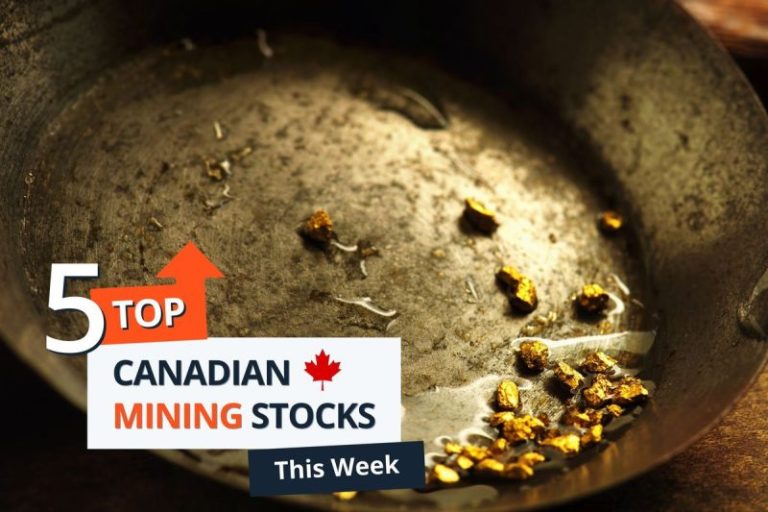
Top Canadian mining stocks this week

How did mining stocks perform against this backdrop?

Take a look at this week’s five best-performing Canadian mining stocks below.

Stocks data for this article was retrieved at 4:00 p.m. EDT on Friday using TradingView’s stock screener. Only companies trading on the TSX, TSXV and CSE with market caps greater than C$10 million are included. Mineral companies within the non-energy minerals, energy minerals, process industry and producer manufacturing sectors were considered.

1. Guardian Exploration (TSXV:GX)

Weekly gain: 94.44 percent
Market cap: C$14.34 million
Share price: C$0.175

Guardian Exploration is an exploration and development company with a portfolio of oil and gas and mineral properties.

Among its properties is the Sun Dog gold project covering an area of 9,415 hectares in the Kivalliq Region in Nunavut, Canada. The site is located near the historic Cullaton Lake mine, which produced 100,000 ounces of gold between October 1981 and September 1985.

The company acquired the project on May 2 from New Break Resources (CSE:NBRK). Under the terms of the deal, Guardian received a 100 percent interest in the property, along with mineral rights and 60 drums of Jet A fuel in exchange for 5 million shares and a cash payment of C$75,000.

Guardian also reimbursed New Break C$18,830 for annual rent and granted New Break the option to buy back a 20 percent interest in the property for C$1.00.

The most recent news from the project came on Monday, when the company reported that it is commencing a one-month field program at the site that will include geological mapping, soil sampling and trenching. Guardian plans to perform follow-up exploration and drilling in 2026.

2. Sokoman Minerals (TSXV:SIC)

Weekly gain: 80 percent
Market cap: C$13.57 million
Share price: C$0.045

Sokoman Minerals is a discovery-oriented company with a portfolio of gold projects and one of the largest land positions in Newfoundland and Labrador, Canada. It also owns a 40 percent stake in the Killick lithium project, a 40/40/20 joint venture with Benton Resources (TSXV:BEX,OTC:BNTRF) and Piedmont Lithium (OTC Pink:PLLTL).

Its primary focus is on its flagship Moosehead gold project located in Central Newfoundland. The advanced project consists of 98 claims covering 2,450 hectares and hosts an orogenic Fosterville-style gold system, according to Sokoman. The company has defined seven zones with high-grade mineralization through over 130,000 meters of drilling.

Sokomon announced on Friday that it was commencing diamond drilling at the site with the focus on testing the Eastern and Western Trend gold zones for depth extensions as well as undiscovered parallel zones. The drill holes will test to a depth of 1,000 meters.

Additionally, the company reported on September 2 that it expanded its land position at its Crippleback Lake gold-copper property to 13,000 hectares and planned to mobilize for induced polarization surveys, sampling and mapping of the site immediately.

3. CopAur Minerals (TSXV:CPAU)

Weekly gain: 61.11 percent
Market cap: C$11.84 million
Share price: C$0.145

CopAur is a gold exploration and development company advancing its flagship Kinsley Mountain oxide gold project in Nevada, United States.

The project is home to a historic open pit gold mine that produced approximately 138,000 ounces between 1995 and 1999. According to the project page, the property hosts an indicated mineral resource of 418,000 ounces of gold with an average grade of 2.63 grams per metric ton (g/t) gold.

On August 7, the company announced that it was shifting its full focus to advance work at its Kinsey Mountain project.

The company’s most recent news came on Monday when it reported that it had hired Andrew Neale as its new CEO. Neale brings more than 35 years of mining experience to CopAur and has held senior positions with Freeport-McMoRan (NYSE:FCX) where he oversaw operations at its Grasberg copper-gold mine in Indonesia.

The company added that it was currently awaiting a decision from the Nevada Bureau of Land Management on a pair of permits for the Kinsey Mountain site, with one allowing it to test for reclamation at the heap leach pad and the other to allow it to restart production.

4. Silver North Resources (TSXV:SNAG)

Weekly gain: 60 percent
Market cap: C$26.72 million
Share price: C$0.40

Silver North Resources is primarily focused on advancing a portfolio of silver assets in the Yukon, Canada.

Its flagship Haldane silver project covers an area of 8,164 hectares in the Yukon’s Keno Hill Silver District and has seen silver exploration dating back to the late 1800s. The property hosts several deposits, including the Main Fault and the West Fault targets, which have produced high-grade silver assays up to 3,267 g/t over 1.26 meters at the West Fault and both zones hosting additional amounts of gold, lead, and zinc.

The company announced on August 15 that it commenced a 10 hole drill program at Haldane to follow up on the discovery of the Main Fault zone in 2024.

Additionally, the company announced on August 20 that it had begun its initial exploration program at the Veronica property at its GDR project in the Yukon. The program is eligible for partial funding up to C$30,000 as part of the Yukon Mineral Exploration Program.

5. Blue Star Gold (TSXV:BAU)

Weekly gain: 53.12 percent
Market cap: C$25.67 million
Share price: C$0.245

Blue Star Gold is a gold exploration and development company operating in Nunavut, Canada.

Its flagship asset is the Ulu gold project, which includes the Ulu mining lease and the Hood River property, together forming a 12,000 hectare land package. The property features a renewable 21 year mining lease for the advanced-stage Flood Zone deposit.

As per a February 2023 updated mineral resource estimate (MRE), Ulu holds a measured and indicated resource of 572,000 ounces of gold from 2.54 million metric tons of ore at an average grade of 7.02 g/t gold, along with an additional inferred resource of 303,000 ounces of gold from 1.28 million metric tons of ore at 7.34 g/t.

Blue Star also owns the Roma gold project, located on 11,532 hectares of crown mineral claims and 4,119 hectares of mineral exploration agreements in Nunavut’s High Lake greenstone belt.

On Wednesday, Blue Star reported results from surface samples at its Auma prospect at Roma. The company said it had collected a total of 133 samples, with 44 returning gold grades above 1 g/t, including two samples with grades of 151 g/t and 125 g/t gold. The sampling program extended Zone 3, which is untested by drilling, by an additional 35 meters for a strike length of 130 meters.

Additionally, Blue Star also found high values of copper in quartz veining, with one sample producing a grade of 7.64 g/t gold and 4.2 percent copper.

FAQs for Canadian mining stocks

What is the difference between the TSX and TSXV?

The TSX, or Toronto Stock Exchange, is used by senior companies with larger market caps, and the TSXV, or TSX Venture Exchange, is used by smaller-cap companies. Companies listed on the TSXV can graduate to the senior exchange.

How many mining companies are listed on the TSX and TSXV?

As of May 2025, there were 1,565 companies listed on the TSXV, 910 of which were mining companies. Comparatively, the TSX was home to 1,899 companies, with 181 of those being mining companies.

Together, the TSX and TSXV host around 40 percent of the world’s public mining companies.

How much does it cost to list on the TSXV?

There are a variety of different fees that companies must pay to list on the TSXV, and according to the exchange, they can vary based on the transaction’s nature and complexity. The listing fee alone will most likely cost between C$10,000 to C$70,000. Accounting and auditing fees could rack up between C$25,000 and C$100,000, while legal fees are expected to be over C$75,000 and an underwriters’ commission may hit up to 12 percent.

The exchange lists a handful of other fees and expenses companies can expect, including but not limited to security commission and transfer agency fees, investor relations costs and director and officer liability insurance.

These are all just for the initial listing, of course. There are ongoing expenses once companies are trading, such as sustaining fees and additional listing fees, plus the costs associated with filing regular reports.

How do you trade on the TSXV?

Investors can trade on the TSXV the way they would trade stocks on any exchange. This means they can use a stock broker or an individual investment account to buy and sell shares of TSXV-listed companies during the exchange’s trading hours.

Top 5 Canadian Mining Stocks This Week: Kirkland Lake Discovery Gains 88 Percent

Top 5 Canadian Mining Stocks This Week: Kirkland Lake Discovery Gains 88 PercentTop 5 Canadian Mining Stocks This Week: San Lorenzo Gold Shines with 329 Percent Gain

Article by Dean Belder; FAQs by Lauren Kelly.

Securities Disclosure: I, Dean Belder, hold no direct investment interest in any company mentioned in this article.

Securities Disclosure: I, Lauren Kelly, hold no direct investment interest in any company mentioned in this article.

This post appeared first on investingnews.com

Highlights:

  • The latest drill results build on Bo_RC_14/25 drill hole (previously released as 12.0 metres @ 4.27% WO₃ from 252.0 metres, incl. 6.0 metres @ 8.39% WO₃ from 252.0 metres) and collectively suggests a larger and higher-grade Breccia complex than previously modeled.
  • Bo_RC_17/25 results included 100.0 metres @ 0.21% WO₃ from 52.0 metres, including
    • 32.0 metres @ 0.33% WO₃ (MF 10.6 m%) from 92.0 metres, including 
    • 14.0 metres @ 0.52% WO₃ (MF 5.2 m%) from 106.0 metres, including 
    • 6.0 metres @ 0.74% WO₃ (MF 4.4 m%) from 110.0 metres
      South infill drill hole confirms bulk-mineable medium-grade core with well-defined high-grade corridors.
  • Bo_RC_15/25 results included 2.0 metres @ 0.97% WO₃ from 164.0 metres
    South-west deep step-out drill hole with a high-grade intersection consistent with previously reported Bo_RC_14/25 drill hole.
  • Bo_RC_22/25 results included 64.0 metres @ 0.12% WO₃ from 284.0 metres, including 
    • 16.0 metres @ 0.21% WO₃ from 316.0 metres
      New northern deep lode opens a new northern vector for resource growth.

Allied Critical Metals Inc. (CSE: ACM,OTC:ACMIF) (OTCQB: ACMIF) (FSE: 0VJ0) (‘Allied’ or the ‘Company’), which is focused on its 100% owned past producing Borralha and Vila Verde tungsten projects in northern Portugal, is pleased to announce additional significant assay results from its ongoing 4,200 metres reverse circulation (RC) drilling campaign at its Borralha Tungsten Project. The latest results from drill holes Bo_RC_1525, Bo_RC_1725, and Bo_RC_2225 extend mineralization both west and north of the previously announced Bo_RC_1425 high-grade intercept, reinforcing that the Santa Helena Breccia within the Borralha Project is emerging as a larger and higher-grade orebody than previously modeled. The Company will commence an additional fully funded 1,528 metre drilling in the fourth quarter of 2025 to build off the drilling success in July.

The results are especially timely as tungsten price has now reached a new high of U.S.$550/MTU, which is an increase of more than 40% over the past four months as demand for the critical mineral increases in the face of further supply chain restrictions from non-Western countries [Source: FastMarkets].

Roy Bonnell, CEO & Director of Allied, commented: ‘These thick, continuous intervals in the central-south and the new northern deep lode materially expand the working envelope at the Santa Helena Breccia in Borralha. Together with the previously reported ultra-high-grade intercept in Bo_RC_14/25, we see clear evidence of a system that is both bigger and better than we initially assumed. This is exactly the kind of data we want feeding into the upcoming Mineral Resource Estimate (MRE) and Preliminary Economic Assessment (PEA). Moreover, the results demonstrate the potential of Borralha as a key strategic, safe, and secure source of tungsten for Portugal, the EU and NATO.’

João Barros, President & COO of Allied, stated: ‘Tungsten is recognized by the European Union as both a critical and strategic raw material under the CRMA. With Europe producing less than 3% of its annual needs and facing increasing Chinese export restrictions, the Borralha Project represents a vital opportunity to strengthen secure, Western-aligned supply chains. Our work directly supports the EU target of sourcing at least 10% of its critical raw materials domestically by 2030, while reinforcing Portugal’s role as a key contributor to Europe’s strategic independence. ‘

General (Ret.) James A. ‘Spider’ Marks, Director of the Company’s U.S. subsidiary, stated: ‘Expanding the mineral resource at the Borralha Project is an essential next step in path to fulfilling the immense need in Portugal, the EU, NATO and the United States for tungsten powders, concentrates and other byproducts. The U.S. and NATO defense military complexes are dependent on tungsten. Without domestic supply of tungsten, the Borralha Project becomes a very important piece to the critical mineral supply chains for the United States and NATO.’

These latest drilling results are highly significant because they combine both scale and grade. The long intercepts at 0.21-0.33% WO₃ in Bo_RC_17/25 are particularly meaningful in wolframite systems. In addition, the drilling program is clearly growing the footprint of the Breccia complex. The Bo_RC_22/25 delineates a northern deep lode, while Bo_RC_15/25 ties the west-deep high-grade corridor back to the main body-both lines of evidence supporting a larger Santa Helena Breccia, the principal mineralized body at Borralha Project.

Table 1 – Drill Hole Collar Locations

Drill Hole ID Coordinates (WGS84) Az.(º) Dip.(º) PFD (m) DEPTH (m)
Bo_RC_14/25 585445 4611405 109 80 250 264.00
Bo_RC_15/25 585347 4611368 109 70 300 255.00
Bo_RC_16/25 585406 4611329 105 60 240 251.00
Bo_RC_17/25 585426 4611295 109 75 250 255.00
Bo_RC_18/25 585461 4611431 109 75 300 241.00
Bo_RC_19/25 585470 4611493 109 82 350 247.00
Bo_RC_21/25 585484 4611552 109 85 400 370.00
Bo_RC_22/25 585484 4611552 109 70 360 375.00
Bo_RC_26/25 585586 4611449 289 60 400 287.00


Table 2 – Drill Hole Interval Highlights

Drill Hole ID From (m) To (m) DH length (m) [1] True factor [1] True Width (m) [1] WO3 (%)
Bo_RC_14/25 52.0 64.0 12.0 tbd [2] [2] 4.27
incl. 52.0 58.0 6.0 tbd [2] [2] 8.39
Bo_RC_15/25 164.0 166.0 2.0 0.88 1.8 0.97
Bo_RC_17/25 52.0 152.0 100.0 0.90 89.9 0.21
incl. 92.0 124.0 32.0 0.90 28.8 0.33
incl. 106.0 120.0 14.0 0.90 12.6 0.52
incl. 110.0 116.0 6.0 0.90 5.4 0.74
Bo_RC_22/25 284.0 348.0 64.0 tbd [2] [2] 0.12
incl. 316.0 332.0 16.0 tbd [2] [2] 0.21


Notes: [1] Reported intervals are downhole lengths. Estimated true widths were calculated from hole orientation and the interpreted geometry of the mineralized corridors. Estimates may vary locally where geometry changes. Where intervals fall outside the resource block-model domains, true widths are not estimated and only downhole lengths are reported. [2] True widths are unknown.

Figure 1 – Drill collar plan showing planned holes for the ongoing 5,728 m RC campaign at the Borralha Project. The red outline delineates the main mineralized breccia zone.

To view an enhanced version of this graphic, please visit:
https://images.newsfilecorp.com/files/11632/265932_59740f4fd42498c1_001full.jpg

Figure 2 – Geological Cross-Section for hole Bo_RC_17/25.

To view an enhanced version of this graphic, please visit:
https://images.newsfilecorp.com/files/11632/265932_59740f4fd42498c1_002full.jpg

Geologic Interpretation

The geologic interpretation indicates that the Santa Helena Breccia is expanding: the combination of broad medium-grade intervals and discrete high-grade intercepts points to a larger, better-connected breccia body than previously modeled. Priority vectors for follow-up include the west-dip high-grade trend (Bo_RC_14/25 and Bo_RC_15/25) and the northern wider deep lode (Bo_RC_22/25), which will guide near-term drilling and feed the Q4 2025 MRE and subsequent PEA workstreams.

Next steps

Ongoing drilling continues to target west-deep and northern extensions while tightening spacing across the MRE backbone. Additional assays from completed holes will be released as received and validated. The program remains aligned with the timeline toward an updated MRE (Q4 2025) and PEA thereafter.

Technical Information and Quality Assurance/Quality Control (QA/QC)

Drilling was completed using reverse-circulation (RC). All sample bags were pre-labelled with a unique internal sequence number used consistently for the assay sample and corresponding reject. Sampling was conducted on 2.0 m intervals for analytics. For each 2.0 m interval, two 1.0 m reject samples were also collected as representative splits. Splitting was performed at the rig via a rotary splitter integral to the RC cyclone.

Sampling followed pre-prepared sample lists that recorded downhole metreage, sequence, and the placement of Certified Reference Materials (CRMs) and field duplicates. CRMs were inserted at a rate of 1 in 20 samples (5%) and field duplicates at 1 in 20 samples (5%), arranged so that every 10th sample alternated between a CRM and a duplicate.

Analytical and reject samples were boxed at the drill site and transported by company personnel to the project core/logging facility. Analytical samples were stored on labelled pallets pending direct shipment to ALS’s preparation laboratory in Seville, Spain. Pulps and rejects were subsequently stored securely in the project logging room.

At ALS Seville, samples were crushed to 70% passing 2 mm, riffle-split to ~250 g, and pulverized using hardened steel to 85% passing 75 μm. Pulps were shipped to ALS Loughrea (Ireland) for analysis. The primary analytical method was ME-MS81 (lithium borate fusion with ICP-MS finish). Base metals were also reported using ME-4ACD81 (four-acid digestion with ICP-MS finish). Over-limit tungsten results were re-assayed using W-XRF15b (lithium borate fusion with XRF). Analytical results were delivered directly by ALS to the Company via secure electronic transfer.

To the best of the Company’s knowledge, no drilling, sampling, recovery, or other factors have been identified that would materially affect the accuracy or reliability of the data referenced herein.

Where reported, metal factor (m·%WO₃) is the product of interval length and grade and is provided as supplemental context only. Primary disclosure remains the reported grade and interval length (and true width where known).

Qualified Person

The scientific and technical information in this news release has been reviewed and approved by Mr. Vítor Arezes, BSc, MIMMM (QMR) (Membership Nº. 703197, Vice-President Exploration of Allied Critical Metals, who is a Qualified Person for the purposes of National Instrument 43-101 – Standards of Disclosure for Mineral Projects. Mr. Arezes is not independent of Allied Critical Metals Inc. as he is an officer of the Company.

Understanding Tungsten

To understand tungsten, it is critical to understand the difference between wolframite tungsten mineralization and scheelite tungsten mineralization. Scheelite often reports higher grades (0.3%-1.0% WO₃) but is more costly and complex to process, requiring flotation methods with higher capital and operating expenditures and lower recoveries.i In contrast, wolframite, which is the focus of Allied, can be processed more efficiently using gravity and magnetic separation, resulting in lower costs and higher recoveries, making lower grades (~0.15%-0.25% WO₃) economically viable in wolframite deposits. For example, a wolframite deposit with 0.4% WO₃ over 3 metres can be more profitable than a scheelite deposit with 0.7% WO₃ over the same interval due to lower processing costs and higher recovery rates.ii

In Western exploration drilling, tungsten grades typically range from 0.3% to 1.0% WO₃.iii The cut-off grade for economic viability is generally around 0.1% WO₃, with highly efficient operations able to mine at grades as low as 0.08% WO₃. Skarn deposits, a common deposit type, typically range from 0.34% to 1.4% WO₃, with intercepts of 0.4% WO₃ over 1-5 metres considered very good and 0.7% WO₃ over 1-3 metres considered very high-grade.iv Intercept lengths can range from 0.6 metres to over 100 metres, with longer intercepts at strong grades generally preferred for economic mining.

Published exploration results in Western jurisdictions demonstrate the standards for wolframite, with reported intercepts such as ~9-15 m @ 0.6-0.8% WO₃, ~18 m @ 1.0% WO₃, and typical intervals of 1-5 m @ 0.25-0.5% WO₃. A result like 0.5% WO₃ over 3 metres is generally considered strong within Western tungsten exploration benchmarks, especially for wolframite tungsten mineralization.v

It is also important to recognize that China, Russia, and North Korea control approximately 87% of the world’s tungsten supply, using cheap labor and minimal environmental standards in authoritarian regimes. vi As a result, production costs and grades in these countries are not comparable to Western projects, which operate under higher labor, ESG, and energy cost structures. Evaluating projects outside these regions provides a realistic benchmark for what grades and intercepts are economically viable while supporting secure, NATO-aligned supply chains.

For Allied, this context is significant. Wolframite tungsten grades, ranging from 0.2% to 1.0% WO₃ are strong global wolframite benchmark values. The Company’s focus on wolframite ensures lower processing costs and higher recoveries, supporting project economics even at lower grades. Allied’s operations in secure jurisdictions align with Western critical mineral needs, avoiding geopolitical risks associated with China and Russia while positioning the Company to benefit from growing tungsten demand across defense, aerospace, and electrification sectors. Allied’s strong grades, low-cost processing advantages, and secure location position it as a strategic and responsible tungsten exploration company, well placed to support robust project economics in a rising-demand market. vii

*The results and intercepts referenced are drawn from publicly available disclosures of third-party mineral projects and are presented for industry benchmarking and comparison purposes only. Allied has no interests in those projects or entities.

ON BEHALF OF THE BOARD OF DIRECTORS,

‘Roy Bonnell’

Roy Bonnell, CEO and Director

For further information or investor relations inquiries, please contact:

Dave Burwell
Vice President, Corporate Development
Email: daveb@alliedcritical.com
Tel: 403-410-7907
Toll Free: 1-888-221-0915

ABOUT Allied Critical Metals

Allied Critical Metals Inc. (CSE: ACM,OTC:ACMIF) (OTCQB: ACMIF) (FSE: 0VJ0) is a Canadian-based mining company focused on the expansion and revitalization of its 100% owned past producing Borralha Tungsten Project and the Vila Verde Tungsten Project in northern Portugal with advantageous wolframite tungsten mineralization. Tungsten has been designated a critical metal by the United States and other western countries, as they are aggressively seeking friendly sources of this unique metal. Currently, China, Russia and North Korea represent approximately 86% of the total global supply and reserves. Tungsten is used in a variety of industries such as defense, automotive, manufacturing, electronics, and energy.

Please also visit our website at www.alliedcritical.com.

Also visit us at:

LinkedIn: https://www.linkedin.com/company/allied-critical-metals-inc
X: https://x.com/@alliedcritical/
Instagram: https://www.instagram.com/alliedcriticalmetals/

The Canadian Stock Exchange does not accept responsibility for the adequacy or accuracy of this release.

Cautionary Statement Regarding Forward-Looking Information

This news release contains ‘forward-looking statements’, including with respect to the use of proceeds. Wherever possible, words such as ‘may’, ‘would’, ‘could’, ‘should’, ‘will’, ‘anticipate’, ‘believe’, ‘plan’, ‘expect’, ‘intend’, ‘estimate’, ‘potential for’ and similar expressions have been used to identify these forward-looking statements. These forward-looking statements reflect the current expectations of the Company’s management for future growth, results of operations, performance and business prospects and opportunities and involve significant known and unknown risks, uncertainties and assumptions, including, without limitation, those listed in the Company’s Listing Statement and other filings made by the Company with the Canadian securities regulatory authorities (which may be viewed under the Company’s profile at www.sedarplus.ca ). Examples of forward-looking statements in this news release include, but are not limited to, statements regarding the proposed timeline and use of proceeds for exploration and development of the Company’s mineral projects as described in the Company’s Listing Statement, news releases, and corporate presentations. Should one or more of these risks or uncertainties materialize or should assumptions underlying the forward-looking statements prove incorrect, actual results, performance or achievements may vary materially from those expressed or implied by the forward-looking statements contained in this news release. These factors should be considered carefully, and prospective investors should not place undue reliance on the forward-looking statements. This list is not exhaustive of the factors that may affect any of the Company’s forward-looking statements and reference should also be made to the Company’s Listing Statement dated April 23, 2025 and news release dated May 16, 2025, and the documents incorporated by reference therein, filed under its SEDAR+ profile at www.sedarplus.ca for a description of additional risk factors. The Company disclaims any intention or obligation to revise forward-looking statements whether as a result of new information, future developments or otherwise, except as required by law.

i International Tungsten Industry Association (ITIA). (2023). Tungsten: Global industry, markets & outlook. Retrieved from https://www.itia.info

ii International Tungsten Industry Association (ITIA). (2023). Tungsten: Global industry, markets & outlook. Retrieved from https://www.itia.info

iii US Geological Survey (USGS). (2024). Mineral commodity summaries: Tungsten. Retrieved from https://pubs.usgs.gov/periodicals/mcs2024/mcs2024-tungsten.pdf

iv British Geological Survey (BGS). (2023). Tungsten fact sheet. Retrieved from https://www.bgs.ac.uk/downloads/start.cfm?id=1408

International Tungsten Industry Association (ITIA). (2023). Tungsten: Global industry, markets & outlook. Retrieved from https://www.itia.info

v Argus Media Group. (2025). Argus Tungsten Monthly Outlook. Issue 26-6, 11 June 2025. https://argusmedia.com

vi International Tungsten Industry Association (ITIA). (2023). Tungsten: Global industry, markets & outlook. Retrieved from https://www.itia.info

US Geological Survey (USGS). (2024). Mineral commodity summaries: Tungsten. Retrieved from https://pubs.usgs.gov/periodicals/mcs2024/mcs2024-tungsten.pdf

vii International Tungsten Industry Association (ITIA). (2023). Tungsten: Global industry, markets & outlook. Retrieved from https://www.itia.info

To view the source version of this press release, please visit https://www.newsfilecorp.com/release/265932


News Provided by Newsfile via QuoteMedia

This post appeared first on investingnews.com

Brings Company’s Total Claims to 491 in Area Housing the Only Rare Earths Producing Mine in U.S.

Move Expands Locksley’s Exploration Pipeline Across Antimony, Rare Earths Elements and Polymetallic Prospects

Locksley Resources Limited (ASX: LKY,OTC:LKYRF; OTCQB: LKYRF), announced it has significantly expanded its strategic footprint within the Mojave Critical Minerals Corridor in California through the staking of an additional 249 claims. This brings the company’s total landholding to 491 claims.

The new claims are adjacent to Locksley’s existing tenement position and adjoin MP Materials landholding, which includes the Mountain Pass Rare Earth Mine. The new claims also secure additional acreage for Locksley in that they abut the recently identified antimony, rare earths elements (REEs) and polymetallic mineralization reported by the company.

‘These additional claims significantly strengthen Locksley’s competitive positioning within one of the most prospective critical minerals regions in the U.S.,’ said Nathan Lude , Head of Strategy, Capital Markets and Commercialization for the company. ‘With demand for antimony and REEs underpinned by U.S. supply chain security initiatives, the expanded landholding provides Locksley with a broader platform to advance multiple exploration and development opportunities,’ he noted.

The south-east claims encompass the favorable gneissic geology, which hosts the Mountain Pass mine and carbonatites. ‘Significantly there are substantial regional north to north-west striking structures evident in the magnetic geophysics datasets,’ said Julian Woodcock , Locksley’s technical director. ‘These transgress across the areas staked, which conceptually have the potential to host pathways for REE bearing carbonatites and be related to other styles of mineralization,’ he said.

Woodcock added that the Northern claims are 3km directly along strike from Dateline Resources Colosseum Gold Project. ‘In addition, the USGS geochemical database indicates polymetallic and precious metals occurrences in the area immediately adjoining the new northern claims. As such there are multiple commodity opportunities evident within this claim area.’

Lude added, ‘Importantly, several of the new claims directly adjoin the Mountain Pass larger claim package, underlining the strategic significance of Locksley’s footprint within the corridor. This positioning enhances potential for both exploration discovery and long-term commercialization pathways, including downstream processing partnerships in line with U.S. government priorities for supply chain resilience.’

More information on this can be found at https://cdn-api.markitdigital.com/apiman-gateway/ASX/asx-research/1.0/file/2924-02992119-6A1283295&v=c2533a54e2514fb77a8f93f84db686e1125273e9 .

Locksley Resources is an Australian-based explorer focused on critical minerals and base metals, with assets in both the U.S. and Australia . The company is actively advancing its U.S. asset, the Mojave Project, in California , targeting rare earth elements (REEs) and antimony. The company has also announced a strategic collaboration with Rice University to develop DeepSolv, for domestic processing of North American antimony. The agreement is the first step in the initiation of Locksley’s U.S. Critical Minerals and Energy Resilience Strategy to accelerate ‘mine-to-market’ deployment of antimony in the U.S.

Contact: Beverly Jedynak , Beverly.jedynak@viriathus.com , 312-943-1123; 773-350-5793 (cell)

View original content: https://www.prnewswire.com/news-releases/locksley-resources-adds-249-additional-claims-to-landholding-of-more-than-40-sq-km-of-highly-prospective-critical-minerals-ground-in-californias-mojave-region-302553290.html

SOURCE Locksley Resources

News Provided by PR Newswire via QuoteMedia

This post appeared first on investingnews.com

Bold Ventures Inc. (TSXV: BOL,OTC:BVLDF) (the ‘Company’ or ‘Bold’) is pleased to announce the results of a prospecting and sampling program on its Burchell Gold and Copper Property (the ‘Property’), located within the Shebandowan Greenstone Belt, approximately 100 km west of Thunder Bay, Ontario. 209 grab samples and 42 channel samples were collected in total. The goal of this phase of work was preparation for a mechanical stripping, sampling and geological mapping program at the 111 Zone gold showing and surroundings. A crew has been mobilized for the mechanical stripping program which will commence immediately.

Highlights from the program include:

  • Verification of gold mineralization at historic trenches in the southwest part of the Property, with one sample returning 3.38 g/t Au.
  • New gold-silver showing south of the 111 Zone, with a maximum of 952 ppb Au and 300 ppm Ag.

Prospecting was carried out over a flagged 800 m by 1 km grid centered on the 111 Zone, where grab samples returned from 10 ppb Au up to 68 g/t Au last Fall (see Bold news release dated January 9, 2025), and along strike to the southwest towards the western Property boundary. Additional locations both along and across strike were sampled. Limited channel sampling was carried out where outcrop could be accessed by hand stripping. In total, 42 samples were collected (see Table 2 and Figure 2 for significant channel sample results).

Limited channel sampling at the 111 Zone revealed that the anomalous gold zone is at least 4.5 to 6.5 meters wide (apparent width), open to the southeast, where outcrop exposure terminated under overburden and along strike in both directions. The highest value obtained was 2.1 g/t Au (and 1250 ppm Cu) over 0.5 meters, with 14 samples in the 100-500 ppb Au range. 3 samples also returned 0.1% or greater zinc, with a maximum of 0.27% Zn over 0.7 m (see Table 2 and Figure 2).

Combined with previous geological mapping and sampling (2023 and 2024), airborne electromagnetic and magnetic surveys (2006, 2019), and historical data compilation, the results of this sampling program will guide the mechanical stripping, mapping and sampling program commencing immediately. This first phase will expose a number of locations along an emerging anomalous gold mineralized trend that extends northeast from near the western Property boundary over a distance of approximately 2.9 km to the 111 Zone and beyond (see Figure 1). This trend appears to be associated with a magnetic low geophysical signature and remains open to the eastern boundary of the claim group which has seen very little exploration to date.

Prospecting Results

209 samples were collected during the summer prospecting program. Several new gold-in-bedrock anomalies were identified on or close to the 111 Zone flagged grid (see Figure 1). These occur close to the contacts between mafic metavolcanics and intermediate or felsic metavolcanics. Significant anomalous results include:

  • 952 ppb Au (with 260 ppm Ag, 0.44% Pb, 0.18% Zn, and 490 ppm Bi) from a 5 cm quartz vein in sheared diorite, 180 meters south-southeast of the 111 Zone, dubbed the ‘Winter Gold Occurrence.’
  • 931 ppb Au (with 300 ppm Ag, 0.54% Pb, 0.19% Zn, and 584 ppm Bi) from the same vein at Winter Gold.
  • 706 ppb Au (with 0.17% Zn and 155 ppm Mo) 780 meters west-southwest of the 111 Zone, from altered mafic volcanic rocks.
  • 207 ppb Au (with 1.34% Zn and 0.36% Pb) 450 meters west-northwest of the 111 Zone, from quartz sericite schist.
  • 412 ppb Au and 1.49% Cu in quartz sericite schist from a location 220 meters northeast of the 111 Zone.
  • At the 111 Zone 3 samples returned anomalous zinc values with a maximum of 0.28% Zn.

See Table 1 and Figure 1. New gold-in-rock anomalies are frequently associated with zinc, copper and lead pathfinders, which is consistent with the soil sampling results reported on August 18, 2025. They show that gold and base metal geochemical anomalies tend to cluster near contacts between mafic metavolcanics and felsic or intermediate metavolcanics. A follow up prospecting program is currently underway to explore these soil geochemical anomalies.

Prospecting in the southwest part of the Property also yielded new gold-in-rock anomalies (see Figure 1), which include:

  • 371 ppb Au from altered, sheared quartz feldspar porphyry (QFP) in local float, as well as two other samples >100 ppb Au in outcrop and subcrop. This new zone of sheared QFP has been dubbed the ‘Moosehead Zone’ and occurs along the side of a northwest-facing slope on the edge of low ground. This zone is located 2.5 km southwest of the 111 Zone, and like the 111 Zone occurs in a magnetic low.
  • 188 ppb Au and 106 ppb Au from altered intermediate volcanic rock and porphyritic rock respectively, from outcrop and talus, approximately 600 meters along strike to the northeast of the Moosehead Zone, along a similar slope indicating that the gold bearing rocks may also continue under overburden to the northwest.
  • 288 ppb Au from altered mafic metavolcanic rock and 118 ppb Au from sulphide iron formation, in close proximity to each other approximately 900 meters north-northwest of the Moosehead Zone.
  • 125 ppb Au from an angular boulder of intermediate volcanics with quartz-magnetite veining approximately 1.2 km north-northwest of Moosehead.

Sampling of historic trenches in the southwest part of the Property, approximately 600 meters north of the Moosehead Zone, confirmed historic gold mineralization with a highest result of 3.38 g/t Au. This area has yet to be comprehensively mapped, prospected and sampled. See Table 1 and Figure 1.

These showings demonstrate the potential for parallel zones in variable rock types across the Property. They are also all in the general vicinity of the extension of the Kawa Trend of Goldshore Resources (GSHR), along which GSHR reported a grab sample which returned 33.7 g/t Au, 0.64% Zn and 75 ppm Mo (note: the qualified person has been unable to verify results reported by GSHR and these are not necessarily indicative of mineralization present on the Burchell Property). From the southwest end of the Moosehead Zone to the northeastern-most gold anomaly on the 111 grid, a 2.9 km discontinuous gold trend has now been identified. See Figure 1.

An exploration permit which includes backhoe stripping was recently obtained by the Company (see Bold’s August 28, 2025 news release), which will allow the Company to expose the 111 Zone and sample the gold-bearing horizon in detail.

Bruce MacLachlan, President and COO of Bold Ventures, said of the results: ‘It is encouraging that numerous gold anomalies were obtained from our summer prospecting and sampling programs. New gold, silver and base metal showings along a 3 km trend within parallel zones that cross multiple rock types indicate some size potential, most notably at the 111 Zone where we will have the opportunity to expose it by backhoe and sample more thoroughly.’

QAQC Protocols

Rock samples were collected, documented and photographed in the field, then placed in sealed bags and delivered to Activation Laboratories (ActLabs) in Thunder Bay, which is an ISO / IEC 17025 accredited laboratory. Rock sample collection is subject to Bold’s internal quality assurance / quality control (QAQC) protocols, which include the insertion of blank material and certified reference material into each batch of samples submitted. Rock samples referenced in this news release were analyzed using ActLabs methods 1A2-50, a 50g fire assay with atomic absorption finish, and 1F2, a total digestion with ICP-OES finish for trace elements.

The technical information in this news release was reviewed and approved by Coleman Robertson, B.Sc., P. Geo., the Company’s V.P. of Exploration and a qualified person (QP) for the purposes of NI 43-101.

Bold Ventures management believes our suite of Battery, Critical and Precious Metals exploration projects are an ideal combination of exploration potential meeting future demand. Our target commodities are comprised of: Copper (Cu), Nickel (Ni), Lead (Pb), Zinc (Zn), Gold (Au), Silver (Ag), Platinum (Pt), Palladium (Pd) and Chromium (Cr). The Critical Metals list and a description of the Provincial and Federal electrification plans are posted on the Bold Critical and Battery Minerals page.

About Bold Ventures Inc.

The Company explores for Precious, Battery and Critical Metals in Canada. Bold is exploring properties located in active gold and battery metals camps in the Thunder Bay and Wawa regions of Ontario. Bold also holds significant assets located within and around the emerging multi-metals district dubbed the Ring of Fire region, located in the James Bay Lowlands of Northern Ontario.

For additional information about Bold Ventures and our projects, please visit boldventuresinc.com or contact us at 416-864-1456 or email us at info@boldventuresinc.com.

‘Bruce A MacLachlan’
Bruce MacLachlan
President and COO

Direct line: (705) 266-0847 

Email: bruce@boldventuresinc.com

‘David B Graham’
David Graham
CEO


Neither TSX Venture Exchange nor its Regulation Services Provider (as that term is defined in the policies of the TSX Venture Exchange) accepts responsibility for the adequacy or accuracy of this release.

Cautionary Note Regarding Forward-Looking Statements: This Press Release contains forward-looking statements that involve risks and uncertainties, which may cause actual results to differ materially from the statements made. When used in this document, the words ‘may’, ‘would’, ‘could’, ‘will’, ‘intend’, ‘plan’, ‘anticipate’, ‘believe’, ‘estimate’, ‘expect’ and similar expressions are intended to identify forward-looking statements. Such statements reflect our current views with respect to future events and are subject to such risks and uncertainties. Many factors could cause our actual results to differ materially from the statements made, including those factors discussed in filings made by us with the Canadian securities regulatory authorities. Should one or more of these risks and uncertainties, such actual results of current exploration programs, the general risks associated with the mining industry, the price of gold and other metals, currency and interest rate fluctuations, increased competition and general economic and market factors, occur or should assumptions underlying the forward-looking statements prove incorrect, actual results may vary materially from those described herein as intended, planned, anticipated, or expected. We do not intend and do not assume any obligation to update these forward-looking statements, except as required by law. Shareholders are cautioned not to put undue reliance on such forward-looking statements.

NOT FOR DISTRIBUTION TO U.S. NEWSWIRE SERVICES OR FOR DISSEMINATION IN THE UNITED STATES

To view the source version of this press release, please visit https://www.newsfilecorp.com/release/265961

News Provided by Newsfile via QuoteMedia

This post appeared first on investingnews.com