U.S. stocks and bonds sold off Thursday and oil continued its weekslong upward trajectory, as optimism faded about possible peace talks or a U.S.-Iran ceasefire.
The price of U.S. crude oil rose near $95 per barrel, up more than 4%. International Brent crude rose 5%, to more than $109 per barrel. Since the war started, the cost of U.S. crude oil is up more than 40%. Since the start of the year, it has risen more than 60%.
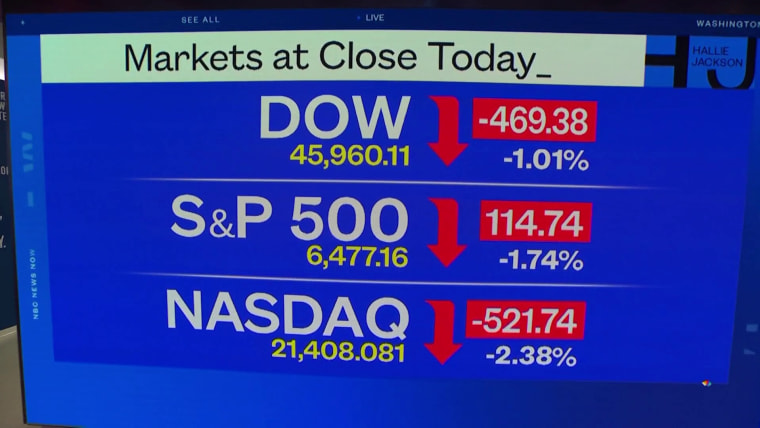
The S&P 500 closed down by 1.7%, the Dow tumbled 470 points and the Russell 2000 ended the day down 1.7%. For the S&P 500, Thursday was its worst single day since the war began.
The Nasdaq Composite fared the worst though, and dropped nearly 2.4%, pushing the index into correction territory. A correction is when an index falls 10% or more from its most recent all-time high. As of Thursday’s close, the index is now down 10.9% from its October high.
Heating oil, a proxy for jet fuel prices, also spiked 8% on Thursday afternoon. The nationwide average price of unleaded gas was $3.98 a gallon.
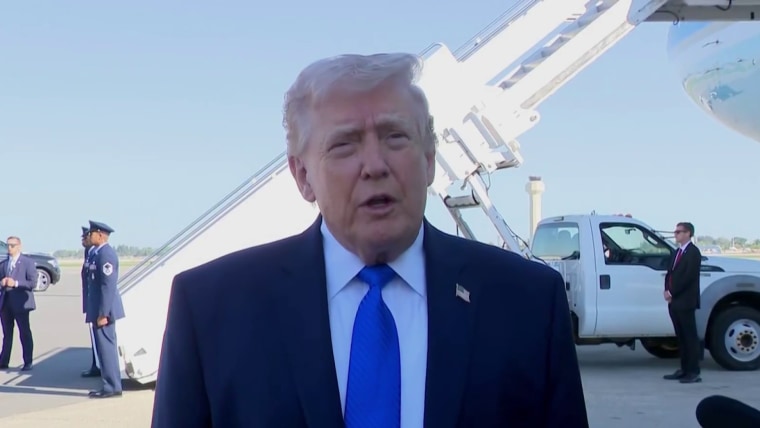
Nonetheless, Trump downplayed the severity of the oil and gas price spikes.
Energy prices “have not gone up as much as I thought,” Trump said at a Cabinet meeting in Washington.
The military campaign is “not over, so maybe it’ll go up a little bit more,” Trump said. “It’s all going to come back down to where it was and probably lower.”
Trump also cast doubt on a deal with Iran. “They are begging to work out a deal,” he said. “I don’t know if we’ll be able to do that. I don’t know if we’re willing to do that.”
But analysts widely believe that oil prices will continue to remain elevated over the long run, factoring in the risk that shippers will now have to assume for oil tankers that transit through the Strait of Hormuz.
Also impacting market sentiment was a report from the Organisation for Economic Co-operation and Development, which predicted that as a result of the war with Iran, the average inflation rate for G20 countries this year would rise to 4%, up from its December prediction of 2.8%. The United States is a member of the OECD.
Bonds also sold off, driving yields higher. The 10-year U.S. Treasury bond yield rose to 4.42%. The yield on 20-year bond hit 4.97% and the 30-year yield hit 4.93%.
Treasury yields, especially for the 10-year bond, heavily influence consumer lending rates. As a result, mortgage rates have risen from around 6% at the start of the war on Feb. 28 to more than 6.5% as of Thursday afternoon.
Stock indexes in Asia had already begun to sell off overnight. China’s Shanghai index and Hong Kong’s Hang Seng index both fell 1%, while Korea’s Kospi slid 3.2%.
These indexes were also weighed down by big drops in shares of tech companies, including Samsung, after Google revealed a new, more efficient use of storage and memory systems for artificial intelligence.
The Stoxx 600 in Europe followed, closing down more than 1%. Flagship stock indexes in Germany, France and the U.K. also ended the trading session down by around 1%.
LOS ANGELES — A jury found Meta and YouTube negligent in the design or operation of their social media platforms, producing a bellwether verdict in the first lawsuit to take tech giants to trial for social media addiction.
The Los Angeles County Superior Court jury said that Meta’s and YouTube’s negligence were a substantial factor in causing harm to the plaintiff, identified in court by her initials, K.G.M., and that the companies failed to adequately warn users of the dangers of Instagram (Meta’s platform) and YouTube (which is owned by Google).
It awarded K.G.M. $3 million in compensatory damages, finding Meta 70% responsible for harm caused to the now 20-year-old plaintiff, and YouTube responsible for 30%.
The trial, which began last month in a Los Angeles County courtroom and included testimony from Mark Zuckerberg and other tech executives, was the first in a consolidated group of cases brought against Meta and other companies by more than 1,600 plaintiffs, including over 350 families and over 250 school districts.
Outside the courtroom, families who say their children were harmed by social media embraced as they celebrated the verdict, telling reporters they feel “vindicated.”
Spokespeople for Meta and Google said the companies disagree with the verdict and plan to appeal.
“Teen mental health is profoundly complex and cannot be linked to a single app,” a Meta spokesperson said. “We will continue to defend ourselves vigorously as every case is different, and we remain confident in our record of protecting teens online.”
José Castañeda, a spokesperson for Google, also said the case “misunderstands YouTube, which is a responsibly built streaming platform, not a social media site.”
In a joint statement, co-lead counsel for K.G.M. said the verdict is “a historic moment” for thousands of children and their families.
“But this verdict is bigger than one case,” the lawyers said. “For years, social media companies have profited from targeting children while concealing their addictive and dangerous design features. Today’s verdict is a referendum — from a jury, to an entire industry — that accountability has arrived.”
The jury decided on $2.1 million in punitive damages for Meta and $900,000 for YouTube, totaling $3 million. It’s a small fraction of the $1 billion in punitive damages the plaintiff’s counsel sought.
Plaintiff K.G.M., center, arrives at Los Angeles County Superior Court on Feb. 26.Mario Tama / Getty Images file
K.G.M.’s lead attorney, Mark Lanier, has said he hopes the proceedings produce transparency and accountability “so that the public can see that these companies have been orchestrating an addiction crisis in our country and, actually, the world.”
The plaintiff was a minor at the time of the incidents outlined in her lawsuit. K.G.M. testified in court that her nearly nonstop use of social media caused or contributed to depression, anxiety and body dysmorphia. It “really affected my self-worth,” she said last month.
Speaking about her social media use, K.G.M. testified that she felt she wanted to constantly be on the platforms and feared missing out if she wasn’t.
Attorneys for Meta and YouTube have disputed claims brought by the plaintiff, arguing their platforms aren’t purposefully harmful and addictive.
A spokesperson for Meta said K.G.M.’s “profound challenges” weren’t caused by social media and pointed to “significant emotional and physical abuse” that she experienced when she was younger.
In his closing argument, an attorney for YouTube said there wasn’t a single mention of addiction to that platform in K.G.M.’s medical records.
The verdict comes after jurors in a separate trial in New Mexico held Meta liable for failing to protect children from online predators and sexual exploitation on Facebook and Instagram.
The New Mexico jury found Tuesdaythat Meta violated the state’s consumer protection laws and ordered it to pay $375 million in civil penalties. Meta has said it disagrees with the verdict and plans to appeal.
In Los Angeles, deliberations took longer, wrapping up after nearly 44 hours over nine days. The jurors had told Judge Carolyn B. Kuhl that they were having trouble coming to a consensus on one defendant.
Social media companies have historically been shielded by Section 230, a provision added to the Communications Act of 1934 that says internet companies aren’t liable for the content users post.
Meta CEO Mark Zuckerberg leaves Los Angeles County Superior Court on Feb. 18. Kyle Grillot / Bloomberg via Getty Images file
K.G.M.’s lawsuit was the first civil action seeking to hold the platforms accountable for allegedly causing addiction and mental health problems.
TikTok and Snap, who were also named as defendants in K.G.M.’s lawsuit, reached settlements before the trial. They remain defendants in a series of similar lawsuits expected to go to trial this year.
Matt Bergman, founding attorney of the Social Media Victims Law Center — which is representing hundreds of plaintiffs in state and federal proceedings — said the jury’s decision Wednesday “establishes a framework for how similar cases across the country will be evaluated and demonstrates that juries are willing to hold technology companies accountable when the evidence shows foreseeable harm.”
“Families pursuing justice in other jurisdictions can now point to this outcome as proof that these claims deserve to be heard and taken seriously,” Bergman said in a statement.
Lanier told NBC News in an interview that this was the most difficult case he’s tried in his 42 years as a lawyer.
“I think the jury understood that they were the very first case in the history of our country to look at social media addiction, and they wanted to leave no question, but that they seriously considered the evidence,” Lanier said. “So they took forever, then they looked carefully at each of the questions and answered everyone was, yes, guilty.”
California Attorney General Rob Bonta also weighed in on the Los Angeles and New Mexico verdicts, writing in an X statement that California “looks forward to holding Meta accountable in our own upcoming August trial in the Bay Area.”
“TODAY” co-anchor Savannah Guthrie will return to the NBC morning show on April 6, as investigators continue to search for her 84-year-old mother in Arizona.
In her first interview since Nancy Guthrie went missing in February, Savannah Guthrie told Hoda Kotb she believes returning to “TODAY” is “part of my purpose right now” — even if it’s hard to imagine coming back to a workplace “of joy and lightness.”
“I can’t come back and try to be something that I’m not. But I can’t not come back because it’s my family,” Guthrie said in the interview about returning to work. “I don’t know if I can do it. I don’t know if I’ll belong anymore, but I would like to try. I would like to try.”
“I’m not gonna be the same. But maybe it’s like that old poem, ‘More beautiful in the broken places,’” she added.
Tune into “Savannah Speaks: A Dateline Special” at 9 p.m. EST on NBC.
Kotb revealed Guthrie’s return Friday on “TODAY.” Her co-host, Craig Melvin, added that the team “can’t wait to welcome her back with open arms.”
“It’s where she belongs. It’s where we all want her to be,” Melvin said.
A spokesperson for “TODAY” did not have additional comment.
Nancy Guthrie was reported missing Feb. 1 after she did not show up at a friend’s house for virtual church services, authorities said. She was last seen the previous night around 9:45 p.m. after having dinner at her daughter Annie Guthrie’s home.
Authorities have described the case as a possible kidnapping or abduction, but clues have been scarce. The Pima County Sheriff’s Office has not publicly specified a motive.
Guthrie told Kotb that her religious faith is “how I will stay connected to my mom.” She alluded to her mother’s experience with loss after her husband, Charles Guthrie, died at the age of 49 in 1988.
“I saw her belief. I saw her faith. She taught me, she taught all of us,” said Guthrie, who was 16 at the time of her father’s death. “I may not do it as well as her, but I will do it. I will do it for my kids. I will. I will not fall apart. I will not let whoever did this take my children’s mother from them.”
Guthrie repeated her pleas for information about her mother’s possible abduction, saying in part: “We need someone to tell the truth. I have no anger in my heart. I have hope in my heart. I have love. But this family needs peace.”
“We need an answer, and someone has it in their power to help,” she added.
Guthrie also opened up about her visit earlier this month to the New York City set of the “TODAY” show, describing her NBC colleagues as her “greater family.”
“I really wanted to come and see everybody. I just love this beautiful place that we call home, where we get to come and be every day,” she said, adding, “When times are hard, you want to be with your family.”
U.S. stocks rose Wednesday and global oil prices fell in yet another volatile trading session as traders and investors were buffeted by constant headlines about the war in Iran.
News of a 15-point U.S. peace plan proposal sparked hopes early in the day that the Trump administration was moving to end its monthlong war against Iran. Initially, the S&P 500 and the Nasdaq 100 futures rose more than 1%.
But reports that Iran had responded negatively to the proposal briefly knocked index futures off their pre-market highs and lifted oil prices off their morning lows.
Despite the early setback, stocks closed the trading day higher. At 4 p.m. ET, the S&P 500 index was up about 0.4%, the Nasdaq Composite closed 0.7% higher, and the Dow jumped 305 points. The Russell 2000 index of smaller companies rose 1.1%.
The price of U.S. crude oil also traded off its lowest levels of the day and was down only 1.4% to about $90 per barrel by late afternoon. West Texas Intermediate crude oil has soared more than 30% since the start of the war on Feb. 28. The cost per barrel is up 50% since the beginning of the year.
International Brent crude prices traded near breakeven, at around $102 per barrel. The price of heating oil, a proxy for jet fuel, dropped 6%.
The global price of oil directly affects what Americans pay at the gas pump and what it costs them to heat and cool their homes. The average nationwide price of unleaded gas Wednesday was $3.98 per gallon, according to AAA data.
“Markets desperately want to believe in the positive,” UBS Global Wealth Management chief economist Paul Donovan wrote. “Focus on the apparent 15-point US plan to end the war has received more attention than Iranian dismissals of this, or the fact that passage through the Strait of Hormuz is minimal.”
Iran’s response to the U.S. proposal included a list of five conditions for ending the war, according to Iranian state TV, which cited a senior political-security official with knowledge of the details of the proposal.
Pakistan has also offered to mediate talks to end the hostilities, four sources told NBC News. A Persian Gulf official said Pakistan had been passing messages between the two countries for the past two days.
An in-person meeting between the U.S. and Iran could be held in the coming days, two sources added.
But President Donald Trump has continued to give conflicting signals.
On March 16, Trump said he was delaying his scheduled visit to China “by a month or so” to monitor the war. On Monday, he said the Strait of Hormuz would be “open very soon.”
And on Tuesday, Trump told reporters in the Oval Office, “This war has been won.” At the same time, the U.S. is sending more than 1,000 additional troops to the Middle East, sources said.
A motorist drives past a sign displaying prices at a gas station in Oakland, Calif., on Tuesday.Godofredo A. Vásquez / AP
Since the war started, the market has experienced several days like this, when markets are whipsawed by constant back-and-forth comments.
“There’s really no way to know at this point what the facts are regarding the state of negotiations, as neither side has any real incentive to conduct talks via the press, so expect more whipsaw action as things continue to progress,” analysts at Bespoke Investment Group wrote in a client note.
They added that the “ongoing tensions continue to support higher prices [and] stoke inflation concerns” and are likely to cause central banks to remain on hold, rather than cut rates.
On the contrary, traders believe the European Central Bank and the Bank of England will both raise interest rates.
“Uncertainty remains high,” analysts at ING wrote in a note Wednesday morning. “Overall, volatility remains elevated and a geopolitical risk premium persists.”
In the 18 trading sessions since the war began, U.S. oil prices have closed down only five times. Likewise, over the same period, the S&P 500 has closed higher only seven times. Three of those higher closes were only fractional.
After Wednesday’s close, the Nasdaq was down nearly 6% for the year, while the S&P 500 was on track for a 3.5% loss so far. The majority of those losses were concentrated in the weeks since the war began.
Meanwhile, the Strait of Hormuz, through which 20% of the world’s oil supply typically passes, has remained at a near standstill since the war began.
On Monday, just five ships passed through the strait, according to data compiled by S&P Global Market Intelligence. On Tuesday, the total was six. On many days since the war started, not a single ship has passed through.
However, some of the ships passing through the strait have taken an unusual course that put them close to the Iranian coastline, potentially signaling that Tehran was keeping a tight grip on traffic flows. Two Indian ships were granted passage Tuesday after a deal with Iran, Bloomberg News reported. The Iranian navy also guided the ships.
Otherwise, hundreds of other ships loaded up with cargo, oil and liquefied natural gas remain stuck.
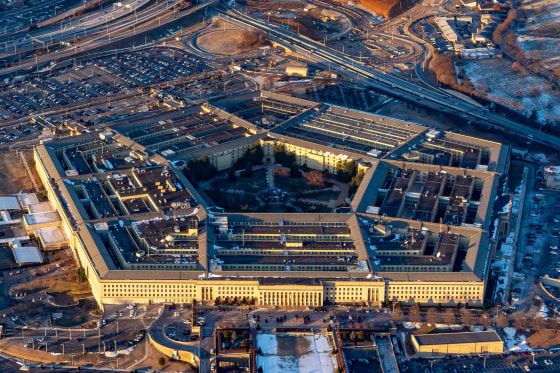
The Defense Department will remove media offices from the Pentagon after a federal judge sided with The New York Times in a lawsuit challenging limits on reporters’ access to the building, a department official announced Monday.
An area of the Pentagon known as “Correspondents’ Corridor” that reporters have used for decades to cover the U.S. military will close immediately, department spokesperson Sean Parnell said. Journalists will eventually be able to work from an “annex” outside the building, which he said “will be available when ready.” He offered no detail about how long that will take.
The Pentagon Press Association said the announcement “is a clear violation of the letter and spirit of last week’s ruling.”
“At such a critical time, we ask why the Pentagon is choosing to restrict vital press freedoms that help inform all Americans,” the association said.
The new policy is the latest dispute over press access to President Donald Trump’s administration, which has limited legacy media while boosting conservative and pro-Trump outlets.
The Times sued the Pentagon and Defense Secretary Pete Hegseth in December, claiming the agency’s new credentialing policy violated journalists’ constitutional rights to free speech and due process. Dozens of reporters had walked out of the building rather than agree to government-imposed restrictions on their work.
U.S. District Judge Paul Friedman in Washington, D.C., last week sided with the newspaper. He ordered the Pentagon to reinstate the press credentials of seven Times journalists and struck down some of the agency’s restrictions on news reporting.
Friedman said the “undisputed evidence” shows that the policy is designed to weed out “disfavored journalists” and replace them with those who are “on board and willing to serve” the government, a clear instance of illegal viewpoint discrimination.
Parnell said the Defense Department disagrees with the ruling and is pursuing an appeal. He said security concerns prompted restrictions on press access, a claim that journalists have rejected.
Under the latest Pentagon rules announced Monday, journalists will still have access to the Pentagon for press conferences and interviews arranged through the department’s public affairs team, but they will have to be escorted, Parnell wrote on social media.
The current Pentagon press corps is comprised mostly of conservative outlets that agreed to the policy. Reporters from outlets that refused to consent to the new rules, including from The Associated Press, have continued reporting on the military.
The AP, meanwhile, is awaiting a decision by a three-judge panel of the U.S. District Court of Appeals on its separate lawsuit against President Donald Trump’s administration. The AP contends that Trump’s White House team punished it by reducing its access to presidential events because the outlet hasn’t followed his lead in renaming the Gulf of Mexico.
This article is part of “Unaffordable America,” a series examining rising economic inequality in the U.S. and the policies that drive it.
How’s the economy?
Not bad if you’re rich.
Demand for luxury yachts and private jets is surging thanks to last year’s tax law. Sales of $10 million-plus mansions are booming as stocks hit new highs. And the wealthy and powerful will get to enjoy a new ballroom for galas at the White House.
What if you aren’t rich?
The typical American can’t afford the median-priced home. A new car is out of reach for many, with the average monthly payment exceeding $700. Food banks are seeing a growing number of people skipping meals because they can’t afford groceries, and more middle-class Americans are selling their plasma to make ends meet.
The divide between rich and poor in America is the widest it’s been in at least a generation — and growing. The amount of wealth held by the top 1% increased at more than double the rate of the bottom 90% in the first nine months of last year, according to Federal Reserve figures. At the very top, Elon Musk’s fortune is approaching that of legendary 19th-century businessman John D. Rockefeller when looked at as a share of the overall U.S. economy.
A variety of factors have shaped the struggles of everyday Americans and fueled the gains of the wealthy: The pandemic disrupted the housing market, making it harder to afford a home. Stocks have surged, driven by enthusiasm over AI. Manufacturing has waned, hiring has slipped and costs continue to rise.
President Donald Trump’s policies are amplifying these trends. One year into his second term, his administration has cut programs helping lower-income households while advancing policies benefiting the wealthy and corporations. He’s signed legislation to cut food stamps and Medicaid benefits and put new restrictions on low-income housing assistance and student loans. To cope with higher costs from tariffs, he has suggested Americans buy fewer dolls for their children.
Meanwhile, the Trump administration has given billions of dollars in tax cuts to corporations and the wealthy and loosened regulations on banks while easing rules around cryptocurrency, which he’s benefited from personally.
“Donald Trump talks a lot about the working class, his MAGA base is primarily working class, but if you look at the data, the working class is doing very badly in the second Trump administration,” said Robert Reich, a professor emeritus at the University of California, Berkeley, who led the Labor Department during the Clinton administration. “The real growth in the second Trump administration has been in corporate profits and in the wealth of the people at the top.”
Trump has defended his economic record, referring to concerns over affordability as a hoax and blaming weakness in the economy on Democrats. He’s dismissed numerous polls showing increasing economic anxiety, saying in his State of the Union address in February that he has ushered in a “golden age of America.” As evidence, he cited rising 401(k) balances, a drop in mortgage rates and lower gas prices — though gas prices have since spiked after his attacks on Iran disrupted the global flow of oil. The S&P 500, fueled by an AI boom, grew around 13% during the first year of his second term.
Trump’s allies argue that, while it may take time, all Americans will benefit from last summer’s tax cuts, with the average refund rising by around $1,000 this year, according to data cited by the White House. They also say that Trump’s still-evolving tariffs will eventually boost U.S. manufacturing jobs, which declined last year, noting announcements by foreign governments and corporations about plans to invest in the U.S.
A White House official also pointed to signs of improvement, including a lower rate of inflation than in the past several years and wages that are rising faster than inflation.
Some economists, including those who have served in past Republican administrations, have questioned whether those improvements will be enough to offset pressures elsewhere in the economy, including from a slowing job market, which shed 92,000 jobs in February across a broad range of industries.
For “Unaffordable America,” a yearlong series on the causes and effects of rising economic inequality, NBC News asked readers how they were faring and heard from hundreds of people. In interviews and written responses, many described struggling to find a job and afford higher food prices and health care costs, while others said they were benefiting from gains in the stock market and lower interest rates.
The clock that was ticking toward a dramatic new escalation in the Iran war may now be counting down to a deal that would end it.
That’s the latest stunning turn of events delivered by President Donald Trump’s social media account.
Trump announced Monday that he was postponing his threatened military strikes against Iranian power plants for at least five days, hours ahead of his deadline for Tehran to reopen the crucial Strait of Hormuz shipping route.
He said the U.S. and Iran were in “productive” talks toward a “complete and total” resolution of the war, though Tehran denied any direct talks.
Follow live updates
Now in its fourth week, the conflict has consumed the Middle East, pushed up the prices of energy and food and threatened the global economy with a far-reaching crisis.
Trump’s reversal delays what many feared would be a significant new escalation for civilians across the region.
Iran’s Foreign Affairs Ministry appeared to counter Trump’s version of events, though, saying in a statement published by the semiofficial news agency Mehr News that there was “no dialogue between Tehran and Washington.”
It said Trump’s delay was “part of efforts to reduce energy prices and buy time to implement his military plans” but acknowledged “there are initiatives from regional countries to reduce tensions.” Iranian state media said Trump had “backed down” after Iran vowed swift retaliation for any attacks on its energy infrastructure.
WASHINGTON — Senate Republicans are buzzing with optimism that they’ve found a viable path to reopen the Department of Homeland Security, four sources familiar with negotiations between the White House and Congress told NBC News.
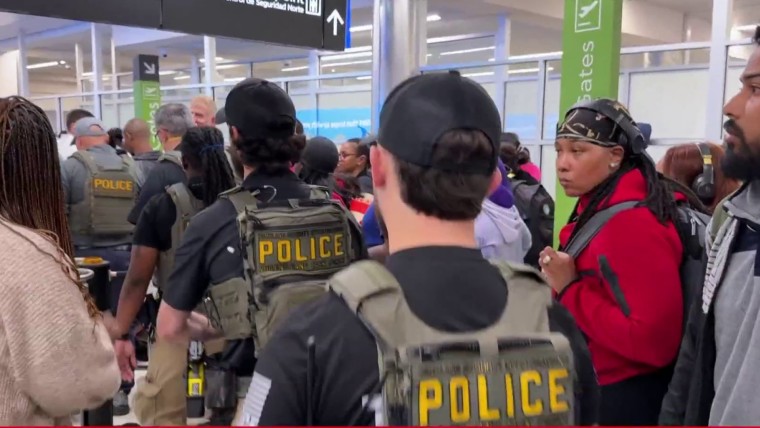
Republicans believe the framework could gain the support of President Donald Trump and secure enough Democratic support to quickly fund TSA and bring an end to long lines at airports.
Asked after a White House meeting whether Republicans have a solution, Sen. Katie Britt, R-Ala., said: “We do.”
The path involves funding all of DHS with the exception of immigration enforcement and deportation operations under ICE.
Once DHS is largely functioning again, Republicans would attempt to use the filibuster-proof “reconciliation” process to fund the rest of ICE and pass limited portions of the SAVE America Act, an election bill that is Trump’s top priority.
A White House official told NBC News that conversations are still ongoing but that it seems to be an acceptable solution.
Senate Majority Leader John Thune, R-S.D., also sounded upbeat about the proposal, without making any guarantees.
“I feel good about it,” he told reporters Monday night as the Senate wrapped up business for the day, adding that there are some particulars to nail down, but “I think we’re in a good spot.”
“All I can say is that the discussions have been very positive and productive and hopefully headed in the right direction,” he said.
The inclusion of some election provisions in the party-line bill could be the clincher that secures Trump’s support. The president has not yet commented publicly on the new plan.
One source with knowledge of the discussions warned that budgetary constraints would severely limit what provisions of the SAVE America Act the Senate can pass through reconciliation, with only Republican votes. That process is seen as the only viable path to pass any provisions in the SAVE America Act since all Democrats oppose the legislation.
One idea is to provide financial incentives to states to implement voter ID laws; another idea is to send money to DHS to “monitor elections” and conduct election security, the source said.
The burgeoning agreement to fund DHS comes after Trump rejected a similar idea pushed by Sens. John Kennedy, R-La., and Ted Cruz, R-Texas, in recent days.
The two-track plan would also need approval from House Republicans, who have a slim majority, before TSA can return to functionality. Some conservatives have already indicated skepticism online, but Trump’s endorsement, if he gives it, could go a long way toward securing enough support to pass it.
Democrats are open to the Republicans’ proposal but aren’t ready to endorse the plan until they see the specific text, a source familiar with the negotiations said.
Democrats also expect that they will still ask for additional concessions after seeing the concrete GOP proposal. While they are anxious to get DHS funding approved, with hourslong lines plaguing airports across the country and TSA workers quitting by the hundreds, they are still asking for specific restrictions from the administration on ICE operations before voting yes on any proposal.
Britt, who chairs the appropriations subcommittee responsible for writing bills to fund DHS, was seen Monday talking on the Senate floor with Senate Minority Leader Chuck Schumer, D-N.Y., and the top Democrat on the Appropriations Committee, Sen. Patty Murray, D-Wash.
As she left the Capitol late Monday, Britt said she’d be “working through the night” to try to “land this plane.”
Sen. Mike Lee, R-Utah, the chief sponsor of the SAVE America Act, warned that the bill as written is ineligible for the reconciliation process.
“It’s hard to imagine how the SAVE America Act could be passed through reconciliation,” Lee wrote Tuesday on X. “And by ‘hard’ I mean ‘essentially impossible.’”
If attempted, it would be an arduous process that is subject to unlimited amendments by Democrats, who could seek to force politically uncomfortable votes on Republicans facing voters in the fall elections, when control of the Senate is up for grabs.
Sen. Susan Collins, R-Maine, said Tuesday she has reservations about attempting to pass elements of the SAVE America Act, a bill that she has otherwise endorsed.
Delta Air Lines has cut off special services for members of Congress at airports, as the industry continues to feel the effects of the government’s failure to pay Transportation Security Administration workers.
On Tuesday morning, Delta issued a statement saying it would temporarily suspend specialty services for members of Congress “due to the impact on resources from the longstanding government shutdown.”
Members of Congress are given special treatment at airports, including expedited screening, escorts through airports to bypass long security lines, and dedicated reservation desks that, among other things, allow them to make last-minute changes.
TSA workers hit their third period without a paycheck since funding for parts of the Department of Homeland Security was halted because of an impasse between the White House and Congress over immigration enforcement and voting policies.
“Next to safety, Delta’s No. 1 priority is taking care of our people and customers, which has become increasingly difficult in the current environment,” the airline said in a statement.
NBC News has requested comment on the ongoing situation from other major airlines.
A Southwest Airlines spokesperson said the company is watching the lines closely at its stations and is “working with Customers who might miss flights as the result of unexpected delays. For those Customers, we do our best to accommodate them without penalty on the next flight to their destination,” the spokesperson said.
“Southwest continues to engage with our federal partners and joins the airline industry in urging Congress to fund the TSA and CBP without further delay,” the spokesperson said.
Two industry sources pointed at the amount of business that airlines have before Congress — one of them specifically cited periodic bailouts — in contending that the companies should avoid alienating or angering lawmakers as they push for a solution.
“Get through this,” said one airline lobbyist. “Don’t be doing things to members.”
Several airports have been hit with security lines that are so backed up they snake through check-in areas and have taken travelers over four hours or more to clear.
As of Monday, 10.93% of TSA employees across the country had called in sick or notified employers they couldn’t work their scheduled shifts — what is known as a callout rate.
In Houston’s William P. Hobby Airport as of Monday, the callout rate was 40.3% and in Hartsfield-Jackson Atlanta International Airport, it was 37.4%.
Meanwhile, TSA employees have said they are unable to pay bills and feed their families because they have not been paid. Airports, unions and charities have been holding food drives, meals and collections for TSA workers.
Johnny Jones, a member of American Federal Government Employees Council for TSA workers and a local unit that represents workers at Texas airports, noted in a press call on Tuesday that employees have contended with shutdowns on and off for months.
He said employees have told the union that they are paying fees of about $75 a day for late rent for apartments or other amounts for car loans. They also are charged bank fees when payments can’t be automatically paid from their accounts.
“Even after the [last] shutdown was over … the back pay doesn’t cover the fact that you just lost and have lost pay to all these fees,” Jones said.
AFGE national president Everett Kelley said Coast Guard workers also are doing their jobs, including rescues, not knowing whether they will have the money for groceries. He called it a “national embarrassment and a disgrace.”
And he warned members of Congress, “Don’t even think about going home for Easter recess while tens of thousands of American families are going without paychecks.”
On Monday, the administration deployed ICE agents to several airports to help with some security tasks, while trained TSA agents focus on screenings.
“People are not quitting the job because they want to quit the job. They love the job. They aren’t showing up to work because they have no choice,” said Hydrick Thomas, president of AFGTSA Council 100, which represents TSA officers.
One union leader said some TSA employees are selling plasma to pay for food, another said some members are now experiencing hunger.
Duncan McGuire, AFGE Region 5 vice president, said he’s been asked about the federal employees’ insurance policies regarding suicide.
“Some people are actually considering suicide as the only option to get their loved ones money when they can’t bring in anymore,” McGuire said.
Other union leaders said people can’t pay for child care, gas to get to work, copays for doctor’s appointments, medicine or food.
“This is what happens when the system is strained and staffing stretched too thin,” said Kelley said. “But instead of solving the problem of paying [transportation officers], the administration sent ICE agents to airports as replacement workers.”
If you or someone you know is in crisis, call or text 988, or go to 988lifeline.org, to reach the Suicide & Crisis Lifeline. You can also call the network, previously known as the National Suicide Prevention Lifeline, at 800-273-8255, or visit SpeakingOfSuicide.com/resources.
“TODAY” co-host Savannah Guthrie has opened up about the ongoing search for her mother, detailing the “agony” her family is going through more than seven weeks after her disappearance from her home in Arizona.
“Someone needs to do the right thing. We are in agony. We are in agony. It is unbearable,” Savannah Guthrie told Hoda Kotb in an interview previewed Wednesday that will be broadcast throughout the week.
Nancy Guthrie, 84, was reported missing by her family Feb. 1 from her home near Tucson, Arizona, after failing to attend a virtual church service at a friend’s house, authorities said. She was last seen the night before, around 9:45 p.m., after having dinner at her daughter Annie Guthrie’s home.
Watch Savannah Guthrie’s interview Wednesday, Thursday and Friday on “TODAY.”
Authorities have described the case as a possible kidnapping or abduction, but clues have been scarce.
“And to think of what she went through. I wake up every night in the middle of the night, every night,” Savannah Guthrie said. “And in the darkness, I imagine her terror. And it is unthinkable, but those thoughts demand to be thought. And I will not hide my face. But she needs to come home now.”
Days after their mother disappeared, Savannah Guthrie — flanked by her sister and her brother, Camron Guthrie — posted a tearful video on Instagram begging for more information from their mother’s possible kidnapper and saying her family is “ready to talk.”
In the video, the siblings also thanked the public for “the prayers for our beloved mom.”
“We feel them, and we continue to believe that she feels them, too,” they said.
Savannah Guthrie and Hoda Kotb during the interview.TODAY
Amid the ongoing search that includes both state and federal agencies, authorities released video of a person whom they have described as a suspect, showing a masked, armed figure appearing to tamper with a security camera on Guthrie’s Tucson-area home.
The FBI has said it is looking for a male who is 5 feet, 9 inches to 5 feet, 10 inches tall, with an average build. In the doorbell camera images, he was wearing a black Ozark Trail Hiker Pack 25-liter backpack.
That doorbell camera disconnected at 1.47 a.m. Feb. 1, according to a timeline previously released by the Pima County Sheriff’s Department.
Forensic testing showed that Guthrie’s blood was found on the porch of her home, authorities have said. Pima County Sheriff Chris Nanos has said that investigators may use genetic genealogy to try and identify the source of unknown DNA recovered from inside the house.
Nancy Guthrie.Pima County Sheriff’s Department
The Guthrie family has offered a $1 million reward for her recovery. Separately, the FBI has offered a reward of $100,000 for information leading to her recovery or to the arrest and conviction of anyone involved in her disappearance.
Earlier this month, Savannah Guthrie, who has been on leave from her position at the “TODAY” show, visited the studio in New York City and said she plans to return to her post.
“While she plans to return to the show on air, she remains focused right now supporting her family and working to help bring Nancy home,” a spokesperson for the show said in a statement.