Raptor Resources (RAP:AU) has announced Raptor Completes Further Drilling at Chester Project
Download the PDF here.
This post appeared first on investingnews.com

Raptor Resources (RAP:AU) has announced Raptor Completes Further Drilling at Chester Project
Download the PDF here.

Stefan Gleason, CEO of Money Metals, breaks down recent silver and gold dynamics, discussing trends in the US retail market, as well as backups at refineries.
While the situation has begun to normalize, he sees potential for further disruptions in the future.
Securities Disclosure: I, Charlotte McLeod, hold no direct investment interest in any company mentioned in this article.
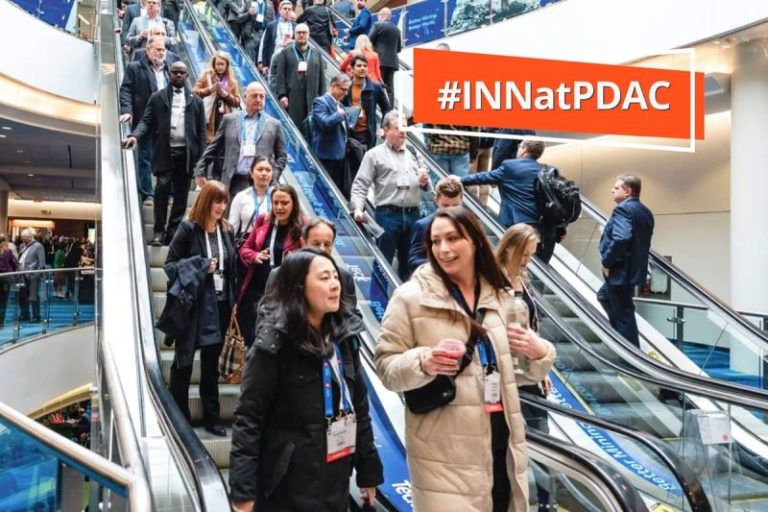
The annual Prospectors & Developers Association of Canada (PDAC) convention is returning this year from March 1 to 4, and it comes at a significant time for the global resource sector.
Precious metals prices are at historic highs, and countries around the world are increasingly recognizing the importance of the mining industry, especially when it comes to building out supply chains for critical minerals.
This year’s convention, which will bring together more than 27,000 attendees from over 125 countries, promises to touch on these key topics and more as diverse thought leaders take the stage.
Read on for her perspective on the industry and her tips and tricks for making the most of PDAC.
KR: Heading into PDAC, there is a positive outlook across the resource sector. Demand for minerals remains strong, and higher commodity prices supported investment through much of 2025. That momentum is showing up across the industry, with companies advancing work and actively assessing new opportunities.
At the same time, the global environment is becoming more competitive as countries work to secure the minerals needed to support their economies. That makes this an important time for the industry. The upcoming PDAC Convention provides the opportunity for leaders to step back from day-to-day tasks, assess where things are heading and have the kinds of conversations that help shape investment decisions.
KR: One of the clearest trends is the growing recognition of how essential minerals are to modern life, from infrastructure and manufacturing to emerging technologies.
That awareness continues to support interest in exploration and in building strong channels for future supply. Technology is also playing a larger role in how companies evaluate opportunities and make decisions, whether through robust geological data or improved digital tools that support exploration.
At the same time, responsible development remains front of mind. Companies understand that environmental performance and strong relationships with communities are fundamental to long-term success. Taken together, these trends point to an industry that is adapting and positioning itself for what comes next.
KR: PDAC 2026 will focus on what is needed to drive new investment and responsible mineral development. Capital markets, supply chains, technological innovation and the broader policy environment will all feature prominently because these aspects directly influence how work advances across the sector.
What makes the convention distinctive is the breadth of experience brought together across the event. Participants hear from industry leaders, technical experts and policymakers, but just as importantly, they have the opportunity to exchange perspectives with peers from around the world.
KR: PDAC 2026 will host more than 1,300 exhibitors, representing the largest trade show footprint in the convention’s history. That level of participation underscores the convention’s role as a global meeting place for the mineral industry, bringing together companies, governments and service providers to showcase expertise, connect with decision-makers and build relationships that support investment and growth.
The Keynote Program is a major draw, convening influential voices from across the global mining industry to discuss commodity outlooks, leadership, innovation and major discoveries.
We will hear from Gustavo Pimenta, CEO of Vale (NYSE:VALE), on accelerating the future of mining, and from Don Lindsay, director at BHP (ASX:BHP,NYSE:BHP,LSE:BHP) and retired CEO of Teck Resources (TSX:TECK.A,TECK.B,NYSE:TECK), on mining finance and leadership. Mikko Tepponen, digital officer at BHP, will explore how data and artificial intelligence are influencing decision-making, while Paul Bartos, former principal greenfields geologist at AngloGold Ashanti (NYSE:AU,JSE:ANG), will deliver the Discovery of the Year keynote.
Beyond the formal program, some of the most valuable moments happen in conversations throughout the convention, where introductions are made, partnerships take shape and new opportunities emerge.
KR: The pace of change across the resource sector is accelerating, and the decisions being made today will help shape supply for decades to come.
In that environment, opportunities to come together in person matter. PDAC creates space for thoughtful dialogue, informed debate and practical collaboration, the kinds of interactions that help turn ideas into action.
As global demand for minerals continues to grow, the importance of aligning investment, innovation and responsible development has never been clearer. PDAC remains focused on supporting those conversations and helping to position the industry for long-term success.
PDAC is widely regarded as a can’t-miss event for investors, executives and companies in the resource sector, and with over 1,300 exhibitors, this year’s convention is sure to be a dynamic experience.
If you’d like to attend PDAC, click here for detailed information on how to register.
You can also click here to sign up to receive the latest news and announcements from PDAC, or follow PDAC on X, LinkedIn, YouTube, Facebook and Instagram. We look forward to seeing you there!
Securities Disclosure: I, Charlotte McLeod, hold no direct investment interest in any company mentioned in this article.

Ni-Co Energy Inc. (“Ni-Co Energy” or the “Company”) is pleased to announce that it has filed a preliminary prospectus (the “Preliminary Prospectus”) with the securities regulatory authorities in the provinces of Québec, Ontario, Alberta, and British Columbia in connection with its proposed initial public offering (the “Offering”) of common shares of the Company (each a “Share”). The Offering is structured as a minimum offering of $1,500,000 (6,000,000 Shares) and a maximum offering of $3,000,000 (12,000,000 Shares), at a price of $0.25 per Share. The Company and the Agent (as defined herein) may jointly elect, at any time up to 48 hours prior to closing, to have up to 1,333,333 Shares issued as “flow-through” shares (each an “FT Share”) within the meaning of the Income Tax Act (Canada) at a price of $0.60 per FT Share.
The Offering will be conducted on a best-efforts basis by Research Capital Corporation (the “Agent”). The Company has granted the Agent an over-allotment option, exercisable in the Agent’s sole discretion, in whole or in part, at any time until and including 30 days following the closing of the Offering, to purchase up to 1,800,000 additional Shares (representing 15% of the Shares sold under the Offering) at the applicable offering price. Pursuant to an agency agreement, the Agent will receive: (i) a cash agency fee equal to 10% of gross proceeds (or 4% in respect of sales to President’s List purchasers, being purchasers identified by the Company, representing up to $1,500,000 in subscriptions); (ii) a corporate finance advisory fee of $50,000; and (iii) agent’s compensation warrants entitling the Agent to purchase up to 1,200,000 Shares at $0.25 per share for a period of 24 months from the closing date of the Offering.
The Preliminary Prospectus contains important information relating to the Company, its business, and the Offering, and remains subject to completion or amendment. Copies are available under Ni-Co Energy’s profile on SEDAR+ (www.sedarplus.ca). Completion of the Offering is subject to, among other things, the receipt of customary approvals, including regulatory approvals. There will not be any sale or any acceptance of an offer to buy the Shares until a receipt for the final prospectus has been issued by the relevant securities regulatory authorities in Canada.
The Shares have not been and will not be registered under the United States Securities Act of 1933, as amended (the “U.S. Securities Act”), or any state securities laws. Accordingly, the Shares may not be offered or sold within the United States or to U.S. persons (as defined in Regulation S under the U.S. Securities Act) unless registered under the U.S. Securities Act and applicable state securities laws, or pursuant to exemptions from the registration requirements thereof. This news release does not constitute an offer to sell or a solicitation of an offer to buy any securities of Ni-Co Energy in any jurisdiction in which such offer, solicitation, or sale would be unlawful.
Neither the TSX Venture Exchange nor its Regulation Services Provider (as that term is defined in the policies of the TSX Venture Exchange) accepts responsibility for the adequacy or accuracy of this release.
For Further Information, Please Contact
Alain Tremblay
President & Chief Executive Officer
info@nicoenergy.ca
819-485-1602
Forward-Looking Information
This news release may contain forward-looking information within the meaning of applicable securities laws, which reflects the Company’s current expectations regarding future events. Forward-looking information is based on a number of assumptions and is subject to a number of risks and uncertainties, many of which are beyond the Company’s control. Such risks and uncertainties include, but are not limited to, failure to complete the Offering and the factors discussed under “Risk Factors” in the Preliminary Prospectus. Actual results could differ materially from those projected herein. The Company does not undertake any obligation to update such forward-looking information, whether as a result of new information, future events or otherwise, except as expressly required under applicable securities laws.
Source
Click here to connect with Ni-Co Energy Inc. to receive an Investor Presentation

The era of “smooth globalization” is over, and mining is entering a more fragmented, politically charged phase defined by strategic nationalism, according to speakers at S&P Global’s latest webinar.
Jason Holden, who opened the “State of the Market: Mining Q4 2025” session with a macro overview, said the industry is operating in a world increasingly shaped by supply chain security and state intervention.
“For decades we operated under a model of frictionless trade,” said Holden, a senior mining analyst at the firm. “That era is over. We’ve entered a world of strategic re-nationalization.”
While the base economic outlook remains resilient, with moderate growth and easing headline inflation, Holden warned that “sticky core inflation remains stubbornly high.”
For mining companies, that has two major implications: higher capital costs and less room for the easy-money valuation surges seen in past cycles. Central banks, led by the US Federal Reserve, are no longer aggressively tightening, but are also not on a clear-cut path to interest rate cuts.
“We’re no longer on a predictable path of easing,” Holden explained to listeners. “The market is now focused on if and when cuts might resume.” At the same time, geopolitical disputes are increasingly spilling into trade policy. The conversation around critical minerals, he noted, has shifted decisively.
“It’s no longer just about economics,’ said Holden. “It’s explicitly framed as national security.”
That shift is driving greater government intervention, subsidies, capital screening and “friend-shoring,” where materials are sourced from politically aligned nations.
Nowhere has geopolitical risk been more visible than in gold.
The metal surged to fresh highs in early 2026 after setting 40 new records in 2024 and 53 more in 2025, a pace not seen since 1979. The price briefly pushed beyond US$5,500 per ounce at the start of the year.
“The message from this price action is unmistakable,” Holden said. “In an uncertain world, the market is paying a premium for insurance, and gold is the ultimate safe asset.”
While short-term flashpoints helped fuel the rally, the structural driver has been central bank buying. Since sanctions in 2022 prompted reserve managers to rethink US dollar exposure, official sector purchases have accelerated.
“The sustained buying from central banks is the real engine behind the rally,” Holden said.
S&P’s base case sees gold averaging US$4,247 per ounce in 2026, with upside potential toward US$6,000 by 2027 in a more bullish scenario.
Luiz Amaral from S&P’s exploration team said copper ended 2025 on strong footing, with London Metal Exchange (LME) prices reaching US$12,500 per metric ton in December.
Supply-side tightness, a weaker US dollar and copper’s growing role in electrification supported prices. The US decision to formally list copper as a critical mineral reinforced its strategic importance.
S&P has lifted its 2026 copper price forecast to US$11,400 per metric ton, projecting a 543,000 metric ton concentrate deficit next year. However, the refined market is expected to move into surplus later in the decade as new smelter capacity ramps up. Longer term, the concentrate picture darkens again.
“Our base case shows a 3 million metric ton shortfall by 2036,” Amaral said.
Nickel’s recent rally, by contrast, has been driven more by policy than fundamentals. The price broke above US$18,000 per metric ton in January after Indonesia reduced its 2026 production quota.
“The market is responding emotionally to policy updates,” Amaral said, noting that despite the rally, the broader market remains in surplus and LME inventories are building.
Lithium prices have also staged a sharp rebound, rising 57 percent in China between mid-December and mid-January on renewed demand optimism and supply concerns. Yet S&P expects the market to remain oversupplied for most of the decade, with deficits not emerging until the early 2030s.
New supply from Australia, Latin America and China continues to outpace demand growth, even as electric vehicles account for roughly 75 percent of lithium consumption through 2035.
At the mine level, gold producers are enjoying some of the strongest margins in years, with prices rising faster than all-in sustaining costs. Silver has outperformed even more dramatically, climbing 154 percent in 2025 versus gold’s 71 percent gain, compressing the gold-silver ratio to below 70.
Battery metals face a tougher backdrop.
“Lithium and nickel continue to face margin pressure as prices lag elevated costs amid oversupply,” said Monica Ramirez from S&P’s mine economics and emissions team.
Across 12 metals analyzed, S&P sees a structurally higher cost environment emerging due to inflation, energy expenses and maturing ore bodies. Precious metals retain the strongest buffers, while copper remains positive but increasingly sensitive at the upper end of the cost curve.
Despite record prices in some commodities, exploration spending tells a more cautious story.
Global exploration budgets totaled US$12.4 billion in 2025, down 1 percent year-on-year. Adjusted for inflation, spending has slipped back to levels last seen nearly two decades ago.
“Gold continues to dominate,” Amaral said, accounting for roughly half of global exploration budgets. Lithium, once a standout, saw budgets fall nearly 50 percent amid weaker prices.
More concerning is the structural shift away from grassroots exploration.
In the mid-1990s, two-thirds of spending targeted generative programs. Today, that share has fallen to a record low as companies prioritize near-mine and late-stage work.
“We are underinvesting at the very front end of the supply chain,” Amaral warned. Without renewed grassroots spending, the long-term discovery pipeline could suffer.
Mining M&A remained active into late 2025, though deal value normalized after earlier mega-mergers. Transaction value fell 45 percent quarter-on-quarter to US$16.1 billion, but deal count rose to its highest level in more than five years.
Gold led activity, with buyers focusing on large-scale, long-life assets in low-risk jurisdictions.
“Gold M&A today is no longer about simple volume growth,” Ramirez emphasized to viewers. “It’s about asset quality, jurisdictional safety and durable cashflow.”
As the webinar made clear, mining is navigating a landscape defined by geopolitical risk, tighter capital and structural cost pressures. For companies able to secure high-quality assets and control costs, opportunities remain, but the margin for error is narrowing.
Securities Disclosure: I, Georgia Williams, hold no direct investment interest in any company mentioned in this article.
Here’s a quick recap of the crypto landscape for Monday (February 23) as of 9:00 p.m. UTC.
Get the latest insights on Bitcoin, Ether and altcoins, along with a round-up of key cryptocurrency market news.
Bitcoin (BTC) was priced at US$64,409.84, down by 4.4 percent over the last 24 hours.
Bitcoin price performance, February 23, 2026.
Chart via TradingView.
XS.com senior market analyst Linh Tran suggested that the medium-term uptrend is limited without major catalysts. She predicts that Bitcoin will fluctuate between US$65,000 support and US$70,000 resistance; however, if current pressures persist, there is a risk of Bitcoin retesting the US$60,000 low, which could trigger a deeper decline.
Software stocks slipped alongside a further decline in crypto prices after Anthropic said its Claude platform can help ‘break the cost barrier to COBOL modernization,’ a high-level, compiled computer programming language that the firm says ‘runs in production every day, powering critical systems in finance, airlines, and government.’
Ether (ETH) was priced at US$1,860.34, down by 4.1 percent over the last 24 hours.
Some parts of the DeFi ecosystem have benefited from the chaos of Bitcoin’s sudden price drop in January, which liquidated billions of dollars’ worth of positions. A DeFi project called Yield Basis, which helps people trade Bitcoin and Ether through its liquidity pools, says it’s handled US$769 million in trades since the beginning of 2026, with more than half occurring after January 28, when crypto prices began swinging wildly.
According to a recent report, the protocol has collected US$12.15 million in fees since it launched its v2 pools in November 2025, compared to US$5.31 million worth of tokens it paid out as rewards, leaving about US$6.84 million in net profit for the users providing liquidity and holding the project’s tokens.
An open-source AI agent framework known as OpenClaw has inadvertently become the center of a crypto controversy. The project, built to power autonomous agents capable of browsing the web and executing complex tasks, was briefly rebranded amid a naming dispute before scammers launched a fake Solana-based token using its former branding.
The token’s market capitalization surged to roughly US$16 million within hours before collapsing more than 90 percent after developer Peter Steinberger disavowed any connection.
Steinberger publicly rejected the speculation, writing on X: “To all crypto folks: please stop pinging me, stop harassing me. I will never do a coin. Any project that lists me as coin owner is a SCAM.”
Tether’s USDT stablecoin is signaling liquidity strain reminiscent of the market turmoil following the FTX collapse.
According to CryptoQuant, the 60 day change in USDT supply has dropped to negative US$3 billion, which marks only the second time such a contraction has occurred. Bloomberg reported that USDT is on pace for its steepest monthly supply decline since December 2022, already shrinking by roughly US$1.5 billion in February alone.
Large-scale redemptions typically suggest institutions or major holders are pulling capital out of the crypto ecosystem rather than simply rotating between tokens. The last comparable contraction came as Bitcoin fell toward US$16,000 during the FTX crisis before stabilizing and beginning a multi-year recovery.
Securities Disclosure: I, Meagen Seatter, hold no direct investment interest in any company mentioned in this article.
Securities Disclosure: I, Giann Liguid, hold no direct investment interest in any company mentioned in this article.

Aurum Resources (AUE:AU) has announced Boundiali Resource Grows to 3Moz – Indicated Up 49%
Download the PDF here.
Brightstar Resources (BTR:AU) has announced High-grade assays incl 4m @ 26.7g/t Au in Sandstone drilling
Download the PDF here.
Gold and silver prices experienced declines early in the week, but ended higher.
The yellow metal closed the week at US$5,111.88 per ounce, while silver finished at US$84.65 per ounce, buoyed by reignited tariff uncertainty out of the US.
On Friday (February 20), the US Supreme Court stuck down tariffs put in place by President Donald Trump using the International Emergency Economic Powers Act. He quickly responded by announcing a new 10 percent global tariff and then increasing it to 15 percent, ramping up trade tensions.
Earlier in the week, Wednesday (February 18) brought the release of the US Federal Reserve’s latest meeting minutes, which show that although officials largely agreed with the January decision to hold interest rates steady, they aren’t aligned about the path forward as 2026 continues.
What’s received more attention is the Lunar New Year holiday.
Most Asian markets are closed for the occasion, and will reopen next week. I asked Ole Hansen of Saxo Bank about the significance of the closure, and he said that in his view, the more important question is what will happen when they’re back in business next week.
Here’s how he thinks that could play out:
‘I think … if they come back to more or less unchanged prices, they will see that probably as a buying opportunity. Simply — well, they probably hope that they might be able to pick it up cheaper in the absence. But if we can manage to hold these levels, then there could be a positive story building as we as we see China reopen.’
Hansen is bullish on gold this year, saying he sees it reaching US$6,000 in the next 12 months.
But interestingly, he has a different take on silver — he thinks the white metal’s upside could be limited by demand-side factors like substitution and higher supply from scrap material.
‘Gold over time can go to US$10,000, it can go to US$20,000 — it’s a monetary metal, which doesn’t really depend on demand from areas where demand could be negatively impacted with the price.
‘Silver hasn’t got that luxury. And that basically means if gold moves towards US$6,000, I would believe that — I would think that silver, at some point, will struggle to keep up, and we will see basically gold relatively outperform silver. But when that point, when that time comes, I can’t see. Again it’s very unclear, especially given the speculative demand, which can carry on for a while longer.’
I also heard this week from Christopher Aaron of iGold Advisor and Elite Private Placements, who has a much brighter outlook for silver — he said given that the metal has just broken out of a 45 year consolidation period, it still has much further to go:
‘Now that whole process, the 45 year consolidation breakout and now coming back, that is — for a number of people here — that is going to be a once-in-a-lifetime breakout. We’re talking a multi-generational breakout happening in silver right now. And it’s really important to — I mean, the bottom line is this: After 45 years of consolidation, a market doesn’t end just two months after a breakout and then kind of withering and petering out for the next 45 years. Again, that’s not how 45 year breakouts happen when we look back.’
Ultimately Aaron sees US$250 to US$350 as a reasonable price level for silver.
The latest TSX Venture 50 list was released on Wednesday, with gold and silver juniors dominating. In fact, of the companies included, only three fall outside the mining sector.
The list ranks TSXV companies’ annual performance by market cap growth, share price performance and Canadian consolidated trading value. Taking the top spot was Santacruz Silver Mining (TSXV:SCZ,NASDAQ:SCZM), which had an impressive share price increase of over 1,100 percent.
As a group, the companies on the list delivered a share price increase of 431 percent.
We’ll have to wait and see whether these types of gains are repeated — or exceeded — in 2026, but the list definitely underscores the strength in gold and silver prices, and shows that their momentum is boosting not just the majors, but also the juniors.
On the M&A side, BHP (ASX:BHP,NYSE:BHP,LSE:BHP) has entered into a long-term streaming agreement with Wheaton Precious Metals (TSX:WPM,NYSE:WPM).
Under the deal, which was signed by subsidiaries of BHP and Wheaton, BHP will receive an upfront payment of US$4.3 billion in exchange for the delivery of silver from the Peru-based Antamina mine, plus ongoing payments when metal is delivered. According to BHP, this is the most valuable streaming transaction to date based on upfront consideration received.
Antamina is a joint venture between commodities giants BHP, Glencore (LSE:GLEN,OTCPL:GLCNF), Teck Resources (TSX:TECK.A,TECK.B,NYSE:TECK) and Mitsubishi (TSE:8058,OTCPL:MSBHF), and Wheaton already has a silver stream in place with Glencore. Once the BHP arrangement closes, Wheaton will receive a combined 67.5 percent of the mine’s silver.
Securities Disclosure: I, Charlotte McLeod, hold no direct investment interest in any company mentioned in this article.
Locksley Resources (LKY:AU) has announced LKY Commences Diamond Drilling at Desert Antimony Mine
Download the PDF here.