Zeus Resources Limited (ZEU:AU) has announced Casablanca Geophysics Highlights Antimony Targets at Depth
Download the PDF here.
This post appeared first on investingnews.com


Zeus Resources Limited (ZEU:AU) has announced Casablanca Geophysics Highlights Antimony Targets at Depth
Download the PDF here.
James Henry Anderson, senior market analyst at SD Bullion, discusses the factors behind gold and silver’s recent price moves, saying a restructuring of the system is taking place.
‘We’re not that far in terms of the psychology that it requires to really break and get really massive flows, and people really afraid of what that currency’s value is going to be,’ he said.
Securities Disclosure: I, Charlotte McLeod, hold no direct investment interest in any company mentioned in this article.
Tackling soaring inflation in the US is the job of the country’s central bank, known as the US Federal Reserve, or the Fed.
The US Fed has consistently made headlines in recent years due to its role in managing inflation through the use of interest rate changes.
Between mid-2021 and 2023, the US economy experienced high inflation, peaking at 8.5 percent in July 2022. The Fed has helped bring it largely under control through careful interest rate increases during that time period.
According to US Labor Department data, the inflation rate in July 2025 was 2.7 percent. As this is still above the Fed’s target of 2 percent, the bank has been slow to lower interest rates so far.
It’s important for any investor to understand the ins and outs of the Fed’s role in US monetary policy and interest rates, as its decisions have a strong impact on US and global markets as well as precious metals prices.
The Federal Reserve, often referred to as the Fed, is the US central bank and monetary authority. It was established by the Federal Reserve Act in 1913, which gave the Fed responsibility for setting monetary policy in response to the 1907 Banker’s Panic.
“The Panic was caused by a build-up of excessive speculative investment driven by loose monetary policy,” explains Investopedia. “Without a government central bank to fall back on, U.S. financial markets were bailed out from the crisis by personal funds, guarantees, and top financiers and investors, including J.P. Morgan and John D. Rockefeller.”
Although it is an independent government agency, the Fed is accountable to the public and US Congress. The current Fed Chair is Jerome Powell, an investment banker who served as assistant secretary and undersecretary of the Department of the Treasury under former President George H.W. Bush. Powell took the helm at the Fed in 2018.
The Fed has a dual mandate: to achieve stable prices and stable employment. The government agency also provides banking services and is the main regulator of the nation’s banks. In times of economic turmoil, the Fed also acts as a lender of last resort.
It’s important to note that while the Fed manages the national monetary policy and regulates the financial system in the US, its actions also have a powerful influence on the global economy.
The Federal Open Market Committee (FOMC) is the Fed’s monetary policy-making body. The 12 members of the FOMC are the seven members of the board of governors of the Federal Reserve System, the president of the Federal Reserve Bank of New York and four of the 11 reserve bank presidents who rotate through the positions for one year terms.
For more than a century, the Fed has been tasked with keeping a watchful eye on any structural risk to monetary stability in the US financial system, and rising inflation and high unemployment are two of the biggest threats to monetary stability.
In the face of rising inflation, the Fed raises interest rates in the hopes of reigning in rapidly rising prices by curbing demand. When interest rates are higher, borrowing money becomes more expensive, which ultimately slows consumer spending and curtails corporate growth.
During times of slow economic growth, the Fed lowers interest rates in order to stimulate the economy. Lower interest rates in effect lower the cost of borrowing and investing for both businesses and individuals.
The Fed’s goal is to keep inflation around its target rate of 2 percent, and unemployment around 4 to 4.5 percent.
“The principle of inflation targeting is based on the belief that long-term economic growth is best achieved by maintaining price stability, and price stability is achieved by controlling inflation,” according to Investopedia.
Inflation is calculated through factoring in price changes of a weighted basket of goods and services, as well as housing.
For example, the COVID-19 pandemic that began in 2020 caused a surge of inflation in the US and globally.
Prices of goods were driven higher by a mix of factors, including significant supply chain disruptions hurting product availability, and economic stimulus packages increasing spending power and demand.
Additionally, the lasting switch to work-from-home for many led to increased demand for homes with space for offices, driving up housing prices. As housing is the highest weighted factor when calculating US inflation, this was one of the biggest drivers of inflation in the 2020s.
Global supply chains have since been hampered by factors like Russia’s ongoing war in Ukraine and growing conflict in the Middle East. There is also the uncertainty generated from the global wave of tariffs sparked by US President Donald Trump’s trade policies, which will raise the cost of goods purchased by American consumers.
This global supply and demand imbalance has led to rising prices for a wide range of consumer products, from gas to groceries. The result has been a loss in purchasing power for US consumers as their dollar needs to stretch further.
In an effort to fight inflation, the American central bank consistently increasing rates from its March 2022 meeting with an initial boost of 25 basis points. Its hike of 75 basis points in June 2022 was at the time its largest since 1994, and it was followed by another three hikes of this magnitude in 2022.
The Fed raised interest rates by 5.25 percentage points between March 2022 and July 2023 before holding at 5.50 percentage points for more than a year. The Fed’s current rate cutting cycle began with a .50 drop in September 2024.
|
_FOMC meeting date___ |
Rate hike in basis points_ |
Target federal funds rate_ |
|
January 25 to 26, 2022 |
N/A |
0 to 0.25 percent |
|
March 15 to 16, 2022 |
+25 |
0.25 to 0.5 percent |
|
May 3 to 4, 2022 |
+50 |
0.75 to 1 percent |
|
June 14 to 15, 2022 |
+75 |
1.5 to 1.75 percent |
|
July 26 to 27, 2022 |
+75 |
2.25 to 2.5 percent |
|
September 20 to 21, 2022 |
+75 |
3.0 to 3.25 percent |
|
November 1 to 2, 2022 |
+75 |
3.75 to 4.0 percent |
|
December 13 to 14, 2022 |
+50 |
4.25 to 4.5 percent |
|
January 31 to February 1, 2023 |
+25 |
4.5 to 4.75 percent |
|
March 21 to 22, 2023 |
+25 |
4.75 to 5.0 percent |
|
May 2 to 3, 2023 |
+25 |
5.0 to 5.25 percent |
|
July 25 to 26, 2023 |
+25 |
5.25 to 5.5 percent |
The FOMC holds eight meetings per year, typically scheduled every seven weeks. According to the Fed’s website, during these meetings the FOMC “reviews economic and financial conditions, determines the appropriate stance of monetary policy, and assesses the risks to its long-run goals of price stability and sustainable economic growth.”
As of August 21, three more Fed meetings are scheduled for 2025, and market participants will be closely watching these events.
It’s too soon to know what exactly the Fed will do at these remaining meetings, but its July statement gives some clues — in it, the central bank said that it ‘seeks to achieve maximum employment and inflation at the rate of 2 percent over the longer run. Uncertainty about the economic outlook remains elevated. The Committee is attentive to the risks to both sides of its dual mandate.’
At the time, the Federal Reserve decided to hold rates steady at 4.25 to 4.5 percent for the fifth straight meeting as inflation remained elevated and job numbers appeared strong. The decision placed downward pressure on the gold price as a better economic outlook dimmed demand for the safe-haven asset.
While the current tariff war between the US and many of its major trading partners has some calling for a return to higher inflation, weak unemployment figures and other economic data published since the last meeting has caused others to consider the potential for a recession before the end of the year.
‘At present, the latest economic data have been sufficiently mixed as to support either policy alternative,’ according to analysts writing for the Peterson Institute for International Economics. ‘The case for a rate cut is driven by the pronounced slowing in job creation, the failure of inflation to respond much to the initial tariff increases, and the fact that most FOMC participants view the current stance of policy as slightly tighter than neutral.’
Securities Disclosure: I, Melissa Pistilli, hold no direct investment interest in any company mentioned in this article.

Brightstar Resources (BTR:AU) has announced North American Mining Conferences Presentation
Download the PDF here.

Jindalee Lithium (JLL:AU) has announced JLL Signs Non-Binding LOI to List McDermitt on a US Exchange
Download the PDF here.

Jindalee Lithium (JLL:AU) has announced Reinstatement to Official Quotation
Download the PDF here.
American Uranium (AMU:AU) has announced Snow Lake Completes AMU Investment
Download the PDF here.

Metro Mining (MMI:AU) has announced Operational Update
Download the PDF here.

Shares of Kenvue fell more than 10% on Friday after a report that Health Secretary Robert F. Kennedy Jr. will likely link autism to the use of the company’s pain medication Tylenol in pregnant women.
HHS will release the report that could draw that link this month, The Wall Street Journal reported on Friday.
That report will also suggest a medicine derived from folate — a water-soluble vitamin — can be used to treat symptoms of the developmental disorder in some people, according to the Journal.
In a statement, an HHS spokesperson said, “We are using gold-standard science to get to the bottom of America’s unprecedented rise in autism rates.”
“Until we release the final report, any claims about its contents are nothing more than speculation,” they added.
Tylenol could be the latest widely used and accepted treatment that Kennedy has undermined at the helm of HHS, which oversees federal health agencies that regulate drugs and other therapies. Kennedy has also taken steps to change vaccine policy in the U.S., and has amplified false claims about safe and effective shots that use mRNA technology.
Kennedy has made the disorder a key focus of HHS, pledging in April that the agency will “know what has caused the autism epidemic” by September and eliminate exposures. He also said that month that the agency has launched a “massive testing and research effort” involving hundreds of scientists worldwide that will determine the cause.
In a statement, Kenvue said it has “continuously evaluated the science and [continues] to believe there is no causal link” between the use of acetaminophen, the generic name for Tylenol, during pregnancy and autism.
The company added that the Food and Drug Administration and leading medical organizations “agree on the safety” of the drug, its use during pregnancy and the information provided on the Tylenol label.
The FDA website says the agency has not found “clear evidence” that appropriate use of acetaminophen during pregnancy causes “adverse pregnancy, birth, neurobehavioral, or developmental outcomes.” But the FDA said it advises pregnant women to speak with their health-care providers before using over-the-counter drugs.
The American College of Obstetricians and Gynecologists maintains that acetaminophen is safe during pregnancy when taken as directed and after consulting a health-care provider.
Some previous studies have suggested the drug poses risks to fetal development, and some parents have brought lawsuits claiming that they gave birth to children with autism after using it.
But a federal judge in Manhattan ruled in 2023 that some of those lawsuits lacked scientific evidence and later ended the litigation in 2024. Some research has also found no association between acetaminophen use and autism.
In a note on Friday, BNP Paribas analyst Navann Ty said the firm believes the “hurdle to proving causation [between the drug and autism] is high, particularly given that the litigation previously concluded in Kenvue’s favor.”
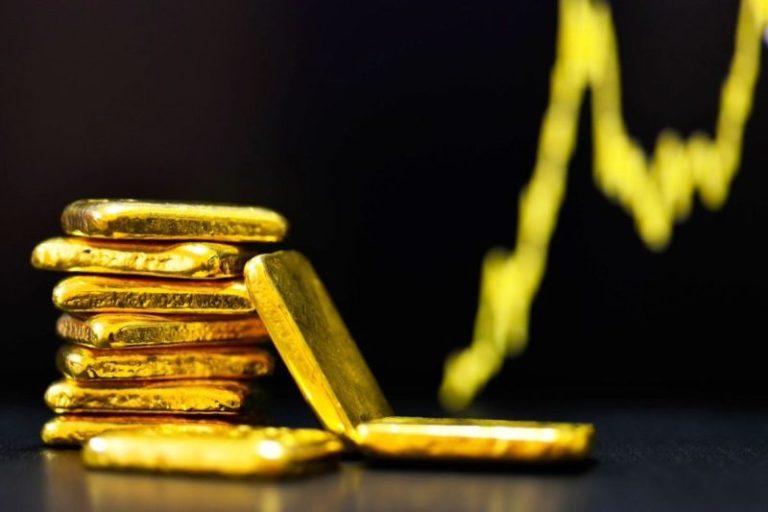
Gold’s record-breaking rise continued on Friday (September 5), with the price approaching US$3,600 per ounce.
After spending the summer months consolidating, the yellow metal began breaking out this week. It pushed through US$3,500 on Tuesday (September 5) and then kept rising, coming within less than a dollar of US$3,600 on Friday.
Gold price chart, August 29, 2025, to September 5, 2025.
Expectations that the US Federal Reserve will lower interest rates when it meets later this month are part of what’s driving gold’s move. The central bank hasn’t made a cut since December 2024, but comments made by Fed Chair Jerome Powell in a recent Jackson Hole, Wyoming, speech stoked anticipation among market participants.
US jobs data for August, released on Friday by the Bureau of Labor Statistics (BLS), has essentially locked in a downward move in rates. Nonfarm payrolls were up by 22,000, significantly lower than the 75,000 expected by economists.
Meanwhile, the country’s unemployment rate came in at 4.3 percent.
The report is the first to be released since US President Donald Trump fired Erika McEntarfer, former commissioner at the BLS. She was ousted after July jobs data came in lower than expected, and after major downward revisions to May and June jobs numbers. The latest BLS report also brought revisions — the July number was boosted by 6,000 to come in at 79,000, but June stands at a net loss of 13,000 after a downward revision of 27,000.
CME Group’s (NASDAQ:CME) FedWatch tool now shows a 90.2 percent probability of a 25 basis point rate cut in September, with a 9.8 percent probability of a 50 basis point reduction.
Target rate probabilities for September 17, 2025, Fed meeting.
Chart via CME Group.
Bond market turmoil also helped move the gold price this week.
Yields for 30 year US bonds rose to nearly 5 percent midway through the period, their highest level since mid-July, on the back of a variety of concerns, including tariffs, inflation and Fed independence.
Globally the situation was even more tumultuous, with 30 year UK bond yields reaching their highest point since 1998; meanwhile, 30 year bond yields for German, French and Dutch bonds rose to levels not seen since 2011.
In Japan, 30 year bond yields hit a record high.
Looking at gold’s path forward, experts agree that its prospects are bright, although what kicks off its next leg and how high it could go during this cycle remain to be seen. While rates are in focus as a key price mover right now, other potential drivers include a stock market correction and the return of western investors.
Watch six experts share their thoughts on gold’s next price trigger.
Elsewhere in the precious metals space, silver was trading at the US$41 per ounce level, down from its peak of around US$41.30 seen earlier in the week, but still at highs not seen since 2011.
Securities Disclosure: I, Charlotte McLeod, hold no direct investment interest in any company mentioned in this article.