Locksley Resources (LKY:AU) has announced 400% Increase in Antimony Target Strike Length
Download the PDF here.
This post appeared first on investingnews.com

Locksley Resources (LKY:AU) has announced 400% Increase in Antimony Target Strike Length
Download the PDF here.

Oil prices weakened in Q3 as global supply outpaced demand and inventories swelled.
Brent crude fell 1.7 percent to end the quarter at US$65.90 per barrel, while West Texas Intermediate dropped to US$62.33. Deloitte’s latest energy report attributes the decline to rising stockpiles and OPEC+’s early decision to unwind production cuts, adding 1.37 million barrels per day in October.
The US Energy Information Administration noted supply exceeded demand by 1.6 million barrels per day between May and August, pointing to continued stock builds ahead.
“OPEC+ discipline is still somewhat unpredictable — its production signals are becoming more tactical rather than structural,” Isaev wrote. “On the other hand, US shale is adjusting to price signals with a focus on capital restraint instead of just ramping up volume. LNG shipments to Europe and Japan are turning into geopolitical tools, not just simple commercial agreements.”
As for how that could affect energy stocks, he stated, ‘The advantage will go to those (companies) who can skillfully navigate this complexity, foresee critical turning points, and invest their capital with both accuracy and creativity.’
Despite the market volatility, the five top-performing oil and gas stocks on the TSX and TSXV have seen share price growth over Q3 2025. All year-to-date performance and share price data was obtained on October 9, 2025, using TradingView’s stock screener, and oil and gas companies with market caps above C$10 million at that time were considered.
Year-to-date gain: 156.25 percent
Market cap: C$221.83 million
Share price: C$0.205
Falcon Oil & Gas is an international oil and gas company specializing in the exploration and development of unconventional oil and gas assets, with interests in assets in Australia, South Africa and Hungary.
The company has a 22.5 percent interest in the Beetaloo joint venture, with Tamboran Resources (NYSE:TBN,ASX:TBN) owning the remainder.
On September 30, Falcon announced it entered into a definitive agreement to be wholly acquired by joint venture partner Tamboran. The combination will create a company with roughly 2.9 million net prospective acres across Australia’s Beetaloo Basin and a projected market cap of US$500 million.
The deal is expected to close in Q1 2026.
Falcon’s share price spiked to a year-to-date high of C$0.21 on October 1.
Year-to-date gain: 37.78 percent
Market cap: C$63.58 billion
Share price: C$123.56
Calgary-based Imperial Oil is a prominent Canadian energy company involved in the exploration, production, refining and marketing of petroleum products. With a history spanning over 140 years, Imperial operates diverse assets across Canada, including oil sands, conventional crude oil and natural gas assets.
In early August, Imperial released its Q2 2025 results, reporting net income of C$949 million, down from C$1.29 billion in Q1, as weaker upstream realizations and downstream margin capture weighed on results.
Despite lower earnings, the company posted its strongest Q2 upstream production in over three decades, averaging 427,000 barrels of oil equivalent (boe/d), led by record output at Kearl. Refinery capacity utilization averaged 87 percent amid major turnaround work
During the quarter, Imperial also launched Canada’s largest renewable diesel facility, located in Alberta, and returned C$367 million to shareholders through dividends.
Shares of Imperial climbed through much of Q2 and Q3, and reached a year-to-date high of C$130.94 on September 16.
Year-to-date gain: 30.91 percent
Market cap: C$3.49 billion
Share price: C$7.03
Athabasca Oil is focused on developing thermal and light oil assets within Alberta’s Western Canadian Sedimentary Basin. The company has established a substantial land base with high-quality resources. Its light oil operations are managed through its private subsidiary, Duvernay Energy, in which the company holds a 70 percent equity interest.
On July 24, Athabasca Oil reported its Q2 2025 results, highlighted by steady production and continued shareholder returns. The company produced an average of 39,088 boe/d, up 4 percent year-over-year. It generated C$127.6 million in adjusted funds flow during the quarter, down from C$165.75 in Q2 2024.
Capital spending totaled C$73 million, largely directed to expanding the company’s cornerstone Leismer project.
Additionally, Athabasca has repurchased 24 million shares year-to-date, reinforcing its “commitment to returning all thermal oil free cash flow to shareholders in 2025.” Its free cash flow from the segment totaled C$66 million in Q2.
A modest uptick in benchmark crude prices supported a stock bump for Athabasca Oil during the second week of October. Shares reached a year-to-date high of C$7.18 on October 8.
Year-to-date gain: 28.68 percent
Market cap: C$1.81 billion
Share price: C$18.80
Headquartered in Calgary, Parex Resources is a Colombia-focused oil and gas producer with six oil-producing assets and one non-operational asset.
Parex’s Q2 results, released on July 30, highlighted an average output rate of 42,542 boe/d, with July production rising to 44,450 boe/d. The company said it is on track to meet its full-year guidance of 43,000 to 47,000 boe/d.
Parex also announced a third quarter dividend of C$0.385 per share.
‘As we enter the second half of the year, strong near-field exploration results in the Southern Llanos, combined with the ramp-up in development drilling, are expected to drive a steady step-up in production through year-end,’ the company stated.
On October 1, the company shared a production update, reporting it averaged 44,000 boe/d in Q3.
Shares of Parex climbed throughout the Q3 to a year-to-date high of C$19.68 on September 25.
Year-to-date gain: 27.4 percent
Market cap: C$7.63 billion
Share price: C$30.50
MEG Energy is an energy company solely focused on in-situ thermal oil production in the southern Athabasca oil region of Alberta, Canada. Utilizing innovative enhanced oil recovery projects, including steam-assisted gravity drainage extraction methods, the company aims to increase oil recovery responsibly while reducing carbon emissions.
In May, Strathcona Resources (TSX:SCR) made an unsolicited C$4.1 billion offer for MEG, a move company executives at MEG quickly denounced. In a subsequent press release shared on June 16, MEG called the offer “inadequate, opportunistic, and NOT in the best interests of MEG or its shareholders.”
In mid-September MEG again urged shareholders to reject a revised offer from Strathcona and instead consider an August offer from Cenovus Energy (TSX:CVE).
On October 8, MEG announced that Cenovus increased its bid to C$8.6 billion, and again suggested shareholders accept the offer.
Following the increased bid, Shares of MEG rose to a year-to-date high of C$30.50 on October 9.
Securities Disclosure: I, Georgia Williams, hold no direct investment interest in any company mentioned in this article.
With its flagship platform, virtualplant, already in commercial use across high-value industrial assets, and a growing global footprint through strategic partnerships, RemSense offers investors a unique opportunity to back a scalable, revenue-generating business at the forefront of digital transformation in the resource and infrastructure sectors.
RemSense Technologies Limited (ASX:REM) is an Australian technology company enabling digital transformation across resource-heavy industries through advanced asset visualisation and drone services. Originally established in 2006 as a developer of drone systems for the defence and industrial sectors, the company expanded into professional drone services in 2012.
In 2019, RemSense made a strategic expansion into high-resolution 3D asset capture and visualisation, culminating in the development of its flagship product, virtualplant. This strategic shift aligns with macro trends in digital transformation, particularly in asset-heavy industries like energy, resources, infrastructure and utilities. The company was listed on the Australian Securities Exchange in 2021.
RemSense is ideally positioned to leverage the growing adoption of digital twin technologies, particularly across mining, oil & gas, manufacturing, utilities, defence, marine and aerospace industries. These sectors are increasingly embracing digital tools to improve safety, reduce costs, and manage assets more efficiently, creating strong and expanding demand for RemSense’s solutions.
In the first half of FY25, RemSense reported $3.12 million in revenue, representing a 178 percent increase over the same period in FY24. The company also recorded its first-ever net profit of $796,892 and achieved positive operational cashflow of $365,539 – a turning point that demonstrates both commercial traction and disciplined financial execution.
Strategic partnerships with Chevron, Newmont Mining and Woodside Energy highlight RemSense’s growing reputation among Tier-1 clients and its ability to scale internationally. These engagements are not pilot programs, but are real, revenue-generating contracts that reinforce RemSense’s value proposition.
Virtualplant is RemSense’s flagship digital platform. It’s a high-resolution 3D asset visualisation solution that allows users to explore and interact with industrial facilities remotely, as if on site. By combining drone-based photogrammetry, terrestrial LiDAR, and 360-degree imaging, virtualplant creates immersive, detailed, interactive models of infrastructure such as gas plants, processing facilities and offshore vessels.
The platform supports a wide range of critical functions including remote inspection, maintenance planning, training, safety management, and compliance documentation. It reduces the need for site travel, improves asset visibility, and helps clients identify and address risks before they become costly failures.
Virtualplant is already deployed in high-value applications. In October 2023, Woodside Energy engaged RemSense to create a visual twin of one of its floating production storage and offloading (FPSO) vessels. In 2024, Chevron signed a series of global services agreement with RemSense to use the platform for photogrammetry scanning at gas plants in South Asia, Northwest Australia and USA, with a total contract value of more than AU$800,000. These projects reflect the platform’s global relevance and enterprise-grade capabilities.
Additional features enhance the platform’s utility:
These capabilities make virtualplant more than a visualisation tool, as it becomes a central intelligence layer in clients’ asset ecosystems.
RemSense has a strong legacy in drone operations, with CASA-certified pilots and a fleet of custom-engineered drones equipped with high-end imaging and sensing tools. These drone services support asset inspections, geophysical and vegetation surveys, water sampling, environmental monitoring, traffic studies, and building condition assessments.
Drone data is often the first step in creating virtualplant models. This seamless integration of field data acquisition and platform-based analysis ensures RemSense delivers a complete, end-to-end digital solution for industrial clients.
Ross Taylor chartered accountant with a global finance background having worked in London, Australia, New York and Tokyo. He has held senior roles at Deutsche Bank, Bankers Trust and Barclays Capital. His experience in international capital markets brings strong governance and financial oversight to RemSense’s board.
With over 25 years of experience in technology development and commercialisation, Warren Cook has led projects in mining, energy and environmental sectors across more than a dozen countries, including Australia, US, Brazil, Canada, France, Indonesia, South Africa and the UK. He was the CEO of acQuire Technology Solutions, delivering information management software solutions for the resources industry.
John Clegg has been a chartered accountant since 1965 and has supported more than 50 companies through IPOs, restructures, and strategic growth initiatives. Following his 16-year tenure at Arthur Young & Co (now Ernst & Young), he shifted focus to startup ventures, offering directorship and consulting services. As a seasoned investor, director, consultant and mentor to senior executives, Clegg has left a significant mark on numerous ventures.
Altech Batteries (ATC:AU) has announced Altech – Spherical Coated Silicon Achieves 88.5% Retention
Download the PDF here.

NINE MILE METALS LTD (CSE: NINE) (OTCQB: VMSXF) (FSE: KQ9) (the ‘Company’ or ‘Nine Mile’) has closed the oversubscribed non-flow-through private placement financing. The company issued 12,142,174 units at a price of 1.5 cents per unit for proceeds of $182,132. The company’s flow-through private placement is still open, with closing expected shortly.
Each unit consists of one common share of the company and one-half common share purchase warrant, with each warrant entitling the holder thereof to purchase one common share at a price of five cents for a period of 36 months.
The proceeds raised through the private placement will be used for general and administrative obligations. All securities issued in the private placement are subject to a four-month-and-one-day hold period.
About Nine Mile Metals Ltd.:
Nine Mile Metals Ltd. is a Canadian public mineral exploration company focused on Critical Minerals Exploration (CME) VMS (Cu, Pb, Zn, Ag and Au) exploration in the world-famous Bathurst Mining Camp, New Brunswick, Canada. The Company’s primary business objective is to explore its four VMS Projects: Nine Mile Brook VMS; California Lake VMS; Canoe Landing Lake (East–West) VMS and the Wedge VMS Projects. The Company is focused on Critical Minerals Exploration (CME), positioning for the boom in EV and green technologies requiring Copper, Silver, Lead and Zinc with a hedge with Gold.
ON BEHALF OF NINE MILE METALS LTD.
‘Patrick J. Cruickshank, MBA”
Chief Executive Officer and Director Tel: (506) 804-6117
Email: info@ninemilemetals.com
The disclosure of technical information in this news release has been prepared in accordance with Canadian regulatory requirements as set out in National Instrument 43-101 – Standards of Disclosure for Mineral Projects (“NI 43-101”) and reviewed and approved by Gary Lohman, B.Sc., P. Geo., VP Exploration and Director who acts as the Company’s Qualified Person and is not independent of the Company.
Forward-Looking Information:
This press release may include forward-looking information within the meaning of Canadian securities legislation, concerning the business of Nine Mile. Forward-looking information is based on certain key expectations and assumptions made by the management of Nine Mile. In some cases, you can identify forward-looking statements by the use of words such as “will,” “may,” “would,” “expect,” “intend,” “plan,” “seek, ”anticipate,” “believe,” “estimate,” “predict,” “potential,” “continue,” “likely,” “could” and variations of these terms and similar expressions, or the negative of these terms or similar expressions. Although Nine Mile believes that the expectations and assumptions on which such forward-looking information is based are reasonable, undue reliance should not be placed on the forward-looking information because Nine Mile can give no assurance that they will prove to be correct.
Source

Quantum BioPharma Ltd. (NASDAQ: QNTM) (CSE: QNTM) (FRA: 0K91) (“Quantum BioPharma” or the “Company”), a biopharmaceutical company dedicated to building a portfolio of innovative assets and biotech solutions for the treatment of challenging neurodegenerative and metabolic disorders and alcohol misuse disorders with drug candidates in different stages of development, is pleased to announce a public whistleblower policy with a potential cash reward of up to USD $7 million to any individual or entity who can provide definitive and verifiable proof that they were asked, instructed, hired, or otherwise induced to manipulate the Company’s stock. The following individuals or entities are not eligible to receive rewards: 1) current directors, officers, or employees of the Company; 2) members of law enforcement, regulatory agencies, or government officials acting in an official capacity; 3) individuals who obtained information unlawfully or in violation of legal or professional duties; and 4) individuals who knowingly submit false, misleading, or fabricated information. The Company will not use the information until the information provider gives consent to the Company to use the information. Those with information can submit directly to reward@quantumbiopharma.com or call 1-833-571-1811.
When formulating this whistleblower reward and policy, Quantum BioPharma received legal opinions and comprehensive advice from multiple law firms/legal counsel, as well as the approval of its audit committee and its board of directors.
The cash reward of up to USD $7 million will be paid if that information tangibly and significantly contributes evidence which leads to a final, non‑appealable judgment in favour of the Company, or a binding settlement. This information includes, but is not limited to, evidence of tactics used such as: 1) illegal “spoofing” trades or, at another’s behest; 2) the deliberate spreading of false or misleading information about the Company across the internet; 3) selling shares that are not timely delivered; and 4) lending shares you do not have.
The whistleblower reward will only be paid out from the net proceeds of the Company’s ongoing lawsuit, once resolved. This reward can be shared between multiple parties providing different information.
The determination of any reward amount is at the Company’s discretion and based on the significance and impact of the information. Any information provided will be kept confidential, unless required by law. Information will only be used once written consent has been obtained.
The lawsuit, and this whistleblower reward, underscore the Company’s commitment to holding alleged perpetrators accountable, and helping restore market integrity.
This reward program does not limit, replace, or interfere with the United States Securities and Exchange Commission (“SEC”) Whistleblower Program or whistleblower programs operated by Canadian regulatory authorities. Individuals remain free to report directly to the SEC and applicable Canadian regulatory authorities and may be eligible for statutory awards under federal law. No notice to the Company is required before contacting the SEC and this program does not waive any whistleblower’s right to receive any SEC award. This reward program encourages simultaneous reporting to the SEC, along with other applicable governmental authorities.
Rewards are not payments for testimony. The Company will not direct, script, or influence any witness testimony. Reward eligibility does not depend on whether a whistleblower testifies; awards are based on the contribution and reliability of the information.
Any potential whistleblower should review the terms of the reward program under the Company’s public whistleblower policy, a copy of which can be found here. Anyone with questions or seeking more information is encouraged to visit the Company’s Frequently Asked Questions web page found here.
Other Key Highlights
Landmark Lawsuit
Quantum BioPharma is the Plaintiff in a landmark stock manipulation lawsuit, suing a number of major financial institutions – including CIBC World Markets and RBC Dominion Securities – for allegedly manipulating and/or allowing their clients to manipulate the Company’s stock price, using an illegal tactic called spoofing, between January 2020 and August 2024. Spoofing is the submission and cancellation of buy and sell orders without the intention to trade, in order to manipulate other traders. Quantum BioPharma is seeking more than USD $700 million in damages, after its share price plummeted from the equivalent of USD $460 in early 2020 to less than USD $10 by late 2024. Legal experts experienced in illegal spoofing have characterized this as allegedly “one of the top 5 biggest spoofing/market manipulation cases” seen in decades. The lawsuit on behalf of Quantum BioPharma is being led by Christian Attar and Freedman Normand Friedland LLP, both renowned law firms. Both law firms have taken this case on a contingency basis – meaning Quantum Biopharma bears no upfront legal costs. These law firms, aided by forensic investigators, have conducted an extensive investigation that has uncovered substantial evidence of a multi-year stock manipulation scheme causing significant financial damage and harm to the Company and its shareholders. The lawsuit details how defendants “spoofed” the market at least hundreds of times, artificially depressing Quantum Biopharma’s share price and harming countless retail investors. The complaint filed in court and other details can be downloaded from the Company’s website, here: Quantum VS Banks | Quantum BioPharma.
A Call to Action and Confidentiality
The Company’s appeal and call to action is aimed at individuals or entities (including employees of financial institutions, hedge funds, traders, online agents, or anyone who was approached to manipulate the Company’s stock), industry insiders, investors or anyone else who may have knowledge or evidence of such wrongdoing. Anyone with evidence is encouraged to contact the Company through the official channels provided on the Company’s website. Confidentiality is maintained to the extent permitted by law.
Both law firms engaged by the Company have extensive experience in high-profile securities litigation and are committed to protecting the rights of those who come forward. By leveraging this whistleblower reward, the Company and its legal team aim to help shine a light on any collusion or instructions given behind the scenes to manipulate the stock’s price.
Potentially Expanding the Investigation
The Company believes the illegal stock market manipulation could extend far beyond the already-named defendants and could potentially involve additional brokers or parties, which it has so far refrained from naming pending further evidence. This whistleblower reward aims to accelerate the discovery of such additional alleged conspirators. By inviting those with inside knowledge to come forward, the Company hopes to further strengthen its case. This initiative is complementary to the Company’s ongoing commitment to involve its shareholder community in the fight – the Company has already invited investors to share their experiences of anomalous trading activity in the Company’s stock as part of documenting the very real and broader impact that retail shareholders have suffered.
About Quantum BioPharma Ltd.
Quantum BioPharma (NASDAQ: QNTM) is a biopharmaceutical company dedicated to building a portfolio of innovative assets and biotech solutions for the treatment of challenging neurodegenerative and metabolic disorders and alcohol misuse disorders with drug candidates in different stages of development. Through its wholly owned subsidiary, Lucid Psycheceuticals Inc. (“Lucid”), Quantum BioPharma is focused on the research and development of its lead compound, Lucid-MS. Lucid-MS is a patented new chemical entity shown to prevent and reverse myelin degradation, the underlying mechanism of multiple sclerosis, in preclinical models. Quantum BioPharma invented unbuzzd and spun out its OTC version to a company, Celly Nutrition Corp, now Unbuzzd Wellness Inc., led by industry veterans. Quantum BioPharma retains ownership of 20.10% (as of June 30, 2025) of Unbuzzd Wellness Inc. at www.unbuzzd.com. The agreement with Unbuzzd Wellness Inc. also includes royalty payments of 7% of sales from unbuzzd until payments to Quantum BioPharma total $250 million. Once $250 million is reached, the royalty drops to 3% in perpetuity. Quantum BioPharma retains 100% of the rights to develop similar products or alternative formulations specifically for pharmaceutical and medical uses. Quantum BioPharma maintains a portfolio of strategic investments through its wholly owned subsidiary, FSD Strategic Investments Inc., which represents loans secured by residential or commercial property.
For more information visit www.quantumbiopharma.com.
Forward-Looking Information
This press release contains certain ‘forward-looking statements’ within the meaning of applicable securities law. Any statements that express or involve discussions with respect to predictions, expectations, beliefs, plans, objectives, assumptions or future events or performance (often, but not always, identified by words or phrases such as “believes”, “hopes”, “alleges”, “pending”, “further”, or variations of such words and phrases or statements that certain actions events or results “may”, “could”, “which”, or “will” and similar expressions) are not statements of historical fact and may be forward-looking statements. Forward-looking information herein includes, but is not limited to, statements regarding: the Company’s ongoing litigation against major financial institutions; the potential outcome or judgment value; expectations regarding whistleblower submissions and related rewards; continued market integrity initiatives; future business performance and possible acquisitions.
In making the forward-looking statements in this news release, the Company has applied several material assumptions, including without limitation: the ability to obtain and validate whistleblower evidence; the timing and outcome of legal proceedings; resolution of ongoing litigation on favourable terms, availability and sufficiency of litigation funding; continued regulatory compliance and market stability for the Company’s operations.
The Company cautions that forward-looking statements are based on the beliefs, estimates and opinions of the Company’s management on the date the statements are made, and they involve a number of risks and uncertainties. Consequently, there can be no assurances that such statements will prove to be accurate and actual results and future events could differ materially from those anticipated in such statements. The above lists of forward-looking statements and assumptions are not exhaustive. Since forward-looking statements address future events and conditions, by their very nature they involve inherent risks and uncertainties. Actual results may differ materially from those currently anticipated or implied by such forward-looking statements due to a number of factors and risks. These include: the adverse outcome of legal actions; the receipt and credibility of whistleblower disclosures; changes in applicable laws and regulations; the actions of third parties involved in alleged manipulation; evolving market dynamics; the sufficiency of future litigation proceeds to fund the Company’s whistleblower reward; the continued ability to obtain sufficient litigation funding; limited future growth opportunities, and reliance on key personnel.
Except to the extent required by applicable securities laws and the policies of the Canadian Securities Exchange, the Company undertakes no obligation to update these forward-looking statements if management’s beliefs, estimates or opinions, or other factors, should change.
The reader is urged to refer to additional information relating to Quantum BioPharma, including its annual information form, can be located on the SEDAR+ website at www.sedarplus.ca and on the EDGAR section of the SEC’s website at www.sec.gov for a more complete discussion of such risk factors and their potential effects.
Contacts:
Quantum BioPharma Ltd.
Zeeshan Saeed, Founder, CEO and Executive Co-Chairman of the Board
Email: Zsaeed@quantumbiopharma.com
Telephone: (833) 571-1811
Investor Relations
Investor Relations: IR@QuantumBioPharma.com
General Inquiries: info@QuantumBioPharma.com
Source
Gold is known as an attractive safe-haven investment and has been used to store wealth during volatile times through history.
It has interesting currency-like tendencies, and retains its purchasing power better than paper currencies.
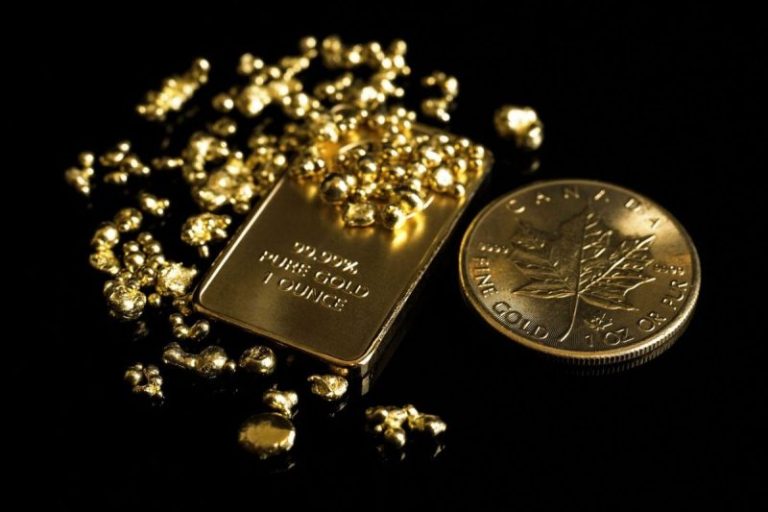
Physical gold investors are generally looking for items that are 0.999 fine. Most gold bullion coins fit this description, including the Canada Gold Maple Leaf, the South African Krugerrand and the American Buffalo Gold coin. American Gold Eagles are popular with investors, but they are have a much lower purity at 91.67 percent.
An alternative to gold coins is gold rounds, which are also 0.999 fine but are not legal tender. This makes them slightly cheaper than gold coins, as the premium for gold coins is higher because of the credibility that comes from being fabricated by government mints.
Both gold coins and gold rounds come in various sizes, usually ranging from 1/10 ounce to 1 ounce, though other less common sizes are available.
Gold bars are another popular option. These also come in a variety of sizes, and as choices can range from a 1 gram bar to 400 ounce bar, this category of products can accommodate a range of investors. They are also 0.999 fine.
When the objective is to get the most metal for the least money, it’s generally best to shop for gold rounds and gold bars, which tend to be cheaper than gold coins of the same weight.
Another factor that may need to be considered is the amount to be invested. Bars may be the best option for large investments since bigger sizes are available. Further, it is often easier to manage large products than it is to manage an array of smaller gold items.
However, physical gold investors also need to give forethought to when they may want to sell their gold. Large products will require liquidating a more sizeable portion of one’s gold portfolio, and such products may be more difficult to sell in some instances. Individuals making ongoing or significant investments may want to consider purchasing gold in various weights.
Investing in physical gold is often oversimplified, and the misconceptions can begin with pricing.
A spot price by definition is the cost of immediate delivery, and is a way to gauge the legitimacy of an ask or retail price. The spot price is what is reported on and what most gold price charts will show. Unfortunately, some investors don’t realize until they make their first purchase that the spot price is not what one actually pays for physical gold.
The retail price of gold is based off the spot price but includes a markup, also called a premium. In addition to premiums, there are numerous other expenses investors should be prepared to pay when purchasing pure gold, including shipping, handling and insurance. In some instances, prices may be higher for individuals who choose to pay with a credit card.
There may also be processing fees to own the yellow metal or fees for small lot purchases. On the other hand, gold prices are sometimes lower for those purchasing larger quantities.
Gold buying can be done through government mints, private mints, precious metals dealers and even jewelry stores. Some of these locations will offer numismatic coins or other gold items geared toward collecting and gift giving, which bullion investors should generally avoid. These products are for play in a different ball game and are not what the average gold investor needs.
When choosing where to buy gold, it is again best to give thought to reselling it. Some businesses that sell gold will also buy it back. Some will even buy gold that they didn’t sell, but may pay lower prices.
Furthermore, premiums and fees are not one size fits all when buying physical gold. Different sellers may offer the same items at different prices, so investors should take the time to find the best deal.
Investors looking to sell their gold bullion and coins should do so at bullion exchanges when possible, as those will offer the best value for the metal.
Individuals who want to sell their gold quickly may consider “we buy gold” businesses as a convenient alternative. However, while these businesses can serve as a quick source of liquidity, they are usually not the best option, as their underlying business strategy often involves making lower-than-average offers, meaning you will receive less than you would at a bullion exchange or mint.
As for when to sell your gold, there are a few other things to take into consideration.
Just as buying gold often provides investors with a pricing wakeup call, investors who decide to sell are sometimes surprised at the prices they receive. That is because the buyback price, or bid, is lower than the asking price. The difference between the two is referred to as the spread, and it is a loss that the seller initially bears.
For example, if an investor pays US$3,700 for a 1 ounce Canadian Maple Leaf from a bullion exchange and wanted to sell it back right after, the exchange’s buying price may only be US$3,610. The spot price is generally in the middle of the two.
Furthermore, there are usually other costs involved with selling gold, including shipping, insurance and liquidation fees. Some businesses have minimum purchase requirements, and depending upon payment arrangements, it may be necessary for the investor to pay bank wire fees or postage to receive a check.
The reality is that, given the spread and the costs associated with acquiring and selling gold, a sharp price move is generally needed to turn a profit in the short term. Investors are encouraged to consider building positions in physical gold as a long-term investment, possibly even for retirement savings.
Determining the best storage option involves weighing risks against costs.
Paying for secure storage eats into profits from the metal’s gains, so some people choose to store their gold at home or in their office. In theory, that is the riskiest option as it involves the highest potential for loss due to theft or disaster. But in many instances these risks are not substantial enough to justify the cost of other storage options.
For home storage of smaller amounts of gold, mitigate theft risk by keeping it hidden somewhere that is less likely to be discovered. Of course, a sturdy home safe comes with an upfront cost and a footprint, but it can help protect valuables from theft and some disasters.
As mentioned, gold can also be stored in a depository or safe deposit box for a cost. If an investor chooses this route, there are a few things to consider. Rates can vary between banks, so price comparison is important. Additionally, the contents of safety deposit boxes in financial institutions are generally not insured.
Last but not least, some banks do not technically permit the storage of bullion, so it’s important to make sure it’s possible before signing a terms and conditions agreement. The information should be listed in the agreement as well.
A gold futures contract is an agreement to buy or sell gold on a date in the future for a price that is determined when the contract is initiated. The futures market is often referred to as an arena for paper trading. Generally, the bulk of the activity is just that, as metal is not actually exchanged and settlements are made in cash.
However, the futures market can also be an arena for purchasing physical gold. That is not to suggest that it is the best source of metal for all investors as it may not increase one’s purchasing power.
Obtaining gold through the futures market requires a large investment and involves a list of additional costs. The process can be complicated, cumbersome and lengthy, which is why this option is considered best for highly experienced market participants.
Purchasing metal is not the only way to gain exposure to physical gold. Indeed, the popularity of exchange-traded funds (ETFs) underscores how easily people can get into the gold market without actually owning physical gold.
Gold ETFs may track gold stocks or they may track the gold spot price. Investors looking for the closest analog to buying physical gold will likely want to focus on the latter. However, it’s important to be aware that ETFs that follow the gold price are generally not vehicles to acquire gold, even if they are physically backed.
One advantage of gold ETFs is that they can be easier to trade than physical gold. Some investors choose to hold a set amount of physical gold at all times and use ETFs to trade the metal’s ups and downs.
To learn about your options, take a look at our lists of North American gold ETFs and gold ETFs on the ASX.
Securities Disclosure: I, Lauren Kelly, hold no direct investment interest in any company mentioned in this article.

Saskatchewan has introduced a new royalty framework for lithium production, marking a major step toward supporting the province’s growing role in Canada’s critical minerals sector.
The amendments to 2017 subsurface mineral royalty regulations formally establish a 3 percent Crown royalty on the value of brine mineral sales, coupled with a two year holiday for new productive capacity.
Provincial officials said the change aligns Saskatchewan’s royalties for lithium with those already applied to potash, salt and sodium sulfate, and keeps the province competitive with leading jurisdictions worldwide.
“Lithium is a critical mineral that is expected to see strong demand and growth in the decades ahead, and Saskatchewan is well-positioned to take advantage of this opportunity,” Energy and Resources Minister Colleen Young said.
“By putting this royalty framework in place now, we are providing certainty for industry, while ensuring the people of Saskatchewan benefit as this sector develops,” Young added.
Industry participants have welcomed the move, calling it a clear signal that the province intends to be a serious player in the global lithium supply chain. Canada-based explorer EMP Metals (CSE:EMPS,OTCQB:EMPPF) described the royalty rate as internationally competitive and a meaningful boost for project economics.
“This is very welcome news. The government of the province of Saskatchewan has once again proven itself to be supportive of lithium production in the province,” EMP Metals CEO Karl Kottmeier said. “This is a highly competitive royalty rate internationally, and a two-year royalty holiday on new production immediately makes a positive impact on financial modelling of what is already a compelling business case for our Project Aurora lithium production project.”
Grounded Lithium (TSXV:GRD) President and CEO Gregg Smith noted that the policy encourages further investment, while recognizing the high upfront costs of developing processing capacity.
“This new regulatory framework provides a reasonable royalty rate while also recognizing the significant risk and initial investment companies make in processing facilities to ultimately achieve commercial production,” he said.
Saskatchewan has emerged as one of Canada’s top destinations for mining investment. The Fraser Institute’s annual mining company survey ranked it the country’s leading jurisdiction, with the province projected to attract over US$7 billion in mining investment this year — more than a quarter of Canada’s total.
The lithium framework also aligns with the province’s broader Critical Minerals Strategy, launched in 2023 to position Saskatchewan as a key contributor to Canada’s resource independence and energy transition.
The plan targets a 15 percent share of national mineral exploration by 2030, the doubling of critical mineral production, and the expansion of existing potash, uranium, and helium output.
Securities Disclosure: I, Giann Liguid, hold no direct investment interest in any company mentioned in this article.

Major miner BHP (ASX:BHP,NYSE:BHP,LSE:BHP) welcomed October with the news that it will invest over AU$840 million in its Olympic Dam copper operation in South Australia.
In an October 1 release, the commodities giant said that the funding is for a series of “growth-enabling projects” at the site, focused on strengthening underground mining productivity.
The company outlines several priority projects it intends to pursue at Olympic Dam, namely the construction of an underground access tunnel, a new backfill system, expansion of ore pass capacity and the installation of a new oxygen plant to improve smelter performance and support increased copper-processing capability.
“We expect to grow our copper base from 1.7 million tonnes to around 2.5 million tonnes per annum,” shared BHP COO Edgar Baston. “Achieving that scale requires significant copper growth, and we are fortunate to have a world-class copper province right here in South Australia to do just that.” According to Baston, BHP’s South Australian copper province has been delivering over 300,000 tonnes a year for the past three years.
In a global trade update shared in May, UN Trade & Development notes that global demand for copper is expected to grow by over 40 percent by 2040. This projected demand increase will drive supply requirements, with the organisation citing the need for around 80 new mines and US$250 billion in investment by 2030 to keep up.
For its part, BHP notes that global copper demand is projected to grow 70 percent by 2050 due to population growth, rising living standards and the energy transition. It adds that this poses a general opportunity for South Australia, underlining that it holds about two-thirds of Australia’s copper resources.
Olympic Dam was acquired by BHP in 2005 through its acquisition of Western Mining. It has become a cornerstone of BHP’s copper portfolio, with copper accounting for around 70 percent of the asset’s total revenue.
In its 2025 fiscal year, BHP reported a production of over 2 million tonnes of copper for the first time.
Don Farrell, Australian minister for trade and tourism, commented on the company’s investment in Olympic Dam, noting, ‘Australia is at the forefront of the energy transition in which copper is a vital resource and by securing the continued flow of copper from Olympic Dam, BHP is ensuring South Australia’s position as a key global supplier.”
Also in early October, BHP iron ore cargoes were banned by Chinese iron ore buyer China Mineral Resources Group. The move reportedly stems from pricing disputes and has raised concerns for Australia.
Australia remains China’s top provider of iron ore, and BHP continues to be among the country’s major iron ore exporters, alongside Rio Tinto (ASX:RIO,NYSE:RIO,LSE:RIO) and Fortescue (ASX:FMG,OTCQX:FSUMF).
BHP has not commented on the matter as of writing.
On a positive note, BHP launched the fourth edition of its Xplor Critical Minerals Accelerator Program.
As in previous cohorts, Xplor 2026 participants can receive up to US$500,000 in equity-free funding, mentorship and access to BHP’s global network of suppliers and service providers.
Submissions close on October 15 at 11:59 p.m. AEST.
Securities Disclosure: I, Gabrielle de la Cruz, hold no direct investment interest in any company mentioned in this article.

Gold marked a new price milestone on Wednesday (October 8), breaking US$4,000 per ounce.
The spot price hit a fresh record, rising as high as US$4,056.14 in midday trading. Future prices for gold breached US$4,000 for the first time on Tuesday (October 7) and have continued to climb higher.
The yellow metal’s rise follows a summer of consolidation. After several months of relatively flat trading, the price began pushing higher toward the end of August, quickly reaching US$3,500 and continuing on up.
Gold futures are up about 12 percent in the last month, and just over 54 percent year-to-date.
Gold price, October 1 to October 8, 2025.
Gold’s latest rise began last week, after US Congress failed to reach an agreement on a spending bill ahead of the new fiscal year, triggering a government shutdown. The closure has now lasted a week, with a key sticking point between Democrats and Republicans being an extension to billions of dollars in subsidies for Obamacare.
US President Donald Trump said Monday (October 6) that negotiations were taking place with Democrats and ‘could lead to very good things’ in terms of healthcare. However, Senator Chuck Schumer and Representative Hakeem Jeffries, Congress’ two Democrat leaders, said no talks were happening and that the White House ‘has gone radio silent.’
Various issues are emerging as the shutdown progresses, with one of the most recent being the Trump administration’s suggestion that furloughed federal workers may not receive backpay.
Beyond current events, gold’s rise is underpinned by factors like strong central bank buying, global geopolitical uncertainty, concerns about the US dollar and other fiat currencies and expectations of lower interest rates.
Those elements have many experts predicting a rise well beyond US$4,000 for the precious metal, likely before the end of the year, although a correction is widely expected beforehand.
Gold’s sister metal silver is also surging higher this week, despite a pullback in the the price on Tuesday.
Silver price, October 1 to October 8, 2025.
The white metal rose as high as US$48.74 per ounce on Monday, but retreated on Tuesday to the US$47.80 level. On Wednesday, silver followed gold higher to US$49.42 by midday.
Silver was last at these price points in 2011, and is close to its 1980 all-time high.
As with gold, experts see a silver correction as natural given its rapid ascent, but think the rally is far from over.
‘The idea that this bull market is over is a fallacy. I would exercise caution, because I believe we’re due a correction. But I’m very happy with silver’s performance so far year-to-date,’ said analyst Ted Butler.
Securities Disclosure: I, Melissa Pistilli, hold no direct investment interest in any company mentioned in this article.