Author

admin

Browsing

Perth, Australia (ABN Newswire) – Locksley Resources Ltd (ASX:LKY,OTC:LKYRF) (FRA:X5L) (OTCMKTS:LKYRF) announced the appointment of Ms. Stacy Newstead to its Advisory Board as Strategic Advisor – Materials Strategy.

Stacy Newstead brings U.S. defense materials expertise to advance Locksley’s critical mineral and commercialisation initiatives.

HIGHLIGHTS

– Stacy Newstead appointed as a Strategic Advisor to the Locksley Advisory Board

– Ms Newstead currently serves as Materials Strategy and Risk Manager at Lockheed Martin, overseeing U.S. supply chain risk mitigation for critical materials used in advanced defence systems

– Over two decades of experience across defence, critical minerals, and advanced materials sectors, including leadership roles at Huntington Ingalls Industries, Textron Systems, and Evolution Energy Solutions –

– Expertise spanning U.S. Department of Defence acquisition, system manufacturing and production, materials engineering, supply chain risk mitigation, critical component supply chains, and state and federal engagement for manufacturing facilities

– Appointment strengthens Locksley’s U.S. Government initiatives and supports commercialisation of American-sourced antimony and rare earth supply chains

– Locksley has submitted U.S. Govt White Paper funding request under Defence Production Act Title III DPA to advance project financing position and accelerate first mover status in re-establishing domestic Antimony industry and U.S supply chain strength

Ms. Newstead currently serves as Materials Strategy and Risk Manager at Lockheed Martin, where she leads initiatives to secure domestic and allied sources of key materials vital to U.S. defense manufacturing and national security. Her work focuses on assessing and mitigating material, pricing, and geopolitical risk across complex supply chains that underpin critical technologies including munitions, batteries, and aerospace systems.

A highly accomplished executive, Ms. Newstead brings more than 20 years of experience across U.S. Government, defense, and industrial sectors. Her prior roles include senior program leadership at Huntington Ingalls Industries and Textron Systems, as well as Chief Executive Officer of the U.S. subsidiary of Evolution Energy Minerals (ASX:EV1), where she led onshoring initiatives for graphite and advanced battery materials.

Her appointment reinforces Locksley’s position at the intersection of critical minerals, defense, and national security strategy, providing invaluable insight into U.S. policy, funding and industrial collaboration opportunities. This strengthens the Company’s ability to engage with U.S. partners and access Federal programs supporting domestic critical mineral supply chains, advancing Locksley’s mine-to-market strategy for U.S.-sourced antimony and rare earths.

Kerrie Matthews, Locksley CEO commented:

‘Stacy’s appointment represents another significant step in strengthening our U.S. advisory capability. Her deep understanding of defense material supply chains, coupled with her leadership at Lockheed Martin, brings exceptional strategic value to Locksley as we advance our mine-to-market development of American sourced antimony and rare earths.’

‘Her perspective on material security and risk will help guide our engagement with U.S. industry and government stakeholders as we scale from pilot to commercial operations.’

Ms Newstead commented:

‘The restoration of secure, transparent and domestic critical mineral supply chains is essential to both U.S. defense readiness and the broader energy transition. Locksley’s integrated mine-to-market model and U.S. operational footprint, position it as a key contributor to these national objectives. I’m honored to support the team’s strategy and growth trajectory.’

About Locksley Resources Limited:

Locksley Resources Limited (ASX:LKY,OTC:LKYRF) (FRA:X5L) (OTCMKTS:LKYRF) is an ASX listed explorer focused on critical minerals in the United States of America. The Company is actively advancing exploration across two key assets: the Mojave Project in California, targeting rare earth elements (REEs) and antimony. Locksley Resources aims to generate shareholder value through strategic exploration, discovery and development in this highly prospective mineral region.

Mojave Project

Located in the Mojave Desert, California, the Mojave Project comprises over 250 claims across two contiguous prospect areas, namely, the North Block/Northeast Block and the El Campo Prospect. The North Block directly abuts claims held by MP Materials, while El Campo lies along strike of the Mountain Pass Mine and is enveloped by MP Materials’ claims, highlighting the strong geological continuity and exploration potential of the project area.

In addition to rare earths, the Mojave Project hosts the historic ‘Desert Antimony Mine’, which last operated in 1937. Despite the United States currently having no domestic antimony production, demand for the metal remains high due to its essential role in defense systems, semiconductors, and metal alloys. With significant surface sample results, the Desert Mine prospect represents one of the highest-grade known antimony occurrences in the U.S.

Locksley’s North American position is further strengthened by rising geopolitical urgency to diversify supply chains away from China, the global leader in both REE & antimony production. With its maiden drilling program planned, the Mojave Project is uniquely positioned to align with U.S. strategic objectives around critical mineral independence and economic security.

Tottenham Project

Locksley’s Australian portfolio comprises the advanced Tottenham Copper-Gold Project in New South Wales, focused on VMS-style mineralisation

Source:
Locksley Resources Limited

Contact:
Kerrie Matthews
Chief Executive Officer
Locksley Resources Limited
T: +61 8 9481 0389
Kerrie@locksleyresources.com.au

News Provided by ABN Newswire via QuoteMedia

This post appeared first on investingnews.com

Here’s a quick recap of the crypto landscape for Friday (November 21) as of 9:00 p.m. UTC.

Get the latest insights on Bitcoin, Ether and altcoins, along with a round-up of key cryptocurrency market news.

Bitcoin and Ether price update

Bitcoin (BTC) was priced at US$84,479.56, down by 2.4 percent over 24 hours. Its lowest price of the day was US$82,623.93, and its highest was US$85,341.10.

Bitcoin price performance, November 21, 2025.

Chart via TradingView.

Ether (ETH) was at US$2,736.67, down 3.8 percent over 24 hours. Its lowest price on Friday was US$2,685.25 and its highest was US$2,799.63.

Altcoin price update

  • XRP (XRP) was priced at US$1.94, down by 3.3 percent over 24 hours. Its lowest price of the period was US$1.89 and its highest was US$1.99.
  • Solana (SOL) was trading at US$127.23, down by 4.8 percent over 24 hours. Its lowest price of the day was US$124.20 and its highest was US$129.79.

Fear and Greed Index snapshot

CMC’s Crypto Fear & Greed Index plunged to 11, firmly in “extreme fear” and its lowest level since late 2022. Reports of large-scale whale liquidations have added to the uncertainty, amplifying pressure across an already fragile market.

CMC Crypto Fear and Greed Index, Bitcoin price and Bitcoin volume.

Chart via CoinMarketCap.

Crypto derivatives and market indicators

Open interest in Bitcoin futures declined slightly by 0.98 percent, settling at approximately US$58.67 billion, while Ether futures saw a larger drop of 2.50 percent, closing at US$32.39 billion. This contraction in open interest suggests some unwinding of speculative positions or reduced leverage in the derivatives markets for both leading cryptocurrencies.

Bitcoin experienced US$30.48 million in contracts being liquidated, predominantly short positions, whereas Ether had a slightly higher US$32.43 million liquidated, also mostly shorts. This contrasts with recent days, where the vast majority of liquidations were long positions, indicating a shift in market dynamics and trader positioning.

Bitcoin’s relative strength index was low at 31.32, signaling that it is nearing oversold territory, which can often precede a price rebound or a period of consolidation. Its funding rate was recorded at a modestly positive 0.003 percent, indicating a nearly balanced market where long traders pay a small premium to shorts, reflecting moderate bullish sentiment or mild cost for holding long perpetual contracts.

Ether’s funding rate was higher at 0.01 percent, suggesting stronger bullish positioning and higher demand for long exposure in Ether perpetual futures. Generally, positive funding rates imply that longs are paying shorts, signaling optimism about price appreciation. However, considering liquidations skewed toward shorts recently, this could reflect traders attempting to position for a reversal or hedging against potential volatility.

Today’s crypto news to know

Anchorage expands institutional custody and staking support

Anchorage Digital now supports full custody and staking for HYPE tokens across the Hyperliquid ecosystem. Institutions can custody HYPE on HyperEVM and stake on HyperCORE through Anchorage Digital Bank, the only federally chartered crypto bank in the US, as well as through Anchorage Digital Singapore and the self-custody wallet Porto.

Partnering with staking provider Figment, Anchorage now offers a regulated pathway for institutional participation in the Hyperliquid DeFi ecosystem. This expansion also includes custody for additional ERC-20 tokens like Kinetiq, enhancing institutional access to Hyperliquid’s fast-growing blockchain infrastructure.

Crypto lawyer seeks New York attorney general seat

Khurram Dara, a 36-year-old cryptocurrency lawyer with experience at Coinbase Global (NASDAQ:COIN) and Bain Capital Crypto, has announced his candidacy for attorney general in the state of New York.

Dara is seeking the Republican nomination to challenge the incumbent Democrat, Letitia James, in the 2026 election. Dara’s campaign focuses on ending what he calls ‘lawfare,’ the use of legal tactics for political gain, reducing regulatory overreach, especially in the crypto sector and fostering a more business-friendly environment in New York.

Dara holds a JD from Columbia Law and is affiliated with the Council on Foreign Relations and crypto advocacy groups. He resides in Brooklyn and will face Republican primary competition from Michael Henry.

BitMine reports strong earnings, plans Ether staking launch

BitMine Immersion Technologies (NYSEAMERICAN:BMNR) announced net income of US$328.2 million for its 2025 fiscal year, with fully diluted earnings per share of US$13.39.

The company also declared an annual dividend of US$0.01 per share, becoming the first large-cap crypto firm to pay a dividend. Notably, BitMine announced plans to launch its ‘Made-in-America Validator Network,’ an Ethereum staking infrastructure, in early 2026 with initial pilot partners selected for testing.

Coinbase rolls out Ether-backed loans

Coinbase has launched a new lending feature for eligible US users.

They will be able borrow up to US$1 million in USDC by using Ether as collateral. The product is integrated with the Morpho protocol on Base, though users interact with it entirely through Coinbase’s interface. Borrowers keep exposure to Ether’s price movements while accessing liquidity without having to sell their holdings.

The service is available across most US states, with the exception of New York due to regulatory requirements.

Securities Disclosure: I, Giann Liguid, hold no direct investment interest in any company mentioned in this article.

Securities Disclosure: I, Meagen Seatter, hold no direct investment interest in any company mentioned in this article.

This post appeared first on investingnews.com

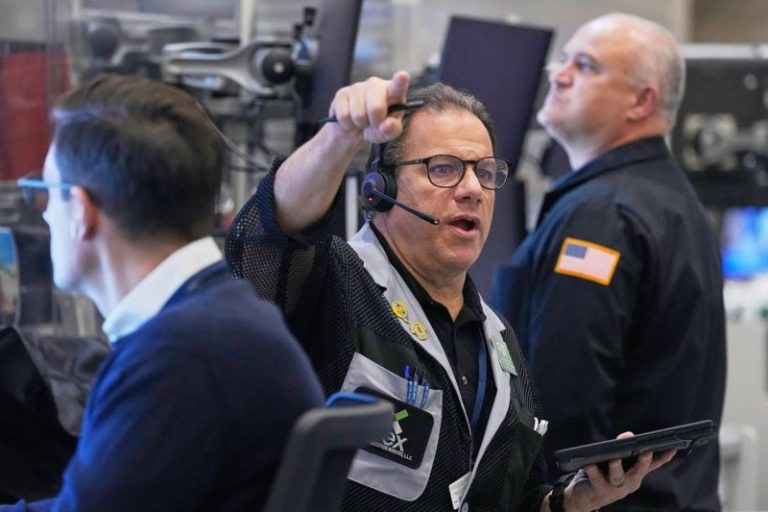
What began as a banner day for stocks turned into a major rout, as investors signaled ongoing skepticism about the longevity of the artificial intelligence boom and trimmed hopes of support from the Federal Reserve.

The tech-heavy Nasdaq fell 2%, and the broad S&P 500 index dropped by more than 1.5%. The Dow Jones Industrial Average, which tracks 30 top-tier stocks, declined by nearly 390 points. It had been up 700 points earlier in the day. Cryptocurrencies also shed billions in value: Bitcoin had fallen below $87,000 as of late Thursday afternoon, weeks after having set highs above $120,000.

The stunning turnaround added further unease to an already shaky economy that has forced households to trim budgets amid stubborn inflation and signs of a wavering job market. With an ever-increasing part of the economy’s principal driver — consumer spending — now reliant on affluent households, an extended market pullback could inflict wider damage.

‘You don’t have to have the biggest bubble in history for an expensive stock market’ and end up seeing declines, said Matt Maley, chief market strategist at Miller Tabak asset management group.

Traders’ hopes were boosted early Thursday by a better-than-expected jobs report that appeared to show the economy remained resilient. Even before the day began, stocks looked poised to rise after Nvidia, the chipmaker at the heart of the AI boom, reported strong quarterly earnings and revenue.

Yet by midday, markets had turned red. The solid September jobs report diminished the odds that the Federal Reserve will cut interest rates next month to lower the cost of borrowing money to spur economic activity. When investors don’t have to pay as much in interest, they often put those savings into stocks.

“The broad rebound in payrolls suggests diminished risks of a higher unemployment rate,” analysts with Morgan Stanley said in a note published shortly before noon. “We no longer expect a Fed cut in December.”

Losses were further compounded by ongoing concerns about AI — specifically, how much more profitable the companies buying chips like Nvidia’s will be. The fears were articulated Wednesday evening on X by Michael Burry, made famous by the movie ‘The Big Short.’

‘Just because something is used does not mean it is profitable,’ he wrote.

Finally, the ongoing sell-off of bitcoin indicated to some traders that a key source of support for stocks — retail or day traders — were beginning to waver on their trademark ‘buy the dip’ mentality.

‘I wouldn’t say we’ve flipped from bull to bear,’ said Steve Sosnick, chief strategist at Interactive Brokers financial group. ‘I would say we’ve flipped from bull to balanced market in the short term. A lot depends on whether sentiment continues to weaken.’

Stocks had already been showing signs of flagging in recent weeks. With Thursday’s losses, the S&P 500 fell to its lowest point since September.

The long-delayed September jobs report, which showed that the United States added a sturdy 119,000 jobs, appeared to show some glimmers of hope for the economy.

Although the unemployment rate ticked up from 4.3% in August to 4.4%, about 450,000 workers entered the labor force. Economists view that as evidence that job opportunities are still plentiful, despite a wave of corporate layoffs.

Just before the Bureau of Labor Statistics released the jobs report, Verizon told employees it planned to lay off 13,000 employees, or about 13% of its workforce.

The company joined a suite of other blue-chip employers that say they plan to eliminate tens of thousands of jobs, including Amazon, General Motors, IBM, Microsoft, Paramount, Target and UPS.

The details of the jobs report, which captured conditions before the government shutdown, as well more recent jobs data, suggested a more mixed picture for the U.S. economy.

Manufacturing shed 6,000 jobs, continuing a trend in a sector the Trump administration has touted as a key target of its economic policies. Transportation and warehousing also lost 25,300 jobs. Wage growth slowed, and job totals for July and August were revised downward.

The employment gains in September were concentrated in the health care, hospitality and social assistance sectors.

Another snapshot of the economy came courtesy of Walmart, which on Thursday reported strong sales and raised its outlook for the year. That strength points to cracks in the economy, though. Executives said the chain is luring more high-income shoppers who are looking for bargains, and noted that lower-income families are feeling more pressure.

‘As pocketbooks have been stretched, you’re seeing more consumer dollars go to necessities versus discretionary items,’ Chief Financial Officer John David Rainey said on an earnings call Thursday morning.

Walmart’s stock closed 6.5% higher.

This post appeared first on NBC NEWS

Bitcoin and ether slumped to multi-month lows on Friday, with cryptocurrencies swept up in a broader flight from riskier assets as investors worried about lofty tech valuations and bets on near-term U.S. interest rate cuts faded.

Bitcoin, the world’s largest cryptocurrency, fell 5.5% to a seven-month low of $81,668. Ether slid more than 6% to $2,661.37, its lowest in four months.

Both tokens are down roughly 12% so far this week.

Cryptocurrencies are often viewed as a barometer of risk appetite and their slide highlights how fragile the mood in markets has turned in recent days, with high-flying artificial intelligence stocks tumbling and volatility spiking VIX.

“If it’s telling a story about risk sentiment as a whole, then things could start to get really, really ugly, and that’s the concern now,” Tony Sycamore, a market analyst at IG, said of the fall in bitcoin.

About $1.2 trillion has been wiped off the market value of all cryptocurrencies in the past six weeks, according to market tracker CoinGecko.

Bitcoin’s slide follows a stellar run this year that propelled it to a record high above $120,000 in October, buoyed by favourable regulatory changes towards crypto assets globally.

But analysts say the market remains scarred by a record single-day slump last month that saw more than $19 billion of positions liquidated.

“The market feels a little bit dislocated, a bit fractured, a bit broken, really, since we had that selloff,” said Sycamore.

Bitcoin has since erased all its year-to-date gains and is now down 12% for the year, while ether has lost close to 19%.

Citi analyst Alex Saunders said $80,000 would be an important level as it is around the average level of bitcoin holdings in ETFs.

The selloff has also hurt share prices of crypto stockpilers, following a boom in public digital asset treasury companies this year as corporates took advantage of rising prices to buy and hold cryptocurrencies on their balance sheets.

Shares of Strategy, once the poster child for corporate bitcoin accumulation, have fallen 11% this week and were down nearly 4% in premarket trade, languishing at one-year lows.

JP Morgan said in a note this week that the company could be excluded from some MSCI equity indexes, which could spark forced selling by funds that track them.

Its Japanese peer Metaplanet has tumbled about 80% from a June peak.

Crypto exchange Coinbase was down 1.9% in premarket trade and is on course for its longest losing streak in more than a month.

Crypto miners MARA Holdings and CleanSpark were down 2.4% and 3.6%, respectively, while the Winklevoss twins’ newly-listed Gemini has plunged 62% from its listing price.

“Bitcoin market conditions are the most bearish they have been since the current bull cycle started in January 2023,” said digital asset research firm CryptoQuant in its weekly crypto report on Wednesday.

“We are highly likely to have seen most of this cycle’s demand wave pass.”

This post appeared first on NBC NEWS

Heliostar Metals Ltd (TSXV: HSTR,OTC:HSTXF): Stonegate Capital Partners updates their coverage on Heliostar Metals Ltd (TSXV: HSTR,OTC:HSTXF). Heliostar continued to advance its flagship Ana Paula project in Guerrero as a high-grade underground development asset, now highlighted by a positive PEA released in early 4Q25. The study outlines total recovered production of ~875,000 ounces over a nine-year mine life, with mill feed averaging 5.37 gt gold and a 1,800 tpd underground operation producing roughly 101 koz per year at cash costs of ~US$923oz and AISC of ~US$1,011oz. At US$2,400oz gold, the PEA delivers a post-tax NPV5 of US$426M, a 28% IRR, and a 2.9-year payback, with strong leverage to higher gold prices. Management is progressing engineering, metallurgical work, and a 15,000m drill program to upgrade Inferred resources, extend the High-Grade and Parallel panels, and support a Feasibility Study targeted for mid-2026, with first underground production still expected in 2028.

To view the full announcement, including downloadable images, bios, and more, click here.

Key Takeaways:

  • PEA shows US$426M NPV5 28 percent IRR US$300M capex about 101 koz per year AISC ~US$1,011 and 2.9 year payback.
  • Quarter revenue was US$26.8M with net income US$1.3M supported by La Colorada and San Agustin operations.
  • Path forward targets a feasibility study by mid 2026 an underground permit amendment in 1Q26 and early works to enable 2028 production.

Click image above to view full announcement.

About Stonegate
Stonegate Capital Partners is a leading capital markets advisory firm providing investor relations, equity research, and institutional investor outreach services for public companies. Our affiliate, Stonegate Capital Markets (member FINRA) provides a full spectrum of investment banking services for public and private companies.

Contacts:

Stonegate Capital Partners
(214) 987-4121
info@stonegateinc.com

Source: Stonegate, Inc.

To view the source version of this press release, please visit https://www.newsfilecorp.com/release/275450

News Provided by Newsfile via QuoteMedia

This post appeared first on investingnews.com

Anteros Metals Inc. (CSE: ANT) (‘Anteros’ or the ‘Company’) announces that, further to its press releases dated October 7, 2025, and October 31, 2025, it has closed the final tranche of its non-brokered private placement through the issuance of 2,196,153 flow-through units (each, an ‘FT Unit’) at a price of $0.065 per FT Unit, and 1,300,000 hard dollar units (each, a ‘Unit’) at a price of $0.05 per Unit, for aggregate gross proceeds of $207,749.95 (the ‘Offering’).

Each FT Unit was comprised of one common share, issued on a flow-through basis (‘FT Share‘) and one-half of one whole common share purchase warrant, issued on a non-flow-through basis (each whole warrant, a ‘Warrant‘). Each Warrant shall entitle the holder thereof to acquire one common share in the capital of the Company (each, a ‘Common Share‘) at a price of $0.10 per Common Share for a period of two (2) years from date of issuance. The FT Shares will qualify as ‘flow-through shares’ within the meaning of subsection 66(15) of the Income Tax Act (Canada), which also qualify for the Canadian government’s Critical Mineral Exploration Tax Credit. Each Unit was comprised of one Common Share and one-half of one whole Warrant.

Gross proceeds raised from the Offering will be used for working capital and general corporate purposes. All securities issued pursuant to the Offering are subject to a hold period of four months plus a day from the date of issuance and the resale rules of applicable securities legislation.

In connection with the first and second tranches, the Company: (i) paid aggregate cash commissions of $16,042.50; and (ii) issued an aggregate of 228,308 finder’s warrants (each, a ‘Finder’s Warrant‘) to certain finders (the ‘Finders‘). Each Finder’s Warrant is exercisable to purchase one additional common share (each, a ‘Finder’s Share‘) at a price of $0.10 per Finder’s Share for a period of two (2) years from the date of issuance.

This press release does not constitute an offer to sell or a solicitation of an offer to buy the securities in the United States. The securities have not been and will not be registered under the United States Securities Act of 1933, as amended (the ‘U.S. Securities Act’) or any state securities laws and may not be offered or sold within the United States or to U.S. Persons as defined under applicable United States securities laws unless registered under the U.S. Securities Act and applicable state securities laws or an exemption from such registration is available.

ABOUT Anteros Metals Inc.

Anteros Metals Inc. is a Canadian exploration company focused on advancing a pipeline of critical minerals projects across Newfoundland and Labrador and select Canadian jurisdictions. The Company is targeting copper, nickel, zinc, and emerging strategic commodities that support the global energy transition. Immediate plans for their flagship Knob Lake Property include bringing the historical Fe-Mn Mineral Resource Estimate into current status as well as commencing baseline environmental and feasibility studies.

For further information please contact or visit:

Email: info@anterosmetals.com | Phone: +1-709-769-1151
Web: www.anterosmetals.com | Social: @anterosmetals
Web: https://www.thunderbayexecutives.com/rift-minerals-inc

On behalf of the Board of Directors,

Chris Morrison
Director

Email: chris@anterosmetals.com | Phone: +1-709-725-6520
Web: www.anterosmetals.com/contact

16 Forest Road, Suite 200, St. John’s, NL, Canada A1X 2B9

Cautionary Statement Regarding Forward-Looking Information

This news release may contain ‘forward-looking information’ and ‘forward-looking statements’ within the meaning of applicable Canadian securities legislation. All information contained herein that is not historical in nature may constitute forward-looking information. Forward-looking statements herein include but are not limited to statements relating to the prospects for development of the Company’s mineral properties, and are necessarily based upon a number of assumptions that, while considered reasonable by management, are inherently subject to business, market and economic risks, uncertainties and contingencies that may cause actual results, performance or achievements to be materially different from those expressed or implied by forward-looking statements. Except as required by law, the Company disclaims any obligation to update or revise any forward-looking statements. Readers are cautioned not to put undue reliance on these forward-looking statements.

To view the source version of this press release, please visit https://www.newsfilecorp.com/release/275398

News Provided by Newsfile via QuoteMedia

This post appeared first on investingnews.com

Amazing AI plc (AQSE: AAI) – 20 November 2025: AAI is a global fintech group with a Digital Asset Treasury Policy that provides online consumer loans and AI finance-related services. AAI announces that the Company is exploring its options to dual list on the Mauritius Stock Exchange and OTCQB Market in the US and will provide updates to the market should applications proceed accordingly.

This announcement contains inside information for the purposes of the UK Market Abuse Regulation, and the Directors of the Company accept responsibility for the contents of this announcement.

Enquiries:

Amazing AI plc

Paul Mathieson – Chief Executive Officer

aai@amazingaiplc.com

Guild Financial Advisory Limited (Corporate Adviser)

Ross Andrews

ross.andrews@guildfin.co.uk

Evangeline Klaassen

evangeline.klaassen@guildfin.co.uk

About Amazing AI plc

Amazing AI plc (AAI) is a global fintech group with a diversified Digital Asset Treasury Policy, that provides online consumer loans and AI finance-related services. AAI leverages its regulated licensed lending and collections operations, experience and network to distribute best-of-breed AI finance-related services internationally, specifically focused on lending, collections and debt financing services. AAI operates under the consumer brand Mr. Amazing Loans in the United States with 6 state consumer lending licenses/certificates of authority and an established track-record of lending, collections and regulatory compliance for over 15 years.

For more information please visit: www.amazingaiplc.com and www.aquis.eu/companies/aai

Important Notices

Amazing AI plc (the ‘Company’), via its 100% owned Mauritius subsidiary Amazing AI Services Ltd, holds treasury reserves and surplus cash in digital assets. Whilst the Board of Directors of the Company considers holding digital assets to be in the best interests of the Company, the Board remains aware that the financial regulator in the UK (the ‘Financial Conduct Authority’ or ‘FCA’) considers investment in digital assets to be high risk. At the outset, it is important to note that an investment in the Company is not an investment in digital assets, either directly or by proxy. However, the Board of Directors of the Company consider digital assets to be an appropriate store of value and growth for the Company’s reserves and, accordingly, the Company is materially exposed to digital assets. Such an approach is innovative, and the Board of Directors of the Company wish to be clear and transparent with prospective and actual investors in the Company on the Company’s position in this regard.

The Company is neither authorised nor regulated by the FCA and digital assets are unregulated in the UK. As with most other investments, the value of digital assets can go down as well as up, and therefore the value of digital asset holdings can fluctuate. The Company may not be able to realise any future digital asset exposure for the same as it paid in the first place or even for the value the Company ascribes to digital asset positions due to these market movements. As digital assets are unregulated, the Company is not protected by the UK’s Financial Ombudsman Service or the Financial Services Compensation Scheme.

Nevertheless, the Board of Directors of the Company has taken the decision to invest in digital assets, and in doing so is mindful of the special risks digital assets presents to the Company’s financial position. These risks include (but are not limited to): (i) the value of digital assets can be highly volatile, with value dropping as quickly as it can rise. Investors in digital assets must be prepared to lose all money invested in digital assets; (ii) the digital assets market is largely unregulated. There is a risk of losing money due to risks such as cyber-attacks, financial crime and counterparty failure; (iii) the Company may not be able to sell digital assets at will. The ability to sell digital assets depends on various factors, including the supply and demand in the market at the relevant time. Operational failings such as technology outages, cyber-attacks and comingling of funds could cause unwanted delay; and (iv) digital assets are characterised in some quarters by high degrees of fraud, money laundering and financial crime. In addition, there is a perception in some quarters that cyber-attacks are prominent which can lead to theft of holdings or ransom demands. The Board of Directors of the Company does not subscribe to such a negative view, especially in relation to digital assets. However, prospective investors in the Company are encouraged to do their own research before investing.

Caution Regarding Forward Looking Statements

Certain statements made in this announcement are forward-looking statements. These forward-looking statements are not historical facts but rather are based on the Company’s current expectations, estimates, and projections about its industry; its beliefs; and assumptions. Words such as ‘anticipates,’ ‘expects,’ ‘intends,’ ‘plans,’ ‘believes,’ ‘seeks,’ ‘estimates,’ and similar expressions are intended to identify forward-looking statements. These statements are not a guarantee of future performance and are subject to known and unknown risks, uncertainties, and other factors, some of which are beyond the Company’s control, are difficult to predict, and could cause actual results to differ materially from those expressed or forecasted in the forward-looking statements. The Company cautions security holders and prospective security holders not to place undue reliance on these forward-looking statements, which reflect the view of the Company only as of the date of this announcement. The forward-looking statements made in this announcement relate only to events as of the date on which the statements are made. The Company will not undertake any obligation to release publicly any revisions or updates to these forward-looking statements to reflect events, circumstances, or unanticipated events occurring after the date of this announcement except as required by law or by any appropriate regulatory authority.

Source

This post appeared first on investingnews.com

Platinum appears to be headed for its first broadly balanced year since 2021, with new projections pointing to a small surplus in 2026 as supply recovers and investment demand retreats from unusually elevated 2025 levels.

The latest Platinum Quarterly from the World Platinum Investment Council (WPIC) shows the market is still firmly set for a deficit in 2025, with a shortfall of 692,000 ounces, equal to roughly 9 percent of annual demand.

However, 2026 may be a turning point where the extreme tightness of recent years begins to ease — not because demand is weakening broadly, but because investment activity is expected to normalize.

Platinum market starting to self-correct

The platinum price has risen sharply in 2025 alongside a strong performance across precious metals, and the WPIC states that higher prices have started to produce early signs of a “self-solving” market.

Recycling volumes, which respond more quickly to price incentives than mining output, are increasing at a double-digit pace and are set to play a larger role in 2026. At the same time, the buildup of exchange warehouse stocks linked to tariff uncertainty in the US is expected to unwind next year if trade frictions ease.

Those trends collectively underpin the WPIC’s baseline forecast for next year: a market moving to near equilibrium, with a small surplus of about 20,000 ounces in 2026.

High lease rates a key feature of 2025

While next year’s platinum surplus looks to be modest, it’s worth noting that physical availability of the metal has tightened to levels rarely seen in modern times. Platinum’s implied one month lease rate averaged 15 percent in the third quarter of the year after sitting at only 1 percent through most of 2024, pointing to spot market stress.

At times in mid-July, lease rates spiked near 40 percent as traders scrambled for metal that was either unavailable in Europe, or locked up in China and the US due to trade-related risk management.

Even if prices have moderated some of the pressure, elevated lease rates remains a defining feature of 2025.

The WPIC maintains that many of the concerns around availability stem from the simple drawdown of physical stocks. Years of persistent deficits reduced vaulted inventories in Europe, undermining assumptions that large, accessible stores of metal would remain available to supplement shortfalls.

Instead, the combination of region-specific demand, US tariff fears and aggressive Chinese imports resulted in metal being redistributed into markets where it could not easily be lent out.

Platinum supply/demand dynamics in 2026

The WPIC expects these pressures to ease next year as supply increases.

Total supply is forecast to rise 4 percent year-on-year in 2026 to 7,404,000 ounces, the highest since 2021.

Mine production is expected to inch higher, mainly because South African producers will be able to release some of the semi-finished inventory they could not process earlier. Zimbabwean output is also anticipated to improve slightly, while declines in North America and Russia are expected to be relatively modest.

More importantly, platinum recycling supply is forecast to grow by 10 percent as a direct result of the stronger price environment and increased processing of spent autocatalysts.

On the flip side, total platinum demand is expected to drop 6 percent to 7,385,000 ounces in 2026, almost entirely because investment flows are set to normalize after an unusually strong 2025.

Investment demand is projected to fall 52 percent as exchange warehouse stocks unwind and investors take profits after this year’s price surge. The WPIC frames this shift not as weakening sentiment, but as a correction from one-off trade and macro conditions that inflated investment inflows last year.

Will the platinum price fall in 2026?

These supply/demand dynamics are expected to produce the narrow surplus projected for 2026.

However, the report emphasizes that market balance will not necessarily translate into lower prices. Spot physical tightness persists, with many structural constraints remaining in place and investors continuing to allocate toward hard assets given interest rate expectations and growing concerns around critical minerals security.

A surplus, but still a fragile market

The WPIC suggests that the 2026 surplus should be viewed as tentative and highly sensitive to disruptions.

Platinum mine supply remains vulnerable to operational and logistical issues, with output from South Africa and Russia being exposed to infrastructure pressure, equipment shortages and grade declines.

Moreover, the Section 232 US trade investigation is adding to the uncertainty. Delayed by the extended government shutdown, the review has been seen as a major driver of exchange warehouse inflows in 2025.

The outcome will shape how quickly those stocks return to the market, and whether regional price differentials persist into 2026, especially after China revoked its longstanding tax rebate on imported platinum this year.

Taken together, the WPIC’s outlook for 2026 portrays a market that is no longer defined by scarcity, but not yet comfortably supplied. After years of sizable deficits, a small surplus could dampen opportunities, but tightness in physical availability and the role of trade politics in shaping the market may still support the price.

Securities Disclosure: I, Giann Liguid, hold no direct investment interest in any company mentioned in this article.

This post appeared first on investingnews.com

MP Materials (NYSE:MP) and the US Department of Defense have entered into a joint venture with Saudi Arabia’s Maaden to build a rare earths refinery in the Kingdom, marking the first major project under a new US-Saudi critical minerals cooperation framework signed in Washington this week.

The binding agreement gives both the US and MP a collective 49 percent stake in the refinery.

Maaden will hold not less than 51 percent, and the refinery will be built in Saudi Arabia, where it will process feedstock from both local deposits and international sources. Once operational, it will produce separated light and heavy rare earth oxides for customers in the US, Saudi Arabia and allied countries.

Rare earths are essential for the production of weapons systems, electric vehicles, renewable energy technologies and high-performance electronics. Secure supply has become increasingly important due to China’s sector dominance.

James Litinsky, MP’s founder and CEO, said the company views the partnership as an extension of its strategic role in Washington’s efforts to diversify global supply chains. “We are honored that the U.S. government asked MP to partner on a project of this magnitude and importance for America and its allies,” he said.

Maaden CEO Bob Wilt said the project fits squarely within the Kingdom’s national mining and industrial strategy.

“This JV is a significant step forward in the development of this important global sector, underpinned by the support of Saudi Arabia’s Ministry of Energy and the Ministry of Industry and Mineral Resources,” Wilt noted.

The joint venture was negotiated under a critical minerals framework signed by senior US and Saudi officials this week. The document is intended to formalize cooperation on rare earths, battery metals and other strategic inputs.

For Washington, the initiative reflects an effort to reshape supply chains away from geopolitical competitors. For Riyadh, it supports a long-term plan to leverage energy resources and expand its footprint in high-tech materials markets.

Financially, the deal is structured to be light in capital for MP.

The Department of Defense will fund the entire US contribution to the venture on a non-recourse basis, allowing MP to deploy technical expertise in separation and refining without taking on debt tied to the refinery’s construction.

The Saudi venture also connects to MP’s growing public-private alignment with the US defense sector.

In July, the company and the Department of Defense announced a multibillion-dollar partnership to accelerate the buildout of a domestic rare earth magnet supply chain. Under the partnership, MP is also constructing a second magnet manufacturing facility known as the 10X Facility, which is expected to begin commissioning in 2028.

When completed, MP’s total US magnet output will reach roughly 10,000 metric tons annually.

Beyond government partnerships, MP has also moved into large-scale commercial magnet supply. Also in July, Apple (NASDAQ:AAPL) and MP announced a US$500 million long-term agreement that will supply Apple with magnets manufactured in the US using 100 percent recycled rare earths feedstock.

Under the arrangement, MP will expand its Fort Worth, Texas, Independence factory to produce components for hundreds of millions of Apple devices starting in 2027. Apple and MP spent nearly five years jointly developing recycling techniques to meet the company’s performance and design requirements.

MP will add a dedicated recycling line at Mountain Pass to support commercial scale as magnet production ramps.

Securities Disclosure: I, Giann Liguid, hold no direct investment interest in any company mentioned in this article.

This post appeared first on investingnews.com