Author

admin

Browsing

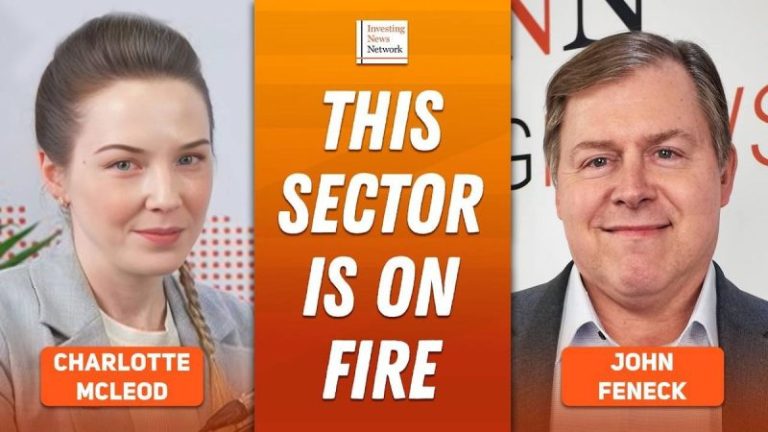
John Feneck, portfolio manager and consultant at Feneck Consulting, explains why he expects gold and silver prices to retest January’s highs, noting that he sees investors beginning to rotate away from the tech sector and toward commodities.

‘This sector is on fire, this sector will continue to rally.’

Securities Disclosure: I, Charlotte McLeod, hold no direct investment interest in any company mentioned in this article.

This post appeared first on investingnews.com

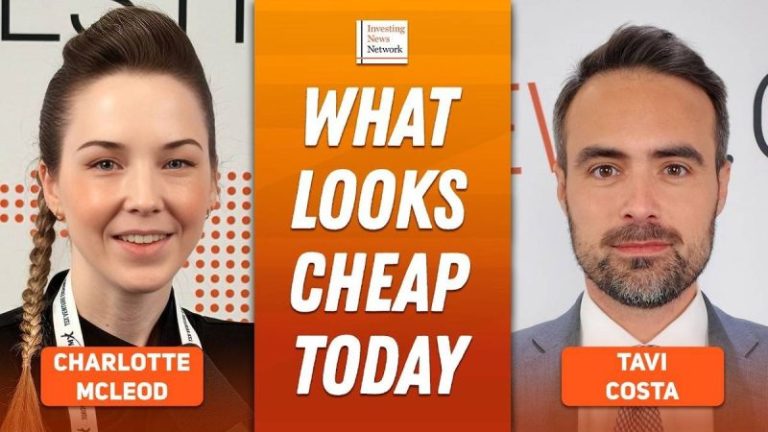
Tavi Costa, CEO of Azuria Capital, explains where he’s looking to deploy capital right now, mentioning mining, energy and emerging markets.

‘When I apply macro analysis into markets, there’s a few things that look exceptionally cheap today that could be extremely asymmetric,’ he commented.

‘Again, I could be wrong in three of them, but if I get one right it’s going to go up.’

Securities Disclosure: I, Charlotte McLeod, hold no direct investment interest in any company mentioned in this article.

This post appeared first on investingnews.com

VANCOUVER, BC / ACCESS Newswire / March 10, 2026 / Earthwise Minerals Corp. (CSE:WISE,OTC:HWKRF)(FSE:966) (‘Earthwise‘ or the ‘Company) announces that it has entered into a Media Agency Agreement (the ‘Agreement’) with Global One Media Group Pte. Ltd. (‘Global One Media’), under which Global One Media will provide digital marketing services, including content creation, social media distribution, and related online awareness initiatives.

The term of the Agreement is for six months (and then month to month), for a monthly fee of US$6,000, with the first three months payable in advance. All fees payable by the Company to Global One Media pursuant to the terms of the Agreement will be paid out of general working capital of the Company.

Global One Media is based in Singapore and is arm’s length to the Company. Global One Media currently holds securities of the Company but will not receive any securities as compensation under the Agreement. The services to be provided under the Agreement are limited to marketing and communications activities and do not include investor relations services. Global One Media will not engage in any promotional activities that require registration under applicable securities laws. The Agreement remains subject to acceptance by the Canadian Stock Exchange.

About Global One Media

Global One Media Group is an investor marketing and media firm focused on digital investor communications for publicly traded companies. Through strategic narrative development, premium video content, and international distribution across its investor media network, the firm helps issuers enhance visibility and connect with investors across North America, Europe, and Asia.

Management Commentary

Mark Luchinski, CEO of Earthwise, commented:

‘We’re thrilled to partner with Global One Media to elevate Earthwise Minerals’ online presence. Their international reach and digital storytelling capabilities will help expand awareness of our progress and opportunities as we continue advancing the Iron Range Gold Project.’

About Earthwise Minerals

Earthwise Minerals Corp. (CSE: WISE,OTC:HWKRF; FSE: 966) is a Canadian junior exploration company focused on advancing the Iron Range Gold Project in southeastern British Columbia near Creston, B.C. The Company holds an option to earn up to an 80% interest in the fully permitted project, which is road-accessible and situated within a prolific mineralized corridor. The property covers a 10 km x 32 km area along the Iron Range Fault System and hosts multiple high-grade gold showings and large-scale geophysical and geochemical anomalies.

For more information, visit www.earthwiseminerals.com.

Earthwise Minerals Corp.,

ON BEHALF OF THE BOARD

‘Mark Luchinski’

Contact Information:

Mark Luchinski
Chief Executive Officer, Director
Telephone: (604) 506-6201
Email: luch@luchccorp.com

Forward Looking Statements

This news release includes statements that constitute ‘forward-looking information’ as defined under Canadian securities laws (‘forward-looking statements’) including, without limitation, statements respecting the Offering and the intended use of proceeds therefrom. Statements regarding future plans and objectives of the Company are forward looking statements that involve various degrees of risk. Forward-looking statements reflect management’s current views with respect to possible future events and conditions and, by their nature, are subject to known and unknown risks and uncertainties, both general and specific to the Company. Although the Company believes the expectations expressed in its forward-looking statements are reasonable, forward-looking statements are not guarantees of future performance, and actual outcomes may differ materially from those in forward-looking statements. Additional information regarding the various risks and uncertainties facing the Company are described in greater detail in the ‘Risk Factors’ section of the Company’s annual management’s discussion and analysis and other continuous disclosure documents filed with the Canadian securities regulatory authorities which are available at www.sedarplus.ca. The Company undertakes no obligation to update forward-looking information except as required by applicable law. The reader is cautioned not to place undue reliance on forward-looking statements.

For more information, please contact Mark Luchinski, Chief Executive Officer and Director, at luch@luchccorp.com or (604) 506-6201.

SOURCE: Earthwise Minerals Corp.

View the original press release on ACCESS Newswire

News Provided by ACCESS Newswire via QuoteMedia

This post appeared first on investingnews.com

Questcorp Mining Inc. (CSE: QQQ,OTC:QQCMF) (OTCQB: QQCMF) (FSE: D910) (the ‘Company’ or ‘Questcorp’) is pleased to announce the successful completion of 12.8 line kilometres of induced polarization (‘IP’) surveying over the Marisa Zone at its 1,168-hectare North Island Copper Project located near Port Hardy on Vancouver Island, British Columbia.

The Company is currently reviewing the newly acquired geophysical data and will release a detailed interpretation once the technical team has completed its evaluation. As part of this process, Peter E. Walcott and Associates Limited will integrate the historical 1992 IP survey data with the new 2026 survey results to generate a comprehensive 3D inversion model of the target area.

The results of this work are expected to assist in defining priority drill targets. Subject to final interpretation and permitting timelines, the Company intends to initiate permitting for a drill program in late H1 or early H2 2026.

Previous exploration at the Marisa Zone identified copper mineralization associated with an IP chargeability anomaly. In 1992, two of five diamond drill holes were completed to test the anomaly intersected copper mineralization, including:

  • 0.078% copper over 56.39 metres (DDH92-01)
  • 0.041% copper over 70.71 metres (DDH92-03)

Both intercepts were encountered within altered quartz diorite, with copper grades increasing with depth in DDH92-03.

Source: Geophysical and Diamond Drilling Report on the Marisa Property, G.J. Allen and P.G. Dasler, February 29, 1992, prepared for Great Western Gold Corporation.

‘This recently completed IP survey represents an important step in advancing the Marisa Zone target,’ stated Saf Dhillon, President & Chief Executive Officer of Questcorp Mining. ‘The survey has successfully confirmed the presence of the historical chargeability anomaly identified in earlier work. Once Walcott and Associates completes the 3D inversion and our technical team finishes reviewing the results, we expect to refine potential drill targets and move toward a drill program later in 2026.’

The Company cautions that a Qualified Person has not verified the historical exploration data referenced in this release. The presence of mineralization on adjacent or nearby properties, including NorthIsle Copper and Gold and BHP properties, is not necessarily indicative of mineralization on the North Island Copper Project.

The technical content of this news release has been reviewed and approved by R. Tim Henneberry, P. Geo (BC), a Director of the Company and a Qualified Person under National Instrument 43-101 – Standards of Disclosure for Mineral Projects.

About Questcorp Mining Inc.

Questcorp is engaged in the business of the acquisition and exploration of mineral properties in North America, with the objective of locating and developing economic precious and base metal properties of merit. The Company holds an option to acquire an undivided 100-per-cent interest in and to mineral claims totalling 1,168.09 hectares comprising the North Island Copper property, on Vancouver Island, B.C., subject to a royalty obligation. The Company also holds an option to acquire an undivided 100-per-cent interest in and to mineral claims totalling 2,520.2 hectares comprising the La Union project located in Sonora, Mexico, subject to a royalty obligation.

ON BEHALF OF THE BOARD OF DIRECTORS,

Saf Dhillon
President & CEO

Questcorp Mining Corp.
saf@questcorpmining.ca
Tel. (604-484-3031)
Suite 550, 800 West Pender Street
Vancouver, British Columbia
V6C 2V6

https://questcorpmining.ca

This news release includes certain ‘forward-looking statements’ under applicable Canadian securities legislation. Forward-looking statements include, but are not limited to, statements with respect to the intended use of proceeds from the Offering; and closing of subsequent tranches of the Offering. Forward-looking statements are necessarily based upon a number of estimates and assumptions that, while considered reasonable, are subject to known and unknown risks, uncertainties, and other factors which may cause the actual results and future events to differ materially from those expressed or implied by such forward-looking statements. Such factors include, but are not limited to general business, economic, competitive, political and social uncertainties, uncertain capital markets; and delay or failure to receive board or regulatory approvals. There can be no assurance that such forward-looking statements will prove to be accurate, as actual results and future events could differ materially from those anticipated in such statements. Accordingly, readers should not place undue reliance on forward-looking statements. The Company disclaims any intention or obligation to update or revise any forward-looking statements, whether as a result of new information, future events or otherwise, except as required by law.

Neither the Canadian Securities Exchange nor its Regulation Services Provider (as that term is defined in the policies of the Canadian Securities Exchange) accepts responsibility for the adequacy or accuracy of this release.

To view the source version of this press release, please visit https://www.newsfilecorp.com/release/288086

News Provided by TMX Newsfile via QuoteMedia

This post appeared first on investingnews.com

Investor Insight

With a strong asset foundation, C$8 million in cash, and an experienced technical team, Prince Silver is well-positioned to capitalize on the current macro tailwinds in the silver and manganese markets. The project has a US Critical Minerals advantage, hosting silver, zinc, lead, and manganese, in addition to gold.

Overview

Prince Silver (CSE:PRNC,OTCQB:PRNCF) is a Vancouver-based exploration company focused on unlocking value at the Prince silver project in southeastern Nevada.

In July 2025, the company completed a transformational acquisition of Stampede Metals Corporation and subsequently rebranded from Hawthorn Resources to Prince Silver Corp.

The flagship asset is a district-scale, past-producing silver-gold-zinc-manganese carbonate replacement system, historically mined through the early to mid-1900s. The immediate objective is to validate and expand upon the 129 historic drill holes (over 16,600 meters) to convert the exploration target into a maiden NI 43-101 mineral resource, targeted for the fourth quarter of 2026.

Company Highlights

  • Flagship Project: 100 percent ownership of the historic Prince silver mine in Lincoln County, Nevada, an open, near-surface silver-gold-zinc carbonate replacement deposit. It has an exploration target of 23 to 45 million tons, with strong historic grades.
  • Fully Funded Drilling Program Underway: A 9,000-meter reverse-circulation drill program is now underway with a steady stream of assay results expected from January to May 2026. This follows an recent funding raise of approximately C$4.75 million in gross proceeds.
  • Clean Corporate Reset: Hawthorn Resources completed the Stampede Metals acquisition and re-listed as Prince Silver Corp. on July 11, 2025.
  • Tight Share Structure: The company has 58.9 million shares issued and outstanding as of February 23, 2026.
  • US Critical Minerals Leverage: The Prince Project hosts critical and strategic minerals on the 2025 USGS list: silver, zinc, lead, and manganese, in addition to gold.
  • Experienced, Hands-on Leadership: President Ralph Shearing, CEO Derek Iwanaka, and new directors Marco Montecinos, Robert Wrixon and Darrell Rader add mine-building, corporate, and capital-markets depth to the leadership team.
  • Expanded Land Position: The land package at the Prince Silver Project has more than doubled, securing over 7 kilometers of prospective strike length along the mineralized fault system.

Key Projects

Prince Silver Project

The Prince silver project is a large-scale, polymetallic Carbonate Replacement Deposit (CRD) located just west of Pioche, a historic mining district in southeastern Nevada. The project hosts a structurally and stratigraphically controlled system of silver-rich mantos, breccias, and fissure veins. Historic underground production between 1912 and 1949 totaled approximately 1.12 million tons (Mt) at average grades of 100 grams per ton (g/t) silver, 4.5 percent zinc, and 10 percent manganese.

Highlights

  • Geological compilation work has defined an exploration target ranging between 23 and 45 Mt, grading approximately 37 to 40 g/t silver, 1.5 percent zinc, and 0.8 percent lead.
  • The fully-funded 9,000 meter drill program is underway with a steady stream of assay results expected from January to May 2026, targeting a maiden NI 43-101 Mineral Resource Estimate (MRE) in the fourth quarter of 2026.
  • The company recently expanded its land position, securing over 7 kilometers of prospective strike length along the mineralized fault system.

Stampede Gap Copper-Gold-Molybdenum Project

The Stampede Gap Copper-Gold-Molybdenum Project is a large, early-stage porphyry target in Nevada featuring over 200 claims. Historical geophysics have identified multiple IP-resistivity anomalies, and a single 700 meter drill hole encountered extensive skarn alteration. Its location is only 150 kilometers south of KGHM’s Robinson copper-gold-silver-molybdenum mine. The project presents a deep-seated exploration target that has the hallmarks of a large-scale copper-molybdenum deposit.

Management Team

Derek Iwanaka – Chief Executive Officer and Director

Derek Iwanaka is a mining-sector executive with over 23 years of investor relations, corporate development, and capital markets experience. He has supported more than 20 corporate transactions and helped raise over US$100 million, including one of Canada’s first at-the-market financings. Iwanaka previously held senior roles at BeMetals and First Mining Gold Corp., contributing to strategic acquisitions, project advancement, and significant market-cap growth.

Ralph Shearing – President and Director

Ralph Shearing is a professional geologist and mine developer with over 35 years in mineral exploration development and public company management. Since 1987, Shearing has held senior executive positions with public junior mining and exploration companies, notably Luca Mining, a company he founded and guided through exploration, development, construction, and pre-production of the Tahuehueto mine in Mexico. He currently acts as a Qualified Person for Prince Silver’s technical disclosure.

Rob Scott – Chief Financial Officer and Corporate Secretary

Rob Scott’s professional experience has helped raise over $200 million in equity with past and current executive and board positions with TSXV issuers, including Great Bear Resources, Valore Metals, Riverside Resources, Capitan Silver, and First Helium.

Dr. Robert Wrixon – Independent Director

Robert Wrixon is the managing director of Starboard Global, a Hong Kong-based project incubator and VC firm. Wrixon is a seasoned executive and engineer with over 20 years’ experience across ASX- and LSE-listed mining companies. He holds a PhD in mineral engineering from UC Berkeley and brings deep technical, corporate development, and mergers and acquisitions experience.

Darrell Rader – Independent Director

Darrell Rader is the president and chief executive officer of Minaurum Gold, a silver explorer in Mexico. He has directly raised over $150 million for mineral exploration and development and has strong relationships with institutional investors and bankers. Rader founded Defiance Silver Corp, a silver developer, and previously was the head of corporate development at IMPACT Silver. Rader holds a BBA in Finance from Simon Fraser University.

Marco Montecinos – Independent Director

Marco Montecinos has over 40 years of mineral exploration experience across the Americas, including a key role in the three-million-ounce Marlin Gold discovery, multiple gold discoveries, and current roles as chief president of exploration at Gunpoint Exploration and US Critical Metals, as well as president of Tigren, Inc.

This post appeared first on investingnews.com

Copper prices surged through 2025 and into 2026, placing the red metal firmly back into the spotlight as concerns about a looming global supply shortfall mount among market watchers.

Analysts say the tightening outlook reflects a powerful mix of rising demand — driven by urbanization, the energy transition and the rapid expansion of artificial intelligence infrastructure — against a backdrop of stagnant mine supply.

Speaking at the Benchmark Summit, held in Toronto on March 2, Carlos Piñeiro Cruz, principal copper analyst at Benchmark Mineral Intelligence, outlined the key forces shaping the copper market in the near term, while warning that structural supply challenges could intensify over the coming decade.

Copper supply side increasingly tight

It would be a lie to suggest that the copper supply and demand situation is tenable.

In 2025, mining disruptions led to significant declines in output. Cruz noted that production in Q4 2024 exceeded that of any quarter in 2025; in fact, the sector lost around 1 million metric tons (MT) of output in total.

Much of the reduction was due to unforeseen situations, such as the mudslide at Freeport-McMoRan’s (NYSE:FCX) Grasberg in Indonesia, seismic events at Ivanhoe Mines’ (TSX:IVN,OTCQX:IVPAF) Kamoa-Kakula in the Democratic Republic of the Congo and worker strikes at BHP’s (ASX:BHP,NYSE:BHP,LSE:BHP) Escondida in Chile.

While the operations will eventually recover, the incidents come at a time when the copper market is increasingly tight and is expected to enter into a supply deficit in the coming years.

Cruz is predicting copper production growth of 1.5 percent in 2025, suggesting that the growth rate is behind what is expected from refined copper demand. The majority of the increase will come from mines returning to normal operations, with additional amounts from projects or expansions that began ramping up in 2025.

Cruz stated that pre-disruption growth was originally forecast at around 2 million MT in 2026, but has since been downgraded by around 700,000 MT, with the majority of the reduction coming from Escondida.

“We see that supply coming in this year will be highly skewed towards H2 as mines recover, with a 9 percent increase between Q1 and Q4, with most of this growth coming from South America, Africa and Asia, ex-China,” Cruz said.

From there, he expects growth to stabilize in 2027 at a much higher rate than this year, with Africa to experience a faster growth rate than the overall market. In the long run, Cruz predicts a compound annual growth rate of 0.9 percent between 2025 and 2035, with copper output peaking in 2033 at 27 million MT.

Copper demand drivers to watch

One of the main areas Cruz focused on was the acceleration of demand driven by the energy transition, artificial intelligence and technology. A lot of the new demand is coming from electric vehicles (EVs) — while the amount of copper in each EV is seen declining, demand growth will remain strong as sales increase.

“We do think that copper density on EVs is going to go down substantially. From 2010 to 2035, it’s going to go from 85 kilograms per unit to 64 kilograms per unit. In spite of this, we still think that copper demand from battery EVs and hybrid vehicles will grow substantially from around 2.3 million MT in 2025 to 6 million MT in 2035,” Cruz said.

It’s not just EVs, other technologies like artificial intelligence, data centers and communications are placing additional strains on the electrical infrastructure. Increasing demand for new power lines, electrical generators and energy storage is further bolstering downstream demand for copper.

“We anticipate demand from these particular sectors will grow from around 10 million MT in 2025 to 14 million MT in 2035. With most of the demand coming from energy transmission and generation,” Cruz said.

He went on to explain that transmission and generation account for 77 percent of the anticipated growth.

Cruz thinks energy demand has been overshadowed by the growth in data centers, where he suggested that copper demand will increase by only about 400,000 MT between 2025 and 2035.

“Of the growth I told you about from EVs with almost 4 million MT, or the demand from energy infrastructure with a little less than 3 million MT, it’s not that impressive. Although it still adds up to a substantial growth,” he said.

100 new copper mines by 2035?

The key takeaway from Cruz’s presentation was that a copper supply gap is developing. While he pointed out that the annual supply growth rate will come in at around 1 percent, demand is nearly double at 1.9 percent.

“This basically means that with the mines that currently exist, plus the projects that are under construction, we expect to see a difference in what needs to be mined and what will be mined in 2035 of around 7.4 million MT,” he said.

When probable projects are factored in, the supply gap narrows, but a 2.2 million MT shortfall still exists. However, these additional projects are not guaranteed. Cruz suggested that to avoid shortfalls, 100 new mines with output in the 75,000 MT range need to be built by 2035 — but this won’t be an easy task. Of the 10 largest mines in the world, only two were built after 2010; meanwhile, many of the others are decades or over 100 years old.

One reason new mines are scarce is long permitting processes, but Cruz also acknowledged that newly found large-scale deposits are at greater depths and lower grades. This has led to a scarcity of greenfield projects, with most growth coming from expansions at existing mines, a trend Cruz expects to continue over the coming years.

“Looking ahead, we expect this trend to continue to the point that we anticipate that by 2031, new production from greenfield projects will be half of what it was in 2011,” he said.

Additionally, Cruz said the copper market is becoming increasingly bifurcated, with China set to be a dominant force in both production and refinement of the red metal moving forward.

“The supply gap, or the future copper shortage, is something that the industry has been warning about for years now. The truth is, it seems not a lot of people are paying attention to it, but China has,” he said.

Cruz explained that China’s involvement in the Democratic Republic of Congo was the result of extensive planning and considerable investment. In fact, Chinese companies have collectively surpassed western producers and are securing their own supply chain.

Investor takeaway

Overall, Cruz believes the copper sector is well positioned for investment.

While he has some concern that smelting capacity is nearing saturation, he expects the situation to return to balance by 2031 and thinks that competition for concentrate will keep producer costs lower until then.

The combination of low treatment charges, high copper prices and even higher by-product gold, silver and molybdenum prices has helped increase margins and profitability for operators.

“We think that the market is in a very good position right now for miners at least. You could argue that for smelters it’s good as well despite the treatment and refinement charges, and we think that if these factors last a little bit longer, we expect some of these projects to bring the copper that humanity needs,” Cruz said.

Securities Disclosure: I, Dean Belder, hold no direct investment interest in any company mentioned in this article.

This post appeared first on investingnews.com

Canada is a premier destination for mineral exploration and mining, but the nation’s exploration-stage companies are still struggling to attract investment dollars.

The country’s appeal is showcased in the Fraser Institute’s most recent Annual Survey of Mining Companies, which tracks the investment attractiveness of global mining jurisdictions. It places the Canadian provinces of Ontario and Saskatchewan among the world’s top mining jurisdictions, behind only Nevada.

The Canadian mining industry “serves as a proxy for the global (mining) industry” as it is home to “the largest concentration of public mineral companies in the world,” with Toronto at “the center of the mining finance universe,” said Douglas Silver, partner and senior advisor at Benwerrin Investment Partners, during his presentation at this year’s Prospectors & Developers Association of Canada (PDAC) convention, held last week.

Jeff Killeen, director of policy and programs for PDAC, shared similar sentiments in his own presentation, telling conference attendees, “Almost 30 percent of every dollar raised somewhere in the world for the (mining) sector comes through the Canadian marketplace: the TSX, the Venture and the CSE.”

Canada’s unique tax incentives crucial for mining investment

Canada owes its leading position in the global mining industry to its large landmass and abundance of natural resources. However, both Silver and Killeen pointed out that the nation’s flow-through share tax incentive — unique to Canada — is also “incredibly critical” to the success of the natioin’s mining sector.

Flow-through shares are a highly specialized financing tool that allow resource companies to transfer eligible exploration and development expenses to investors, who then deduct them from their own taxable income.

Under the Mineral Exploration Tax Credit (METC), funds generated from this type of capital raise must be put into a project within 18 months. There’s also the Critical Mineral Exploration Tax Credit (CMETC), which applies to critical minerals used for batteries and magnets, including rare earths, nickel, uranium, lithium and graphite, among others.

Generational shift shrinking pool of mining investors

Although Canada dominates the global mining finance sector and is teeming with multiple types of mineral deposits, it’s becoming increasingly difficult for the nation’s exploration-stage companies to attract investment dollars.

The tight financial landscape for today’s explorers stems in part from both a complex regulatory system that limits the areas open to mining activity, and a lack of proper infrastructure in the more remote regions of the country. Both of these shortcomings strike at the heart of perceived jurisdictional risk for both retail and institutional investors.

During his presentation, Killeen highlighted a few of the key financing trends affecting access to capital in the mineral industry, noting that last year saw a dramatic uptick in investment in the mining sector.

Where is capital originating from? Most of it was equity raised through private placements, which poses a problem as it represents a very narrow investor base that consists of friends and family of the management team and strategic investors that probably already own shares in the company.

“That just tells us that we’re not broadening the investor base. We’re not pulling in more investors. There’s no more new retail folks coming in investing in shares in Canada. This tells us that we’re in a very risky balance in terms of who actually can fund the sector through the next generation,” he warned the PDAC audience.

“There is a lesser population of retail investors as time goes on. You know that the Boomer generation is going away in terms of an investment pool, and the next generation isn’t necessarily replicating that.”

Silver also views the generational shift in the investment landscape as a problem for raising money in the mining industry. “There’s no question from what I’ve read and heard that the younger generations don’t pick individual stocks. They tend to lean towards ETFs or crypto or other stuff,” he said. “Crypto is definitely competing with mining.”

Gold grabbing all the dollars

Canada’s minerals industry did experience a strong rebound in terms of equity investment in 2025, but it was heavily targeted at producers and developers with large-scale, near-production projects. Gold dominated, but investment also increased in projects associated with critical minerals like lithium, nickel, copper and graphite.

“How much is going to the bottom end, to those sub-$100 million market cap companies, the lion’s share of the junior explorers that are out there? Well, in the Canadian marketplace, only about 10 percent of every dollar raised is getting down to those size of companies,” explained Killeen, highlighting the discrepancy.

In his view, the lack of investment over the past decade is bringing about a decline in grassroots exploration.

Gold is grabbing many mineral investment dollars, not only because its price is surging to unprecedented highs, but also because there’s a faster return on investment compared to other metals. Killeen said that’s due to the fact that gold mining doesn’t require large amounts of infrastructure such as railways and ports.

“In some cases, you don’t need roads. The capital to develop a gold mine might be one-sixth of, one-10th of or one-20th of a copper mine or a zinc mine,” he commented. “So the rate of return for the average investor who’s looking at an exploration stock saying, ‘Could I get money back into this? Could I get value back into this?’ Today that timeframe is much shorter, and the capital to bring it to market is much lower.”

Looking at copper, which is much more capital intensive, Killeen said production is down nearly 30 percent from seven or eight years ago. Reserves are also down, even though rising copper prices have resulted in more resources being upgraded to reserves. Silver agreed with that take — his research shows that the Canadian mining industry is overflowing with gold companies. Of the 1,555 mining companies in Canada in 2024, 42 percent of them were gold-focused firms compared to only 17 percent for copper, the second highest amount.

“So why do we have so many gold companies? I think the answer is pretty obvious to me, which is if you want to build a porphyry copper mine, you’ve got to go raise $5 (billion) or $10 billion,” said Silver. “That’s very difficult in the mining industry, because we just don’t have that much gross capital available to us relative to what some of the other industries have … but you can build a gold mine for a couple hundred million (dollars).’

Despite the massive focus on gold, Killeen and Silver both noted that Canada is actually seeing increasing exploration activity for rare earths, lithium, cobalt, graphite and uranium.

Improving the investment case for Canada’s juniors

Killeen said PDAC and its members are pushing for the Canadian government to make the METC and CMETC permanent to bring more investment into mineral exploration in greenfield regions and making new discoveries.

Last year, flow-through shares generated C$1.6 billion in investment into the sector, according to Silver’s research, or about 76 percent of funding received by mineral exploration companies in Canada.

“When you look at the role of Canadian flow through, it’s so incredibly critical to Canadian mining,” he said. Silver too is advocating for the mining industry and investors to “fight for flow through way more than you do.’

To address infrastructure challenges for bringing critical metals projects into production sooner for a quicker return on investment, Killeen suggested more pension funds investing in Canada and easing government regulations.

“We need them cooperating together with the federal government to develop major infrastructure that doesn’t exist beyond 100 kilometers from the border,” he said.

Killeen noted that “the world is changing” and governments, including Canada’s, are becoming more focused on securing domestic sources of critical minerals. For example, at PDAC, Tim Hodgson, Canada’s minister of energy and natural resources, announced a C$3.6 billion suite of investments targeting the critical minerals sector.

Securities Disclosure: I, Melissa Pistilli, hold no direct investment interest in any company mentioned in this article.

This post appeared first on investingnews.com

Fathom Nickel Inc. (CSE: FNI,OTC:FNICF) (FSE: 6Q5) (OTCQB: FNICF) (‘Fathom’, or the ‘Company’) is pleased to announce that the winter drill program at the Gochager Lake project commenced late in the day of March 6, 2026. Drilling is expected to continue into the first or second week of April, dependent upon prevailing winter conditions.

Ian Fraser, Fathom CEO and VP Exploration stated, ‘Our field crews worked very hard over the course of the past two months to ensure the trail and ice conditions were safe to transport the diamond drill and ancillary equipment to site for the start of this program. With the winter trail now in place, we will eliminate our reliance on helicopter support, resulting in an expected 30% to 35% reduction in total drilling cost per meter. This increased cost efficiency will allow us to drill more meters and, ultimately, more holes in comparison to historical, heli-supported drill programs. This drill program is now well underway, and we look forward to testing along strike of the historic Gochager Lake deposit for more Gochager-like mineralization.’

The Company is fully funded to complete the proposed drill program of up to 4,000 meters. In the event that the full drill program is not completed before spring break-up in mid-April, we intend to return to Gochager in late May/early June to complete the full 3,000-to-4,000-meter program.

Qualified Person and Data Verification

Ian Fraser, P.Geo., CEO, VP Exploration and a Director of the Company and the ‘qualified person’ as such term is defined by National Instrument 43-101, has verified the data disclosed in this news release, and has otherwise reviewed and approved the technical information in this news release on behalf of the Company.

About Fathom Nickel Inc.

Fathom is an exploration company that is targeting magmatic nickel sulphide discoveries to secure the supply of North American Critical Minerals and to support the global green energy transition. The Company now has a portfolio of three high-quality exploration projects located in the prolific Trans Hudson Corridor in Saskatchewan:

1) The Albert Lake Project, a 90,000+ hectare project that hosts the historic Rottenstone Mine1. Fathom exploration to date at the Albert Lake project confirms:

  • The high-grade Ni-Cu-Co+3E1 Rottenstone deposit mineralization extends to the south a minimum 40m and remains open.
  • The Rottenstone deposit is potentially offset and continues within the footwall of a prominent fault defined by drilling.
  • A new Rottenstone-like discovery (similar host rock, and similar mineralization) by drilling 500-550m W-NW of the historic mine; the 300+m Bay Island Trend, remains open along strike.
  • Similar Rottenstone-like host rock and mineralization intersected by drilling approximately 1.5km S-SW of the historic mine (the Nic5-Tremblay-Olson area).

2) The 33,000+ hectare Gochager Lake Project that hosts the historic Gochager Lake deposit2. Fathom exploration to date at the Gochager Lake project confirms:

  • Vertical extension of Ni-Cu-Co mineralization a minimum of 150m below the historic Gochager Lake deposit interpreted boundary, and very good potential for expansion of mineralization in all directions.
  • Multiple high-grade vertically oriented Ni-Cu-Co sulphide breccia mineralization zones and chutes occur within the historic deposit, and the zones, chutes remain open for further expansion and delineation in all directions.
  • Surface mapping and rock geochemistry has confirmed the Gochager Lake deposit host/container rock extends 3.5+ km along strike east-northeast of the deposit.
  • Soil geochemistry has defined a favourable geochemical footprint, inclusive of the historic deposit, that now extends 8.6+ km.

3) The 10,000+ hectare Friesen Lake Project located 40km southwest of the historic Rottenstone Mine and 30km northwest of the historic Gochager Lake deposit.

The Friesen Lake property hosts the Olsen Cu-Ni-Pt Showing also referred to as the Friesen Lake Cu-Ni-Pt showing and is described as an ultramafic dyke that historic trenching and drilling demonstrates Cu-Ni-Pt-Pd and Au mineralization within the ultramafic dyke (Saskatchewan Mineral Deposit Index (SMID) #0928a). To date Fathom has not performed any exploration at the Friesen Lake Project.

1 – The Rottenstone Mine; a small open-pit mining / milling operation was in production 1965-1969. Mining in 1965 produced 5,500 short tons with a reported average production grade of 3.23% Ni, 1.83% Cu, 0.14 oz/ton Pt, 0.10 oz/ton Pd, 0.03 oz/ton Au (9.26 g/t*3E, 3E = Pd-Pt+Au) and 0.20 oz/ton Ag. Initial milling of mine concentrate; September 5 – November 7, 1965, produced 1,070 dry short tons of concentrate that averaged 10.83% Ni, 5.74% Cu, 0.33 oz/ton Pt, 0.53 oz/ton Pd, 0.10 oz/ ton Au (32.91 g/t* 3E) and 1.25 oz/ton Ag. Richards, B.R. and Robinson, B.G.W. (1966), Mining and milling a small ore deposit …. Rottenstone Mining Limited: The Canadian Mining and Metallurgical Bulleting for December 1966. The Saskatchewan Mineral Deposit Index (SMDI) #0958 reports final mine production in 1969 of 28,724 tons with an average grade of 3.28% Ni, 1.83% Cu and 9.63 g/t 3E and that approximately 9,000 tons of concentrate were sold to the International Nickel Company of Canada Limited. * A factor of 34.286 g/tonne was used to convert 1 oz/ton to g/tonne (g/t).

2 – The Gochager Lake property is host to the historic Gochager Lake Ni-Cu deposit. There is no source or available Technical Reports to verify the historic resource estimate for the Gochager Lake deposit; hence, Fathom will treat the historic estimate as an Exploration Target. Available records in the Saskatchewan Mineral Deposit Index (SMDI) and Saskatchewan Mineral Assessment Database (SMAD) suggest an Exploration Target of 4-5 million tons grading 0.3% Ni – 0.4% Ni and 0.08% Cu – 0.09% Cu. The potential quantity and grade are conceptual in nature, there has been insufficient exploration to define a mineral resource, and that it is uncertain if further exploration will result in the target being delineated as a mineral resource. At present, Fathom has drilled 16 drillholes (5,549m) into the historic Gochager Lake deposit and has confirmed Ni-Cu grades comparable to and higher than the historical grades reported, thus confirming that a deposit of Ni-Cu+Co metal accumulation does exist at the historic Gochager Lake deposit / property. The disclosed potential quantity and grade has been determined by historic records notably; the Saskatchewan Mineral Deposit Index and Saskatchewan Mineral Assessment Database. (SMDI #0880) reports delineation drilling outlined a deposit at the historic Gochager Lake Deposit; Steel, J.S. (1990), (SMAD 73P15-0091): Report on a Diamond Drilling Program on the Gallagher (Gochager) Lake Property of McNickel Inc., reported that Scurry-Rainbow Oil Ltd. constructed vertical sections and a longitudinal section from drill data collected 1966-1968, and an orebody with reasonably well-defined limits was interpreted. As stated above, the historic estimate is not well documented and there are no available Technical Reports to support the historic resource estimate(s).

For further information, please contact:

Ian Fraser, Chief Executive Officer & Vice-President Exploration
1-403-650-9760
Email: ifraser@fathomnickel.com

or

Doug Porter, President & CFO
1-403-870-4349
Email: dporter@fathomnickel.com

Forward-Looking Statements:

This news release contains ‘forward-looking statements’ that are based on expectations, estimates, projections and interpretations as at the date of this news release. Forward-looking statements are frequently characterized by words such as ‘plan’, ‘expect’, ‘project’, ‘seek’, ‘intend’, ‘believe’, ‘anticipate’, ‘estimate’, ‘suggest’, ‘indicate’ and other similar words or statements that certain events or conditions ‘may’ or ‘will’ occur. Forward-looking statements relate to information that is based on assumptions of management, forecasts of future results, and estimates of amounts not yet determinable. Any statements that express predictions, expectations, beliefs, plans, projections, objectives, assumptions or future events or performance are not statements of historical fact and may be ‘forward-looking statements.’ Forward-looking statements are subject to a variety of risks and uncertainties which could cause actual events or results to differ from those reflected in the forward-looking statements, including, without limitation: risks related to failure to obtain adequate financing on a timely basis and on acceptable terms; risks related to the outcome of legal proceedings; political and regulatory risks associated with mining and exploration; risks related to the maintenance of stock exchange listings; risks related to environmental regulation and liability; the potential for delays in exploration or development activities or the completion of feasibility studies; the uncertainty of profitability; risks and uncertainties relating to the interpretation of drill results, the geology, grade and continuity of mineral deposits; risks related to the inherent uncertainty of production and cost estimates and the potential for unexpected costs and expenses; results of prefeasibility and feasibility studies, and the possibility that future exploration, development or mining results will not be consistent with the Company’s expectations; risks related to commodity price fluctuations; and other risks and uncertainties related to the Company’s prospects, properties and business detailed elsewhere in the Company’s disclosure record. Such forward looking statements involve known and unknown risks, uncertainties and other factors which may cause the actual results, performance or achievements of the Company to be materially different from any future results, performance or achievements expressed or implied by such forward-looking statements. These forward- looking statements are made as of the date hereof and the Company does not assume any obligation to update or revise them to reflect new events or circumstances except in accordance with applicable securities laws. Actual events or results could differ materially from the Company’s expectations or projections.

To view the source version of this press release, please visit https://www.newsfilecorp.com/release/287717

News Provided by TMX Newsfile via QuoteMedia

This post appeared first on investingnews.com

Force majeure declarations are beginning to ripple across the global commodities sector as the escalating conflict in the Middle East threatens to spread shocks beyond oil and gas.

Energy companies, producers, and traders are already grappling with interruptions to shipments through the Strait of Hormuz, the narrow waterway linking the Persian Gulf to global markets.

The strait typically carries roughly one-fifth of the world’s oil and liquefied natural gas supply, making it one of the most important chokepoints in global commodity trade.

Energy producers declare force majeure

Some of the first force majeure declarations have emerged from the energy sector.

QatarEnergy declared force majeure on liquefied natural gas (LNG) deliveries this week after attacks forced the state-owned company to halt production at key facilities. The decision followed strikes on two LNG installations and continuing security threats in the region.

In Israel, Chevron (NYSE:CVX) also declared force majeure at the Leviathan offshore gas field after authorities ordered a shutdown following US–Israeli strikes on Iran and subsequent retaliation across the region.

Leviathan is Israel’s largest gas field and supplies natural gas to Israel, Egypt and Jordan. The suspension marks the second time in less than a year that regional hostilities have interrupted operations at the site.

Meanwhile, oil producers in the Gulf have begun cutting output as tankers struggle to move through Hormuz. The United Arab Emirates (UAE) and Kuwait have both started reducing production after storage facilities began filling up when exports could not leave the region.

Aluminum, precious metals markets feel the shock

Aluminium Bahrain BSC has invoked force majeure on some shipments after maritime traffic through Hormuz effectively stalled. The company said the measure was tied to transit disruptions rather than damage to its smelter operations.

The announcement sent aluminum prices sharply higher. Futures in London surged to their highest level since 2022, rising as much as 5.1 percent during trading before settling higher on the day.

The aluminum market is particularly sensitive to supply disruptions because the metal is used across a wide range of industries, including automotive manufacturing, construction, appliances and packaging. Even short interruptions can create shortages for manufacturers that rely on tightly timed deliveries of specialized metal products.

Mining financier Robert Friedland, founder of Ivanhoe Mines (TSX:IVN,OTCQX:IVPAF), warned that the broader consequences of a prolonged closure of the Strait of Hormuz could extend far beyond the Gulf region.

“Further to what we said about the impact that the closing of the Strait of Hormuz has on the sulphur market… and therefore African copper production… Craig Tindale maps out that this is only one small piece of a giant and critically important 3D jigsaw,” Friedland wrote on X.

“Everything affects everything, everywhere, all of the time.”

Meanwhile, precious metals markets are also feeling the effects of the conflict. Air traffic across much of the Gulf region has been curtailed since US and Israeli strikes on Iran began earlier this week, halting most flights in and out of Dubai.

Dubai, one of the world’s most important hubs for bullion logistics, handled roughly 20 percent of global gold shipments last year, serving as a key transit point for metal moving from Africa and Europe to Asian markets.

With flights grounded, traders say shipments of gold and silver have stalled across several trading centers.

“Gold availability has become a concern following the suspension of flights from the Middle East,” said John Reade, senior market strategist at the World Gold Council (WGC).

Some traders say prolonged disruptions could increase volatility in precious metals markets that have already seen sharp price swings this year. Gold recently surged to record levels above US$5,400 per ounce amid geopolitical tensions before easing slightly this week.

Even after the pullback, prices remain nearly 20 percent higher since the start of the year.

Geopolitical turmoil drive metals market swings

Jeffrey Christian, managing partner at CPM Group, said geopolitical instability has been a major driver of investor demand for gold and silver.

“That has caused investors to buy more gold and silver than ever before.”

Christian added that high prices and volatility can also create bottlenecks in the physical metals market.

“You have to understand that with the high prices and the high volatility, that really puts a constraint… on the flow of physical metal through the market,” he said.

For now, the biggest question facing commodity markets is how long disruptions in the Persian Gulf will last.

The Strait of Hormuz remains effectively closed to most commercial shipping, leaving hundreds of oil and gas tankers anchored outside the passage while governments consider military escorts to reopen the route.

Securities Disclosure: I, Giann Liguid, hold no direct investment interest in any company mentioned in this article.

This post appeared first on investingnews.com