
Author

admin

Browsing

It’s been a wild week of ups and downs for precious metals prices.

Gold, silver and platinum have already recorded new all-time highs in 2026. But this week, the rally reversed course — only briefly, but in a big way, as is the case with such highly volatile markets.

Let’s take a look at what got the precious metals moving over the past week.

Gold price

After hitting a record high of close to US$5,600 per ounce, gold closed out January by embarking on one of the biggest price slides it’s seen in decades. By early morning trading on Monday (February 2), the yellow metal had dropped as low as US$4,400 for a significant loss of more than 21 percent.

However, gold regained much of that lost ground by Tuesday’s (February 3) close, trading back above US$4,935. By Wednesday (February 4) morning, gold was once again back above the key psychological US$5,000 mark, although it couldn’t maintain that level for long and slipped back down into the US$4,900 range.

Gold price chart, January 28, 2025, to February 4, 2026.

The primary drivers for gold this past week are:

          Silver price

          The silver price has tracked gold on these macro trends. The white metal fell from the all-time high of more than US$120 per ounce that it reached on January 29 to a low of about US$71 on Monday.

          Silver price chart, January 28, 2025, to February 4, 2026.

          Although silver lost 35 percent from its peak in such a short time, the precious metal has rebounded to an intraday high of US$92.32 as its fundamentals remain strong.

          Platinum price

          Platinum tracked its precious metal sisters down from a January 29 high of US$2,816 per ounce to as low as US$1,882. By Tuesday, the metal was back above US$2,200 and has traded mostly around that price mark for Wednesday.

          Platinum price chart, January 28, 2025, to February 4, 2026.

          Platinum is one of the top-performing metals over the past year, reaching 12 year highs in recent weeks. Demand is being driven by the metal’s essential role in the emerging hydrogen economy. Its also still seeing robust demand from the auto sector despite the emergence of electric vehicles and uneasy consumer confidence in the economy.

          On the supply side, global platinum reserves remain critically low, especially as the world’s biggest producer, South Africa, continues to be plagued by power shortages and operational disruptions.

          Palladium price

          Palladium has been the black sheep of the precious metals family for the past few years, remaining well below its March 2022 all-time record of US$3,440.76 per ounce.

          On January 29, palladium got in on the party and rallied to an intraday high of US$2,172.50.

          Then on Monday it came along for the slide, falling as low as US$1,529. After a slight rebound on Tuesday, the precious metal has traded around US$1,700 to US$1,800.

          Palladium price chart, January 28, 2025, to February 4, 2026.

          The palladium price is being held down by a slump in demand for electric vehicles and a looming oversupply situation. Analysts at Heraeus and Metals Focus predict the palladium market may move into a surplus in 2026 as secondary supply from recycling increases by 10 percent.

          Securities Disclosure: I, Melissa Pistilli, hold no direct investment interest in any company mentioned in this article.

          This post appeared first on investingnews.com

          For at least two decades, former Amazon executive Dave Clark ended his work week the same way: a standing Friday date night with his wife, Leigh Anne.

          Over dinner, the Clarks would talk through the “peak and pit” of their weeks. The ritual often revolved around Amazon, where Clark played a central role in building the logistics infrastructure that helped launch the e-commerce era.

          During those years, Leigh Anne was a sounding board for her husband. In the process, she had a front-row seat to Amazon’s growth from what she called “a baby to a behemoth.”

          By the time Clark left Amazon in 2022, he was CEO of the Worldwide Consumer division and one of billionaire founder Jeff Bezos’ top lieutenants.

          Dave Clark at Auger headquarters Monday.David Jaewon Oh for NBC News

          But these days, Fridays for the Clarks look very different.

          Their dinner date has morphed into afternoon cocktails — a bourbon with Diet Coke for her and a Manhattan for him. And the conversation isn’t focused on Amazon anymore. It’s about Auger, the supply-chain startup they run together.

          In their first joint interview from Auger’s Seattle office, the Clarks described how their marriage and complementary skill sets are shaping the company.

          “We’ve been together for so long that we kind of just read each other’s minds,” Leigh Anne said. Working together, she said, “felt like a natural fit.”

          This post appeared first on NBC NEWS

          Mr. Thordarson brings two decades of expertise in operations, infrastructure development, and large-scale business transformation in the aviation industry

          Syntholene Energy Corp. (TSXV: ESAF,OTC:SYNTF) (OTCQB: SYNTF) (FSE: 3DD0) (‘Syntholene’ or the ‘Company’) announces the nomination of Jens Thordarson, former Chief Operating Officer of Icelandair, to its Advisory Board. With nearly two decades of leadership experience in the aviation industry, Mr. Thordarson brings expertise in operations, infrastructure development, and large-scale business transformation, critical elements as Syntholene advances its synthetic fuel solutions for global transportation and logistics.

          Mr. Thordarson held multiple executive roles at Icelandair over his 17-year tenure, including Chief Operating Officer and Vice President of Technical Operations. In these roles, he spearheaded large-scale operational improvements, optimized fleet management, and integrated advanced technologies to enhance efficiency and sustainability in one of the world’s most demanding industries. Currently, he serves as CEO of GeoSalmo, a company focused on sustainable aquaculture, further reinforcing his commitment to innovative and environmentally responsible industries. Mr. Thordarson also serves as the Honorary Consul of Ireland in Iceland, encouraging tourism, trade, and foreign affairs between the two nations.

          ‘Jens’ leadership in aviation and operations, combined with his strategic network in the nation of Iceland, makes him an ideal contributor to Syntholene’s Advisory Board,’ said Dan Sutton, Chief Executive Officer of Syntholene Energy Corp. ‘As we work to bring sustainable synthetic fuels to Icelandic and European markets, his insights into politics, regulatory landscape, and infrastructure readiness will be instrumental in driving our commercialization strategy.’

          Syntholene Energy Corp. is at the forefront of developing sustainable synthetic fuels designed to seamlessly integrate with existing energy infrastructure while significantly reducing carbon emissions. The nomination of Mr. Thordarson reinforces the Company’s commitment to drawing expertise from industries where fuel efficiency, innovation, and operational scale are paramount.

          ‘I am excited to join Syntholene’s Advisory Board and contribute my experience in aviation, operations, and strategic growth,’ said Mr. Thordarson. ‘The transition to sustainable fuels is essential for industries like aviation, and Syntholene’s technology represents a major step forward, taking a fundamentally different and more disciplined approach to the challenge. I look forward to working with the team as they move toward scale.’

          About Syntholene

          Syntholene is actively commercializing its novel Hybrid Thermal Production System for low-cost clean fuel synthesis. The target output is ultrapure synthetic jet fuel, manufactured at 70% lower cost than the nearest competing technology today. The company’s mission is to deliver the world’s first truly high-performance, low-cost, and carbon-neutral synthetic fuel at an industrial scale, unlocking the potential to produce clean synthetic fuel at lower cost than fossil fuels, for the first time.

          Syntholene’s power-to-liquid strategy harnesses thermal energy to power proprietary integrations of hydrogen production and fuel synthesis. Syntholene has secured 20MW of dedicated energy to support the Company’s upcoming demonstration facility and commercial scale-up.

          Founded by experienced operators across advanced energy infrastructure, nuclear technology, low-emissions steel refining, process engineering, and capital markets, Syntholene aims to be the first team to deliver a scalable modular production platform for cost-competitive synthetic fuel, thus accelerating the commercialization of carbon-neutral eFuels across global markets.

          For further information, please contact:
          Dan Sutton, CEO
          comms@syntholene.com
          www.syntholene.com

          Investor Relations
          KIN Communications Inc.
          604-684-6730
          ESAF@kincommunications.com

          Forward-Looking Statements
          This press release contains forward-looking statements within the meaning of applicable securities laws. The use of any of the words ‘expect’, ‘anticipate’, ‘aims’, ‘continue’, ‘estimate’, ‘objective’, ‘may’, ‘will’, ‘project’, ‘should’, ‘believe’, ‘plans’, ‘intends’ and similar expressions are intended to identify forward-looking information or statements. All statements, other than statements of historical fact, including but not limited to statements regarding the completion of the definitive agreement, successful implementation of the test facility, commercial scalability, technical and economic viability, anticipated geothermal power availability, anticipated benefit of eFuel, and future commercial opportunities, are forward-looking statements.

          The forward-looking statements and information are based on certain key expectations and assumptions made by the Company, including without limitation the assumption that the Company will be able to execute its business plan, that the eFuel will have its expected benefits, that there will be market adoption, and that the Company will be able to access financing as needed to fund its business plan. Although the Company believes that the expectations and assumptions on which such forward-looking statements and information are based are reasonable, undue reliance should not be placed on the forward-looking statements and information because the Company can give no assurance that they will prove to be correct. Since forward-looking statements and information address future events and conditions, by their very nature, they involve inherent risks and uncertainties.

          Actual results could differ materially from those currently anticipated due to a number of factors and risks, including, without limitation, Syntholene’s ability to meet production targets, realize projected economic benefits, overcome technical challenges, secure financing, maintain regulatory compliance, manage geopolitical risks, and successfully negotiate definitive terms. Syntholene does not undertake any obligation to update or revise these forward-looking statements, except as required by applicable securities laws.

          Readers are advised to exercise caution and not to place undue reliance on these forward-looking statements.

          To view the source version of this press release, please visit https://www.newsfilecorp.com/release/282796

          News Provided by TMX Newsfile via QuoteMedia

          This post appeared first on investingnews.com

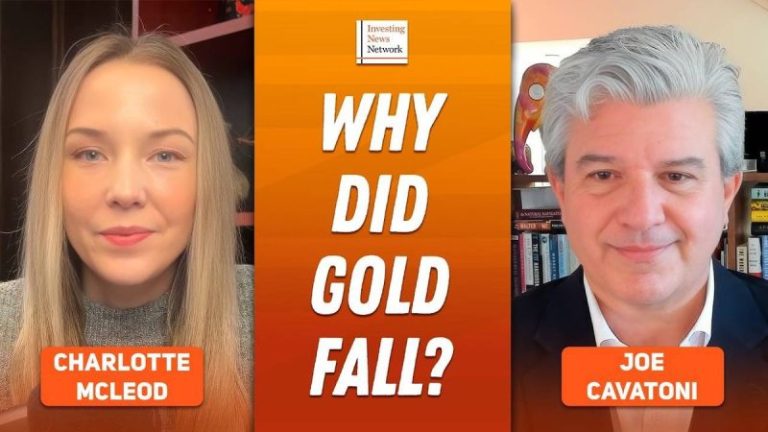
          Joe Cavatoni, senior market strategist, Americas, at the World Gold Council, breaks down gold’s record-setting run past US$5,500 per ounce as well as its correction.

          ‘At the end of this, you’re looking at a lot of people who were pushing the price higher — speculative in nature — pulling back and taking money off the table,’ he said.

          Securities Disclosure: I, Charlotte McLeod, hold no direct investment interest in any company mentioned in this article.
          This post appeared first on investingnews.com

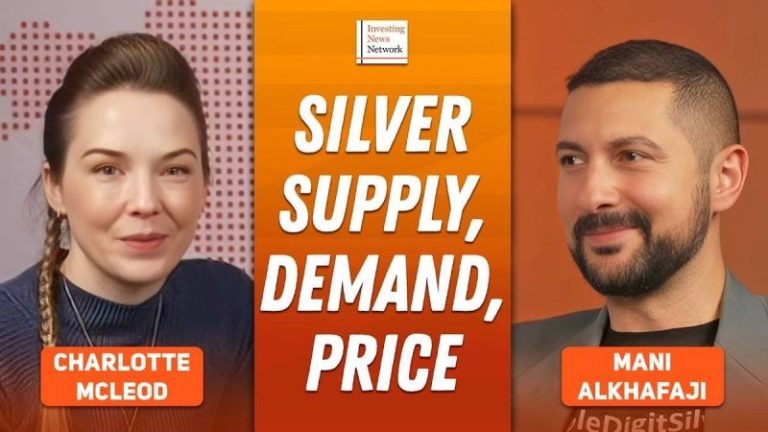
          Mani Alkhafaji, president of First Majestic Silver (TSX:AG,NYSE:AG), discusses silver supply, demand and price dynamics, as well as how the company is positioning for 2026.

          He also shares his thoughts on when silver stocks may catch up to the silver price: ‘You’ve got to give it a couple of quarters, but when it comes in it’s going to come pretty quick.’

          Securities Disclosure: I, Charlotte McLeod, hold no direct investment interest in any company mentioned in this article.
          This post appeared first on investingnews.com

          A deal between VersaBank (TSX:VBNK,NASDAQ:VBNK) and Stablecorp Digital Currencies could be one of the clearest signals yet that Canadian dollar stablecoins are moving into the regulated financial mainstream.

          On Tuesday (February 3), VersaBank signed a definitive agreement to act as custodian for QCAD, Stablecorp’s Canadian‑dollar‑pegged stablecoin, using its proprietary VersaVault digital asset custody platform.

          For investors, the announcement is a sign that the Canadian decentralized finance (DeFi) industry is positioning itself for the next phase of the stablecoin boom.

          Agreement terms and immediate impact

          Under the terms of the agreement, VersaBank will hold and safeguard the reserve assets backing QCAD through the Ontario-based QCAD Digital Trust, which will manage those reserves on behalf of QCAD holders.

          The company will provide safekeeping and custodial services using its VersaVault technology, which it describes as a highly secure solution with Systems and Organization Controls 2 certification that has been designed specifically for digital asset custody. Put simply, VersaVault will become the vault, while the QCAD Digital Trust and Stablecorp will remain responsible for governance, issuance and compliance.

          For VersaBank, the arrangement creates a new revenue stream, allowing it to earn custody fees based on the value of QCAD assets held, along with a spread on QCAD‑related deposits. That income will be added to its net interest income on cash and securities rather than its lending‑related margin.

          For Stablecorp, the main takeaway is the regulatory optics: QCAD is already marketed as Canada’s first regulatory‑compliant, Canadian-dollar‑pegged stablecoin, and now its reserves will be held by a federally regulated Schedule I bank rather than a crypto‑native custodian.

          Strategic and market implications

          Stablecorp markets QCAD as a compliant, bank-grade Canadian dollar rail for cross-border payments, DeFi and institutional trading. The VersaBank deal reinforces that narrative by naming a Schedule I bank at the center of its reserve‑holding stack. From an investor standpoint, the deal makes it easier for institutions and regulated counterparties to see QCAD as a “safe” Canadian-dollar‑denominated instrument, rather than solely a crypto‑native token.

          Additionally, regulators and policymakers should see a Canadian dollar stablecoin that is both technically robust and institutionally anchored, which could help shape future rules around CAD‑pegged tokens.

          Stablecorp’s investor base already includes heavy hitters such as Coinbase Global (NASDAQ:COIN), Circle (NYSE:CRCL), DeFi Technologies (NASDAQ:DEFT) and FTP Ventures.

          The VersaBank partnership adds another layer of credibility that could help Stablecorp attract more traditional financial services capital as Canada’s broader stablecoin and digital asset regulatory framework evolves.

          The QCAD mandate represents a symbolically important strategic and balance sheet development, distinct from its core lending activities, offering long-term growth potential. By classifying QCAD-related net interest income within its cash and securities category, VersaBank signals that this activity is capital light and non-credit related. This approach diversifies revenue without significantly altering the bank’s credit risk profile.

          This move may attract investors cautious of banks with high crypto-lending exposure, but comfortable with custody and infrastructure. The QCAD deal validates a broader digital asset custody franchise, especially if VersaVault gains more mandates for Canadian-dollar-pegged or other tokenized assets and stablecoins.

          Broader implications for Canadian investors

          The VersaBank-Stablecorp partnership is significant for Canada-focused investors as it represents a blending of traditional finance and crypto-native infrastructure. Stablecoins such as QCAD act as programmable Canadian dollars. The involvement of a Schedule I bank as custodian enhances the prospect of using CAD stablecoins for interbank or institutional settlement, particularly as Canada explores wholesale central bank digital currency technologies.

          Furthermore, the arrangement opens the door for new tokenized financial products like money market funds, deposits or treasury management products that will reside on public blockchains, but are securely backed by regulated entities.

          From a risk management perspective, investors may want to watch reserve composition disclosures for QCAD, and monitor how quickly QCAD’s circulating supply and VersaBank’s associated fee income scale.

          For now, the deal is more of a strategic and signaling move than a near‑term earnings inflection point, but it lays the groundwork for QCAD to become a core Canadian-dollar‑denominated rail in Canada’s digital asset stack.

          Securities Disclosure: I, Meagen Seatter, hold no direct investment interest in any company mentioned in this article.

          This post appeared first on investingnews.com

          VANCOUVER, BRITISH COLUMBIA / ACCESS Newswire / February 3, 2026 / Prince Silver Corp. (CSE:PRNC,OTC:PRNCF)(OTCQB:PRNCF)(Frankfurt:T130) (‘Prince Silver’or theCompany’) is pleased to announce that, due to strong investor demand, it has increased the size of its previously announced non-brokered private placement (the ‘Offering’) from $3,000,000 to up to $4,750,000.

          The upsizing reflects continued support from existing shareholders and interest from new investors as the Company advances the Prince Silver Project, located in the Pioche Mining District, Nevada.

          The Offering consists of units (the ‘Units’) priced at $0.70 per Unit. Each Unit is comprised of one common share of the Company and one-half of one common share purchase warrant. Each whole warrant entitles the holder to acquire one additional common share at a price of $1.00 for a period of two years from the date of issuance, provided that, if the closing price of the company’s common shares for a period of 10 consecutive trading days is $1.40 or higher, the company will have the right to accelerate the expiry date of the warrants upon notice given by press release and the warrants will thereafter expire on the 30th calendar day after the date of such press release, or such later date as may be stated in the news release.

          In connection with the upsizing, the Company may issue up to 6,785,714 Units for total gross proceeds of up to $4,750,000, subject to regulatory approval and customary closing conditions. All securities issued under the Offering will be subject to a statutory hold period of four months and one day in accordance with applicable securities laws.

          Proceeds from the Offering are expected to be used to advance the next phase of drilling at the Prince Silver Project, complete a maiden mineral resource estimate, conduct ongoing metallurgical work, and for general working capital purposes.

          Finders’ fees may be paid in accordance with applicable securities laws and exchange policies.

          About Prince Silver Corp.

          Prince Silver Corp. is a silver exploration company advancing its past-producing Prince Silver-Zinc-Manganese-Lead Mine in Nevada, USA. Featuring near-surface mineralization that was historically drill tested by over 129 holes and is open in all directions, the Prince Project offers a clear path toward a maiden 43-101 compliant resource estimate. The Company also holds an interest in the Stampede Gap Project, a district-scale copper-gold-molybdenum porphyry system located 15 km north-northwest of the Prince Silver Project, highlighting Prince Silver’s focus on high-potential, strategically located exploration assets.

          On Behalf of the Board of Directors

          Derek Iwanaka, CEO & Director
          Tel: 604-928-2797
          Email: info@princesilvercorp.com
          Website: www.princesilvercorp.com

          Forward-Looking Information

          Certain statements in this news release are forward-looking statements, including with respect to future plans, and other matters. Forward-looking statements consist of statements that are not purely historical, including any statements regarding beliefs, plans, expectations, or intentions regarding the future. Such information can generally be identified by the use of forwarding-looking wording such as ‘may’, ‘expect’, ‘estimate’, ‘anticipate’, ‘intend’, ‘believe’ and ‘continue’ or the negative thereof or similar variations. Some of the specific forward-looking information in this news release includes, but is not limited to, statements with respect to: ongoing and proposed drill programs, amendments to the Company’s website, property option payments and regulatory and corporate approvals. The reader is cautioned that assumptions used in the preparation of any forward-looking information may prove to be incorrect. Events or circumstances may cause actual results to differ materially from those predicted, as a result of numerous known and unknown risks, uncertainties, and other factors, many of which are beyond the control of the Company, including but not limited to, business, economic and capital market conditions, the ability to manage operating expenses, dependence on key personnel, completion of satisfactory due diligence in respect of the Acquisition and related transactions, and compliance with property option agreements. Such statements and information are based on numerous assumptions regarding present and future business strategies and the environment in which the Company will operate in the future, anticipated costs, and the ability to achieve goals. Factors that could cause the actual results to differ materially from those in forward-looking statements include, the continued availability of capital and financing, litigation, failure of counterparties to perform their contractual obligations, failure to obtain regulatory or corporate approvals, exploration results, loss of key employees and consultants, and general economic, market or business conditions. Forward-looking statements contained in this news release are expressly qualified by this cautionary statement. The reader is cautioned not to place undue reliance on any forward-looking information.

          The forward-looking statements contained in this news release are made as of the date of this news release. Except as required by law, the Company disclaims any intention and assumes no obligation to update or revise any forward-looking statements, whether as a result of new information, future events or otherwise.

          This news release does not constitute an offer to sell, or a solicitation of an offer to buy, any securities in the United States. The securities have not been and will not be registered under the United States Securities Act of 1933, as amended (the ‘U.S. Securities Act’) or any state securities laws and may not be offered or sold within the United States or to U.S. Persons (as defined under the U.S. Securities Act) unless registered under the U.S. Securities Act and applicable state securities laws or an exemption from such registration is available.

          SOURCE: Prince Silver Corp.

          View the original press release on ACCESS Newswire

          News Provided by ACCESS Newswire via QuoteMedia

          This post appeared first on investingnews.com

          On January 28, the US Securities and Exchange Commission (SEC) issued a joint staff statement from the Division of Corporation Finance, the Division of Investment Management and the Division of Trading and Markets in an effort to provide clarity regarding tokenized securities.

          The update formalizes the agency’s approach under the new Project Crypto initiative.

          INN: Is the SEC’s guidance a real step forward for tokenized securities, or simply existing law repackaged for blockchain?

          EF: It is mostly existing law applied to new rails, and the SEC staff says that explicitly: the format and whether records are onchain or off-chain does not change the application of federal securities laws, and the statement creates no new obligations or exemptions. The step forward is practical: a clear taxonomy of tokenization models and an invitation to engage on registrations and requests for staff action, which reduces interpretive ambiguity for counsel and compliance teams.

          INN: Does formally classifying tokenized securities under federal securities laws accelerate institutional adoption?

          EF: It accelerates adoption only to the extent it reduces legal uncertainty. The statement anchors tokenized securities inside familiar categories and emphasizes that compliance pathways already exist, which helps internal risk committees approve pilots. But it does not solve the institutional bottleneck by itself; mainstream adoption still requires scalable market infrastructure and regulated operating models that fit broker-dealer, exchange, custody and settlement expectations.

          INN: Who is this guidance really designed for? Crypto-native platforms, traditional financial institutions or regulators preparing for enforcement?

          EF: All three, but the clearest primary audience is market participants preparing filings and requests for relief, across both crypto native and traditional firms. The staff frames it as assistance for compliance and for preparing registrations, proposals or requests for appropriate action. At the same time, it signals an enforcement baseline: do not assume tokenization changes the regulatory perimeter, especially for third-party sponsored models that introduce intermediary and bankruptcy risk.

          INN: Does the SEC’s tokenization taxonomy provide meaningful structure, or does it leave key operational questions unresolved?

          EF: It provides meaningful structure by separating issuer-sponsored tokenized securities from third-party sponsored tokenized securities, then splitting third-party models into custodial tokenized securities and synthetic tokenized securities. Key operational questions remain open because the statement is not a rule and assumes away major frictions like state law transfer validity, and it does not standardize how onchain settlement, custody controls or trading venues should be implemented in practice.

          INN: What needs to happen next for tokenized securities to move from experimentation to mainstream financial markets?

          EF: First, a credible clearing and settlement pathway at scale. The (Depository Trust Company) no-action relief for its tokenization services pilot is directionally important because it connects tokenized entitlements to core market plumbing.

          Second, more formal regulatory outputs: targeted exemptive relief, standard form disclosures for tokenized representations and clear expectations for broker-dealer and exchange-compliant secondary trading of tokenized securities. Third, operational standards that institutions can audit: identity and permissioning controls, wallet and key management, corporate actions processing and insolvency treatment for intermediary-based models, so that tokenization becomes an efficiency upgrade rather than a new risk layer.

          Securities Disclosure: I, Meagen Seatter, hold no direct investment interest in any company mentioned in this article.
          This post appeared first on investingnews.com

          President Donald Trump is preparing to launch a US$12 billion strategic stockpile of critical minerals aimed at accelerating the administration’s efforts to reduce the US dependence on China for key raw materials.

          Known as Project Vault, the initiative will combine up to US$10 billion in long-term financing from the US Export-Import Bank (EXIM) with roughly US$2 billion in private capital.

          Under the plan, Project Vault will procure and store minerals such as gallium, cobalt, lithium, rare earth elements and other strategically important materials used in products ranging from electric vehicles and batteries to smartphones, jet engines, and advanced defense systems.

          Furthermore, the plan is also structured as an independently governed public-private partnership. Participating manufacturers will commit in advance to purchase specific quantities of materials at predetermined inventory prices and pay upfront fees.

          In return, the project will acquire and store those materials on their behalf, charging a carrying cost tied to loan interest and storage expenses. Companies will be allowed to draw down their inventories as long as they replenish them, while retaining full access in the event of a major supply disruption.

          A key feature of the design is a repurchase commitment: manufacturers that agree to buy a set amount of material at a given price also commit to repurchase the same amount at that price in the future. The administration views this as a stabilizing mechanism that could dampen extreme price swings in critical mineral markets.

          Administration officials said the effort gained urgency after Beijing tightened export controls on certain critical materials last year, forcing some US manufacturers to scale back production and highlighting the extent of China’s leverage over global supply chains.

          China currently dominates both the mining and processing of many critical minerals, giving it significant influence over prices and availability.

          The EXIM Bank’s board is scheduled to vote on authorizing the 15-year, US$10 billion loan, which would be the largest financing deal in the agency’s history, more than double its previous record.

          “Project Vault is designed to support domestic manufacturers from supply shocks, support US production and processing of critical raw materials, and strengthen America’s critical minerals sector,” EXIM Chairman John Jovanovic said in the announcement.

          More than a dozen companies have already signed on, according to officials. Participants include automakers and industrial giants such as General Motors (NYSE:GM), Stellantis NV (NYSE:STLA), The Boeing Company (NYSE:BA), and Alphabet (NASDAQ:GOOGL)’s Google.

          A step towards the right direction

          “The announcement is a step in the right direction, that direction being minimizing China’s ability to disrupt the US economy and manufacturing/technology base by manipulating both price and supply of critical elements,” Silversteyn said.

          However, he noted that it is “not a quick solution” given that many US-backed mining projects remain in early development stages or produce limited commercial volumes.

          The initiative also follows earlier, less successful efforts. Last summer, the US withdrew a proposed US$500 million cobalt stockpile tender after failing to attract sufficient compliant supply.

          Regardless, mining companies and developers have broadly welcomed the renewed push. American Pacific Mining Chief Executive Warwick Smith said Project Vault underscores the growing strategic importance of domestic copper supply.

          “Once again, President Trump and the current administration are shining an important light on the need for more critical metals within the United States,” Smith said, pointing to copper’s role in electrification, transmission infrastructure, and advanced manufacturing.

          Trump has also recently met with GM Chief Executive Mary Barra and mining entrepreneur Robert Friedland in a bid to bridge the interests of mineral producers and large industrial consumers.

          Securities Disclosure: I, Giann Liguid, hold no direct investment interest in any company mentioned in this article.
          This post appeared first on investingnews.com

          Japan announced that it has successfully retrieved mineral-rich seabed sediment from nearly 6,000 meters below the ocean’s surface near the remote island of Minamitorishima.

          Officials say the technical milestone could help reduce the country’s dependence on China.

          The work was carried out by deep-sea drilling vessel Chikyu, which collected the sediment as part of a government-backed test program aimed at assessing the feasibility of mining rare-earths-bearing mud from the deep ocean.

          According to Japan’s Agency for Marine-Earth Science and Technology, Chikyu departed last month for Minamitorishima — about 1,950 kilometers southeast of Tokyo — and arrived at the test site on January 17.

          The first batch of sediment was recovered on February 1.

          “It is a first step toward industrialization of domestically produced rare earth in Japan,” Prime Minister Sanae Takaichi said in a statement posted on X. “We will make efforts toward achieving resilient supply chains for rare earths and other critical minerals to avoid overdependence on a particular country.”

          Rare earths are essential in the high-performance magnets used in electric vehicles, wind turbines, electronics and defense systems. China currently dominates global production and processing of heavy rare earths, giving Beijing significant influence over prices and supply, a vulnerability that has increasingly worried world governments.

          Japan’s latest test comes amid heightened geopolitical tension in the region.

          Tokyo has grown more concerned about potential supply disruptions after China recently suspended exports of certain dual-use goods to Japan. While rare earths were not explicitly named, the move raised fears that Beijing could use its control over critical minerals as leverage as it has in the past.

          Japanese researchers first identified rare-earth-rich mud deposits around Minamitorishima in the 2010s. Since then, the government has funded research, development and feasibility studies under its Strategic Innovation Promotion Program, focusing on whether those resources could support a domestic supply chain.

          The current trial is designed to test not only the ability to retrieve sediment from extreme depths, but also the logistics of deep-sea mining. Officials cautioned that the work is still at an early stage. Details such as the concentration of rare earth elements in the retrieved mud and the overall recovery rates are still being analyzed. Moving toward commercial production would require demonstrating the entire process, from seabed extraction to separation and refining.

          Japan plans to continue testing through mid-February. If the trials are successful, larger-scale demonstrations could follow, potentially including the construction of a dedicated processing facility on Minamitorishima later this decade.

          US targets rare earths security with Project Vault

          While Japan pushes deeper into rare earths supply diversification, developments in the US underscore how deeply critical minerals policies are shaping markets on both sides of the Pacific.

          On Monday (February 2), the Trump administration rolled out Project Vault, a roughly US$12 billion strategic critical minerals reserve aimed at reducing US dependence on China for rare earths and other essential metals.

          The initiative, anchored by a US$10 billion loan from the US Export‑Import Bank and about US$2 billion in private capital, is designed to stockpile strategic materials like rare earths, cobalt and lithium.

          The program’s backers say the reserve will function much like America’s Strategic Petroleum Reserve, offering a buffer against global supply disruptions and insulating manufacturers from price shocks that have plagued markets during recent US-China trade tensions. Analysts say the effort signals an ongoing shift toward industrial policy that treats critical minerals as strategic assets, even as completion details and long‑term execution remain uncertain.

          The financial markets responded quickly. Shares of Australian rare earths producer Lynas Rare Earths (ASX:LYC,OTCQX:LYSDY) rallied more than 3 percent on Tuesday (February 3), closing at AU$15.25, reflecting renewed investor interest tied to the policy news and the broader rare earth narrative.

          Lynas’ recent movements come against a backdrop of broader gains in non‑Chinese mineral producers, as investors reposition around supply chain security and government policy support.

          Rare earths stocks more generally saw upticks in the US market after the country’s critical minerals plan came into focus, with producers like MP Materials (NYSE:MP) and USA Rare Earth (NASDAQ:USAR) gaining on reports of increased government engagement in critical mineral sourcing.

          Securities Disclosure: I, Giann Liguid, hold no direct investment interest in any company mentioned in this article.

          This post appeared first on investingnews.com