
Author

admin

Browsing

CSE: NINE,OTC:VMSXF) (OTC Pink: VMSXF) (FSE: KQ9) (the ‘Company’ or ‘Nine Mile’) announces that it has proceeded with its third anniversary payment under its option to Purchase 100% of the Wedge Project, dated February 9, 2023, (the ‘Option Agreement’) with Slam Exploration Ltd. (‘Slam’).

The company has approved and paid the required Cash Payment of $40,000 and authorized and issued the allotment of 300,000 common shares as part of the Option Agreement. The Option Agreement has one remaining payment anniversary on February 2027 requiring a Cash Payment of $50,000 and issuing 400,000 common shares and then Nine Mile will have completed the 100% Purchase of the Wedge Project from Slam. The common shares are subject to a hold period under applicable Canadian Securities laws expiring four months and one day from the issuance of the shares.

The Wedge VMS Project consists of 35.83 km2 and hosts the Wedge Mine, West Wedge, Tribag Targets within the 8km Wedge VMS Exploration Trend. (See Figure #1 Below)

Figure 1: Priority Targets with Late Time Conductive Axis’ along the Wedge VMS Trend

To view an enhanced version of this graphic, please visit:
https://images.newsfilecorp.com/files/7335/288134_55583d46a46edbf8_002full.jpg

Nine Mile just completed its Fall 2025 Wedge Mine Phase 2 Drill Program and is releasing Certified Drill Results as received. The goal at the Wedge Mine is to demonstrate and prove the Mine has an economic future and the deposit is much larger and higher grade than previously determined. Nine Mile is well on the way to that goal.

Gary Lohman, P.Geo, VP Exploration & Director, stated, ‘This completes a crucial stage in the completing of the Purchase Agreement with Slam Exploration. Our advancement of the entire project including the Wedge Mine, West Wedge & Tribag High Priority VMS Targets is an example of our technical and financial commitment to this Priority Project for Nine Mile Metals and our shareholders. Assay results reported to date further demonstrate the hidden quality of the Wedge and we look forward to expanding on our recent success at the Wedge and the inaugural Drill Program along trend at the West Wedge and Tribag.’

Figure 2: Upcoming 2026 Drill Program Targets at West Wedge and Tribag Zones

To view an enhanced version of this graphic, please visit:
https://images.newsfilecorp.com/files/7335/288134_55583d46a46edbf8_003full.jpg

Patrick J Cruickshank, MBA, CEO & Director, stated, ‘The Wedge Mine and clustering targets on Trend, have quickly become, and rightly so, a priority project for us at Nine Mile. The continued success in our Wedge Mine Drill Programs clearly displays the high-grade copper ore remaining in the deposit. In 2024, drilling extended the deposit to the east and our recent drilling shows the deposit has high grade copper mineralization at depth and to the southwest. We are defining the next phase of drilling at the Wedge and the west extension. Once we complete the BHEM surveys and Mike Defrusne, President at Apex Geoscience, leading our Technical Team, integrates these new holes into our live 3D model, we will announce our Phase 3 Drill Program at the Wedge Mine, unlocking the value and test the overall size and scale of this high-grade deposit. We are excited to also launch our 2026 Drill Program at the West Wedge & Tribag sites and test those prospective VMS zones. 2026 will be a very busy exploration year.’

Nine Mile Metals also announces that it has entered into an agreement (the ‘Agreement’) with Generation IACP Inc. (‘Generation’) to provide market making and issuer services in accordance with Canadian Securities Exchange (CSE) policies. Under the terms of the Agreement, Generation will trade shares of the Company on the CSE and other trading venues with the objective of maintaining a reasonable market and improving the liquidity of Nine Mile’s common shares. Generation IACP will also provide analytical data services on the stock trading patterns, CDS activity mapping security transfers and all aspects of issuer trading reporting, including shorts monitoring, institutional, retail, anonymous trades and market sentiment analysis.

The Agreement is for an initial term of six months and shall be automatically renewed for successive six-month periods unless terminated by either party with 30 days prior written notice. Pursuant to the Agreement, Generation will receive a monthly fee of $8,500 Cdn, plus applicable taxes during the initial term. Thereafter, the monthly fee will automatically increase annually by 3% on each anniversary of the Agreement. No stock options or other compensation are being granted in connection with the engagement.

Generation is arm’s length to the Company and does not own any securities of Nine Mile as of the date of this release; however, Generation and its clients may acquire an interest in the securities of the Company in the future.

Generation’s market making and issuer service activities will be primarily intended to correct temporary imbalances in the supply and demand of the Company’s shares. Generation will be responsible for the costs it incurs in buying and selling the Company’s shares, and no third party will be providing funds or securities for the market making activities.

‘We have seen extremely strong trading volume and interest in Nine Mile Metal’s story from strategic, institutional, and retail investors. We traded over 90M shares through December and January 2026 and continue to have strong daily trading. We would like to monitor the trading behaviors, patterns and understand our trading base across all platforms. The relationship with Generation IACP complements our capital markets strategy and supports our focus on accessibility, transparency, and long-term shareholder alignment,’ commented Jonathan Holmes, Director.

About Generation IACP Inc.

Generation IACP is based in Toronto, Ontario, and is an independently held and registered broker and member of the Investment Industry Regulatory Organization of Canada, the TSX-V, the Canadian Securities Exchange, and the NEO Exchange.

The disclosure of technical information in this news release has been prepared in accordance with Canadian regulatory requirements as set out in National Instrument 43-101 – Standards of Disclosure for Mineral Projects (‘NI 43-101’) and reviewed and approved by Gary Lohman, B.Sc., P.Geo., VP Exploration and Director who acts as the Company’s Qualified Person, and is not independent of the Company.

About Nine Mile Metals Ltd.:

Nine Mile Metals Ltd. is a Canadian public mineral exploration Company focused on VMS (Cu, Pb, Zn, Ag and Au) exploration in the renowned Bathurst Mining Camp (BMC), located in New Brunswick, Canada. The Company’s primary business objective is to explore its four VMS Projects: Nine Mile Brook VMS Project, California Lake VMS Project, the Canoe Landing Lake (East – West) VMS Project, and the Wedge VMS Project. The Company is focused on Critical Minerals Exploration, positioning itself for the boom in EV and green technologies requiring Copper, Silver, Lead and Zinc with a hedge on Gold.

ON BEHALF OF Nine Mile Metals LTD.

‘Patrick J. Cruickshank, MBA’
CEO and Director
T: 506-804-6117
E: patrick@ninemilemetals.com

Forward-Looking Information:

This press release may include forward-looking information within the meaning of Canadian securities legislation, concerning the business of Nine Mile. Forward-looking information is based on certain key expectations and assumptions made by the management of Nine Mile. In some cases, you can identify forward-looking statements by the use of words such as ‘will,’ ‘may,’ ‘would,’ ‘expect,’ ‘intend,’ ‘plan,’ ‘seek,’ ‘anticipate,’ ‘believe,’ ‘estimate,’ ‘predict,’ ‘potential,’ ‘continue,’ ‘likely,’ ‘could’ and variations of these terms and similar expressions, or the negative of these terms or similar expressions. Forward-looking statements in this press release include that (a) we will announce complete Certified assay results once received from ALS and Glencore. Although Nine Mile believes that the expectations and assumptions on which such forward-looking information is based are reasonable, undue reliance should not be placed on the forward-looking information because Nine Mile can give no assurance that they will prove to be correct.

The Canadian Securities Exchange (CSE) has not reviewed and does not accept responsibility for the adequacy or the accuracy of the contents of this release.

___________________________________________________________________________________________________
The Canadian Venture Building, 82 Richmond St E., Toronto, Ontario Canada M5C 1P1

To view the source version of this press release, please visit https://www.newsfilecorp.com/release/288134

News Provided by TMX Newsfile via QuoteMedia
This post appeared first on investingnews.com

Here’s a quick recap of the crypto landscape for Wednesday (March 11) as of 9:00 p.m. UTC.

Get the latest insights on Bitcoin, Ether and altcoins, along with a round-up of key cryptocurrency market news.

Bitcoin (BTC) was priced at US$70,624.29, up by 0.6 percent over the last 24 hours.

Bitcoin price performance, March 11, 2026.

Chart via TradingView.

Bitcoin volatility remains elevated amid macro and oil price shocks. Amberdata’s recent analysis pins Bitcoin’s prolonged correction, which began after its October 2025 peak, partly on carry trade unwind, which has caused the 30 day basis to compress from over 15 percent in January 2025 to just over 5 percent on Wednesday.

Rania Gule, senior market analyst at XS.com, reads the current US$70,000 stall as a bottoming and rebalancing, not an endless correction, with short squeeze and scarcity setting up the next leg up.

Ether (ETH) was priced at US$2,075.44, up by 1.7 percent over the last 24 hours.

Altcoin price update

  • XRP (XRP) was priced at US$1.39, up by 0.4 percent over 24 hours.
  • Solana (SOL) was trading at US$87.19, up by 1.3 percent over 24 hours.

Today’s crypto news to know

Oil trading surges on crypto derivatives platform

Volatility in global energy markets is spilling into crypto trading platforms, where oil derivatives are now among the most active markets. On decentralized exchange Hyperliquid, an oil-linked perpetual futures contract tracking West Texas Intermediate (WTI) crude has generated about US$1.32 billion in trading volume over the past 24 hours.

The surge made oil the second most traded contract on the platform after Bitcoin.

It followed the escalation of the US-Israel conflict with Iran, which sent oil prices briefly soaring above US$118 per barrel before retreating. Prior to the conflict, the contract typically saw about US$21 million in daily trading.

Data from Hyperliquid shows Bitcoin still dominates trading activity with roughly US$3.64 billion in daily volume, but the WTI contract has now leapfrogged assets such as Ether, silver and gold.

Strategy adds nearly 18,000 Bitcoin in US$1.28 billion purchase

Michael Saylor’s Strategy (NASDAQ:MSTR) continued its aggressive accumulation strategy last week, revealing that it purchased 17,994 BTC for about US$1.28 billion between March 2 and 8.

According to a regulatory filing, the company paid an average price of roughly US$70,946 per coin. The latest purchase lifts Strategy’s total holdings to 738,731 Bitcoin, acquired at a combined cost of about US$56.04 billion.

Circle launches nanopayments on testnet for AI agent commerce

Circle Internet Group (NYSE:CRCL) launched nanopayments on a testnet on Tuesday (March 10), enabling artificial intelligence (AI) agents and machines to handle instant, gas-free payments of fractions of a cent using USDC. This financial rail allows machine-to-machine commerce, or “agentic economic activity,” by bundling many tiny off-chain transactions for free and settling them periodically on EVM chains like Arbitrum or Base.

Agents sign an off-chain authorization for immediate service. Following the x402 standard, it requires no accounts, just programmable USDC flows. This enables use cases like robots paying to recharge or AI paying per data crawl.

It is currently available for developers on testnet only.

Foundry Digital to launch Zcash mining pool

Foundry Digital, a company that builds infrastructure for digital asset mining, said it is planning to launch a specialized mining pool for Zcash in April of this year, expanding beyond their Bitcoin focus.

A spokesperson for Foundry told Cointelegraph that the company decided to build the new mining pool because “Zcash addresses something we believe is genuinely important: the idea that financial privacy is foundational to economic freedom, and that privacy and compliance can coexist.”

In addition, “When institutional and public miners can mine Zcash through infrastructure built to their standards, it brings new hashrate to the network and strengthens its security.”

Strive allocates US$50 million to Strategy

Strive Asset Management announced a US$50 million allocation of its corporate treasury to Strategy variable-rate perpetual preferred stock on Wednesday, with Chief Risk Officer Jeff Walton saying the company sees the stock as “a high-quality credit, offering material yield, higher liquidity, and attractive risk profile over traditional credit instruments for moderate duration capital.” The firm projects over US$3.9 million in returns per year compared to T-bills.

China’s top court warns of tougher penalties for crypto crime

China’s Supreme People’s Court has signaled a harder line against cryptocurrency-related financial crime, pledging stricter penalties for individuals using digital assets to launder money or move funds overseas.

Chief Justice Zhang Jun issued the warning in the court’s annual report to the National People’s Congress, highlighting the growing role of crypto in cross-border financial offenses.

Authorities say the crackdown is part of a broader campaign against technology-enabled crime, which increasingly includes AI-driven fraud and coordinated online harassment campaigns known as “human flesh search.”

Despite the ban, enforcement agencies say criminals have continued to exploit digital assets to bypass China’s strict capital controls, which limit individuals to transferring US$50,000 abroad each year.

Securities Disclosure: I, Meagen Seatter, hold no direct investment interest in any company mentioned in this article.

Securities Disclosure: I, Giann Liguid, hold no direct investment interest in any company mentioned in this article.

This post appeared first on investingnews.com

The global uranium market is entering what industry leaders describe as a pivotal phase, with strengthening nuclear demand colliding with tightening supply and rising geopolitical competition for fuel.

At the Prospectors & Developers Association of Canada (PDAC) convention in Toronto, an executive from Cameco (TSX:CCO,NYSE:CCJ) and an analyst from UxC warned that the nuclear fuel cycle is undergoing a structural shift; one that could reshape uranium pricing and supply security over the coming decades.

During a presentation titled “Reviving the Nuclear Life Cycle,’ Grant Isaac, president and COO of Cameco, said the market often underestimates uranium demand because much of it is driven by long-term government and utilities agreements that are negotiated outside the public market.

“The sovereign interest in where nuclear fuel is coming from over a very long period of time is probably one of the most unrecognized pieces of uranium demand out there,” he said.

Unlike most commodities, uranium is rarely traded through large spot exchanges. Instead, utilities typically secure fuel years in advance through long-term contracts tied to reactor operations.

“Uranium is a product for which there is no substitute,” Isaac said.

“We don’t produce uranium to dump into a spot market or to sell to a smelter or metals exchange. That’s not how our market works … the market works on long-term planning tied directly to reactor demand.”

Nuclear expansion reshaping uranium demand

The global nuclear fleet currently includes roughly 441 reactors generating about 400 gigawatts of electricity, according to data from UxC. By 2040, that capacity could grow to more than 580 gigawatts as new reactors come online and existing units receive license extensions.

China alone operates about 60 reactors and has another 38 under construction, representing nearly 40 gigawatts of additional capacity. India is also expanding rapidly as part of its energy security strategy.

Elsewhere, nuclear demand is being supported by reactor restarts in Japan and steady generation in France, as well as new projects in the US and across Central and Eastern Europe.

Isaac noted that many reactors originally slated for closure are now being upgraded and extended, adding new fuel requirements that were not anticipated just a few years ago. Utilities are investing in upgrades that can boost output by 50 to 100 megawatts per reactor, he said — changes that require additional uranium.

“That alone is significant demand for uranium that nobody was talking about three or four years ago,” Isaac said.

Uranium supply challenges intensifying

While demand is strengthening, speakers at PDAC warned that uranium supply faces a range of structural constraints, from geopolitical disruptions to project development risks.

Nick Carter, executive vice president at UxC, said Asia will account for much of that demand growth, particularly in China and India. In terms of supply, global uranium production totaled about 173 million pounds in 2025, according to UxC. The largest producer was Kazakhstan, followed by Canada, Namibia and Australia.

Yet even with new projects planned, UxC forecasts significant deficits beginning around 2030.

“We do start seeing supply gaps starting around 2030 and extending through 2040. Filling that gap will be quite challenging,’ Carter said. Several factors are complicating the supply outlook.

Political instability has already disrupted production in parts of Africa. In 2023, the government of Niger took control of uranium assets previously operated by French nuclear group Orano.

“That is material that used to come into the west that is not coming into the west anymore,” Isaac said.

At the same time, China has aggressively secured uranium supply through overseas investments and long-term contracts. Carter estimates that the Asian nation now controls or has access to nearly 40 percent of global primary uranium production through imports and equity stakes in foreign mines.

“China imported nearly 70 million pounds of open market supply last year,” Carter said, adding that large volumes of Russian material are also being redirected to Chinese buyers.

New mines need higher incentive prices

Despite strong demand fundamentals, uranium prices have not yet fully reflected tightening supply conditions across the nuclear fuel cycle. Downstream services such as enrichment and conversion have already experienced significant price increases, Isaac said, suggesting the uranium market itself could follow.

“We need to see price discovery in our industry,” he said, adding that the era of extremely cheap uranium is likely over.

“We’re out of US$20 uranium, and we’re probably out of US$40,” he said. “And I think we’re running out of US$80.”

Higher uranium prices may ultimately be required to incentivize new mines and ensure long-term fuel availability for the expanding nuclear sector.

“If we treat nuclear fuel as the long-lead item that it actually is,” Isaac said, “Then the industry can transition smoothly into this period of growth.” Otherwise, he warned, the market may face a more abrupt reset.

“It will reset,” he said. “But it may reset more violently than any of us would like.”

Uranium prices enter new phase of volatility

Also speaking at PDAC, Treva Klingbiel, president of TradeTech, said the uranium market is entering a new phase marked by stronger prices and increasing volatility. She noted that uranium prices have historically moved in pronounced “supercycles,” a pattern visible in price data dating back to the late 1960s.

The most recent cycle has been particularly dramatic, she said, highlighting how the market has rebounded from the prolonged downturn that followed the Fukushima accident.

In 2016, uranium prices fell to a low of about US$17.75 per pound as early reactor closures, production costs well above market prices and supportive policies for gas and renewable energy weighed heavily on the sector.

Since then, the market has staged a sharp recovery.

“Since that low point, the price has more than quintupled,” Klingbiel said.

Today, TradeTech’s daily spot price sits around US$85, while the long-term contract price has climbed to about US$90. She added that TradeTech’s exchange value, a monthly pricing indicator, briefly reached US$100 in late January, a level that has been recorded only a handful of times since the firm began tracking uranium prices in 1968.

Looking ahead, Klingbiel said the uranium industry is now grappling with how quickly supply and demand can respond to geopolitical and policy shifts. In her view, the velocity is ‘very different from the past.’

Recent political developments, particularly shifting trade policies and evolving alliances, have already disrupted longstanding nuclear fuel supply chains. While some government initiatives are boosting nuclear power, other policies have placed pressure on available supply of uranium and enrichment services.

Limited investment over the past decade has contributed to what TradeTech views as a widening structural deficit.

“The demand is there,” Klingbiel told listeners at PDAC.

“What we need now is the capital to develop new production to bridge that supply gap.”

Securities Disclosure: I, Georgia Williams, hold no direct investment interest in any company mentioned in this article.

This post appeared first on investingnews.com

Jeffrey Christian, managing partner at CPM Group, sees gold and silver prices continuing to rise as global political and economic risks persist.

‘We look at the world right now and we see a world where the risks and uncertainties are greater now than at any time since Pearl Harbor. December 1941,’ he said.

Securities Disclosure: I, Charlotte McLeod, hold no direct investment interest in any company mentioned in this article.

This post appeared first on investingnews.com

Red Mountain Mining Limited (ASX: RMX, US CODE: RMXFF, or “Company”) a Critical Minerals exploration and development company with an established portfolio in Tier-1 Mining Districts in the United States and Australia, is pleased to announce that it has received continued strong assay results from the second tranche of assays for its auger soil sampling program at the Oaky Creek prospect at the Company’s 100% owned Armidale Antimony-Gold project in New South Wales.

HIGHLIGHTS:

  • Red Mountain has confirmed the presence of multiple drill-ready Antimony targets at the Oaky Creek Prospect following the second batch of analytical results from its comprehensive auger soil sampling program at the Armidale Antimony-Gold Project
  • Newly discovered stibnite vein rock samples return up to an exceptionally high grade of 28.1% Sb. The new samples collected ~600m NNW of the Oaky Creek South workings, highlight the potential for a new extension to the current mineralised system at Oaky Creek
  • Conventional and auger soil sampling and rock analytical results of up to 39.3% Sb and 1.09ppm Au for Oaky Creek indicate the potential of a large-scale orogenic Antimony-gold vein system with a strike extent of ~3km at surface, which is analogous to Larvotto Resources’ Hillgrove project, Australia’s largest known Antimony deposit
  • Previously identified 200m x 30m Antimony-arsenic anomaly near the Oaky Creek South Main Grid has been extended by a further 30% and remains open to the northeast, with values of up to 251ppm Sb and 1,443ppm As returned
  • Soil sampling from southern end of Oaky Creek North has further supported the NNW- trending Antimony anomaly, with values of up to 137ppm Sb and 334ppm As. Aligning with previously identified conventional soil anomaly and mineralised stibnite-bearing rock sampling, providing further evidence for widespread antimony mineralisation at Oaky Creek
  • Results for approximately 900 further auger soil samples collected during January and February are pending and expected to be received before the end of March. These samples will expand auger coverage at both Oaky Creek North and Oaky Creek South, including the newly collected anomalous rock sample, and will be used in conjunction with existing datasets to refine multiple orogenic Antimony vein targets ahead of planned drill-testing
  • Further assays pending for Thompson Falls Antimony Project in the US following recently announced initial high-grade Antimony results

Assay results from the January-February field program across Oaky Creek North and Oaky Creek South have reported numerous highly anomalous samples including a stibnite vein sample collected ~600m NNW of the Oaky Creek South workings returning 28.1% Sb. 42 rock samples now exceed 0.5% Sb at Oaky Creek, further supporting the presence of widespread antimony mineralisation across the Oaky Creek Prospect and potentially indicating an extension to the Oaky Creek South mineralised system (see below).

Results for approximately 900 further auger soil samples collected during January and February remain pending, with assays expected before the end of March. These results will significantly expand coverage at both Oaky Creek North and Oaky Creek South (Figure 1) and will be used in conjunction with datasets for additional expected orogenic antimony vein targets ahead of planned drill testing in Q2 2026.

New Auger Assay Results Extend Antimony-Arsenic Anomaly at Oaky Creek South

As was reported in November 20251, initial auger sampling at the Oaky South Main Grid, located approximately 400m north-northwest of the small historical pits and shafts at Oaky Creek South, defined a coherent NE-striking ~200m x 30m Sb-As anomaly that remained open to the northeast.

Newly received results from sampling completed in late 2025 returned values of up to 251ppm Sb and 1,443ppm As (Appendix 1) and extend this anomaly ~60m further to the northeast (Figure 2). The anomaly remains open in that direction, with analytical results for sampling completed in January and February 2026 pending and represents a priority target for planned drill testing in Q2 2026.

The new results comprise approximately 180 auger soil samples collected over conventional soil anomalies at Oaky Creek South and Oaky Creek North, expanding coverage from the initial ~250 auger samples collected at Oaky Creek South in November 20252 (Figure 1).

Click here for the full ASX Release

This post appeared first on investingnews.com

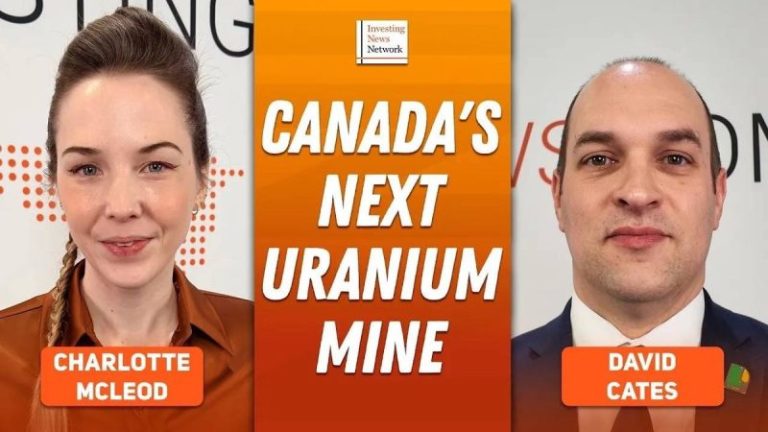
David Cates, president and CEO of Denison Mines (TSX:DML,NYSEAMERICAN:DNN), discusses uranium market dynamics, as well as the company’s path forward after its recent final investment decision for the Phoenix ISR uranium project in Saskatchewan’s Athabasca Basin.

Construction at the asset has begun, with first production planned for mid-2028.

Securities Disclosure: I, Charlotte McLeod, hold no direct investment interest in any company mentioned in this article.

This post appeared first on investingnews.com

Precious metals prices are responding to the impact of the US-Iran war, as well as inflation data.

The war has weighed on the precious metals market for much of this past week. An oil price surge past US$100 per barrel increased the threat of inflation and strengthened the US dollar, softening the investment case for gold.

That trend seemed to reverse after US President Donald Trump made statements that the end of the war is in sight, and G7 nations are considering potential plans to potentially release strategic reserves. However, the relief was short-lived.

Let’s take a look at what’s got the precious metals moving over the past week.

Gold price

Gold prices shot up on March 2 to US$5,400 per ounce as the war broke out in the Middle East.

While many may have expected the price of gold to continue skyrocketing on safe-haven demand during an escalating war, this typically is not the case in a region where military conflict can greatly impact oil prices..

Historically, gold prices get an immediate ‘safe-haven bump’ when conflict breaks out in the oil-rich Middle Eastern region. Yet, time and time again we’ve seen these gains are short-lived as macroeconomic factors like rising oil prices and a stronger US dollar often take over the direction of gold prices.

It’s been a choppy week for gold prices as investors weigh safe-haven concerns with a shifting inflation outlook. On March 5, the yellow metal managed an intraday high of US$5,164.05, before paring those gains down to a low of US$5,058.14 as liquidity stresses and renewed inflation fears outweighed gold’s traditional safe-haven role.

Gold reversed course on March 6, rising to an intraday high of US$5,171.92 as prices stabilized after a sharp mid-week correction. The oil price surge weighed on rate-cut bets, pushing prices down again Monday (March 9) morning to US$5,071.03; however, by the end of the trading session the yellow metal had reversed course to close at US$5,136.97.

By early morning trading Tuesday (March 10), the precious metal had reached an intraday high of US$5,235.61, before retreating to close at US$5,191.81. This was fueled by a ‘most intense’ day of U.S. strikes against Iran, despite conflicting signals from the White House regarding the conflict’s end.

On Wednesday (March 11) morning, the release of US Consumer Price Index (CPI) data showed headline inflation up by 2.4 percent over the last 12-months in February.

More US economic data will come on Friday (March 13) with the release of personal consumption expenditures (PCE) index for February, which analysts are projected will show upwards of 2.7 percent year-over-year growth.

With the threat of stickier inflation, gold investors are anticipating that the US Federal Reserve will sit on current interest rates for longer. In response, gold traded back down to as low as US$5,148.30 early Wednesday morning.

Still, gold prices are proving resilient given the long-term fundamentals for the metal. As of 12:00 p.m. PST Wednesday (March 11) gold was trading at US$5,170.83.

Gold price chart, March 5, 2026, to March 11, 2026.

Here are the primary drivers for gold this past week:

  • Geopolitical conflict in the Middle East remains the primary driver for safe-haven gold this week. Investors are getting mixed signals as to how long this conflict could last and how much damage it will do to global oil markets.
    • US economic data pointing to higher inflation for longer.
    • A weakened US dollar and a retreat in 10 year Treasury yields provided some support for gold.
    • Investor profit-taking is still at pay this week as are expected technical pullbacks in what many gold analysts believe is a broader uptrend in prices for the yellow metal.

      In other gold news, Venezuela’s state-owned mining company, Minerven, has agreed to sell between 650 and 1,000 kilograms of gold dore bars to commodities trading house Trafigura.

      The multimillion-dollar arrangement, brokered by US officials, will see a shipment of gold potentially worth more than US$100 million delivered to US refineries under a separate arrangement with the US government.

      Silver price

      Silver has also experienced a volatile week, but the white metal has made bigger gains than gold, although it didn’t reach last week’s high of US$95.71 per ounce. Silver traded at an intraday low of US$81.28 on March 5 before closing at US$82.23. The following day (March 6), the price of silver closed even higher up at US$84.54.

      Monday saw silver move higher to reach US$87. Tuesday brought further gains for silver as fears that the Middle East conflict would escalate dissipated slightly and the dollar weakened. The white metal rose as high as US$89.70 in morning trading before closing up at US$88.34.

      Silver sank a bit on Wednesday morning alongside gold to as low as US$84.61 before rising to US$85.46 by 12:00pm PST.

      Silver price chart, March 5, 2026, to March 11, 2026.

      As the world’s most electrically and thermally conductive metal, silver is still receiving strong support from industrial demand, especially from solar panels, electric vehicles and artificial intelligence technology. The entrenched silver supply deficit also continues to provide a floor of support for the metal’s price.

      In silver mining news, major silver producer Pan American Silver’s (TSX:PAAS,NYSE:PAAS) exploration program at its La Colorada silver mine in Zacatecas, Mexico, led to the discovery of four new high-grade veins. Within about 40 percent of the holes drilled returned silver assays exceeding 1,000 grams per tonne.

      Platinum price

      Investors are increasingly using platinum as a defensive hedge alongside gold amid global instability.

      The platinum price traded above the US$2,100 per ounce mark for much of March 5, closing up at US$2,128.60. March 6 brought more volatility, with the precious metal pushing up to US$2,176.10 before closing at US$2,130.70.

      On Monday, the price of platinum had climbed as high as US$2,195 near the end of the trading day. Tuesday brought further upside for platinum prices as they rose as high as US$2,242.90 in the morning trade before closing just slightly above the US$2,200 level.

      Early Wednesday morning saw platinum slide with the other precious metals to a low of $2,166.80, but quickly spiked to US$2,218.90 before settling down to U$2,178.90 by 12:00 PST.

      Platinum price chart, March 5, 2026, to March 11, 2026.

      Production remains tight as aging mines and power instability continue to plague South Africa’s platinum mining sector which accounts for more than 70 percent of global supply. Depleted above-ground stocks are providing a floor that prevents deep price collapses.

      On the demand side, automakers continue to use platinum in catalytic converters, anchoring long-term industrial demand. As for investment demand, a surge in bar and coin buying, particularly in China and India, is helping support prices.

      Palladium price

      Palladium was not immune to the volatility trend for precious metals prices this past week.

      On March 5, palladium slipped from US$1,658 per ounce to as low as US$1,635 before finishing the day at US$1,649. Palladium prices followed this pattern again on March 6 as the metal started the morning session trading at around US$1,665, later falling back down to US$1,635 again before swinging back up to an intraday high of US$1,671 before closing at US$1,656.

      On Monday, palladium gained much ground, climbing as high as US$1,715 on safe-haven demand. However, the following day palladium’s price tracked downward to close at US$1,678.50 on US dollar strength and profit-taking.

      Wednesday saw palladium trade in a range of US$1,634.50 to US$1,673.50 before hitting US$1,648.50.

      Palladium price chart, March 5, 2026, to March 11, 2026.

      Palladium is facing the same pressures as the rest of the precious metals, rising global inflation fears alongside safe-haven demand. Prices for palladium may be trading at three-month lows this week, however there is lots of support for the US$1,650 to $1,700 range given supply constraints and shifts in government automotive policies.

      Persistent supply issues include production disruptions in South Africa and uncertainty over Russian exports. On the demand side, regulatory changes in Europe extending the time period when gas-powered vehicles can remain on the market means palladium will still be in demand for use in catalytic converters.

      Securities Disclosure: I, Melissa Pistilli, hold no direct investment interest in any company mentioned in this article.

      This post appeared first on investingnews.com

      Experienced Thermal Integration Specialist Team Adds Depth to Syntholene’s Construction and Operational Roster

      Syntholene Energy CORP (TSXV: ESAF,OTC:SYNTF) (FSE: 3DD0) (OTCQB: SYNTF) (‘Syntholene’ or the ‘Company’) announces that it has selected Papadakis Engineering (‘Papadakis’), the advanced fabrication and systems division of Papadakis Racing, as its development and integration partner for the geothermal heat exchanger system supporting Syntholene’s planned thermal-hybrid synthetic fuel Demonstration Facility.

      Papadakis Engineering is a U.S.-based engineering and fabrication firm with deep expertise in high-performance thermal systems, precision manufacturing, and complex system integration.

      The Papadakis organization is internationally recognized for its championship-winning motorsports engineering program, having designed and built record-setting powertrains and vehicle systems for top-tier professional racing series, including multiple Formula Drift titles.

      The firm is known for translating extreme performance requirements into reliable, precision-engineered systems operating under continuous thermal and mechanical stress, a pedigree that directly informs its approach to advanced industrial thermal and integration challenges.

      ‘Thermal integration is one of the most important levers for Syntholene’s vision of lowering the cost of electrolytic hydrogen and, by extension, synthetic fuels,’ said Dan Sutton, Chief Executive Officer of Syntholene Energy Corp. ‘Papadakis brings an uncommon combination of thermal engineering, fabrication discipline, and execution speed. Their experience delivering tightly integrated, high-performance systems makes them an ideal partner as Syntholene moves from design into physical system validation.

      The Company’s engagement of Papadakis is pursuant to a written project proposal dated January 28, 2026. The project scope covers detailed engineering, fabrication, containerized integration, and electrical scope associated with a geothermal heat exchanger skid designed to provide low-grade process heat to Syntholene’s Solid Oxide Electrolyzer Cell (SOEC)-based hydrogen production system. Under the proposal, Papadakis has agreed to provide electrical and heat exchanger integration services for a total contract value of US$289,026 payable in tranches during the term, with delivery of services expected to be complete by June 1, 2026. The work is intended to support factory acceptance testing and delivery of a fully integrated demonstration-scale system. This proposal was entered into by the Company in the ordinary course of its business in furtherance of the previously announced proposed Demonstration Facility. Papadakis and the Company are arm’s length parties.

      Syntholene’s proposed Demonstration Facility represents the kind of engineering challenge we’re built for: integrating complex subsystems into a cohesive, performance-driven platform,‘ said Stephan Papadakis, Founder of Papadakis Engineering. ‘My team is excited to apply our high-performance engineering discipline to a program aimed at improving the efficiency and economics of synthetic fuel production.’

      The selection of Papadakis represents a key milestone in the execution of Syntholene’s thermal-hybrid production architecture, which aims to integrate electricity with process heat to reduce net electrical demand and improve overall SOEC system efficiency. The proposed Demonstration Facility is designed to validate this approach and to generate operating data required to inform future commercial deployment plans.

      The proposed Demonstration Facility is intended to serve as a validation platform for Syntholene’s thermal-hybrid production system, enabling the Company to de-risk system integration, operating performance, and unit economics ahead of targeted future commercial scale-up. Data to be generated from the facility is expected to inform subsequent project development, engagement with strategic partners, and discussions with policymakers and capital providers.

      About Papadakis Engineering

      Papadakis Engineering is an agile engineering, procurement, and construction firm specializing in advanced design, prototyping, precision fabrication, and integrated system development. The company bridges the gap between engineering and execution, enabling clients to move efficiently from concept through validated hardware.

      Papadakis Engineering has deep experience solving complex mechanical, thermal, and electrical integration challenges under compressed timelines and high-performance requirements. Originally founded by champion Stephan Papadakis in the high-performance environment of professional motorsport, the firm applies that same discipline to industrial, energy, and advanced technology programs requiring precision, reliability, and secure operations.

      About Syntholene Energy Corp

      Syntholene is actively commercializing its novel Hybrid Thermal Production System for low-cost clean fuel synthesis. The target output is ultrapure synthetic jet fuel, which the Company seeks to manufacture at 70% lower cost than the nearest competing technology today. The Company’s mission is to deliver the world’s first truly high-performance, low-cost, and carbon-neutral synthetic fuel at an industrial scale, unlocking the potential to produce clean synthetic fuel at lower cost than fossil fuels, for the first time.

      Founded by experienced operators across advanced energy infrastructure, nuclear technology, low-emissions steel refining, process engineering, and capital markets, Syntholene aims to be the first team to deliver a scalable modular production platform for cost-competitive synthetic fuel, thus accelerating the commercialization of carbon-neutral eFuels across global markets.

      For further information, please contact:
      Dan Sutton, CEO
      comms@syntholene.com
      www.syntholene.com
      +1 608-305-4835

      X: @Syntholene
      Linkedin: Syntholene Energy
      Youtube: Syntholene Energy

      Investor Relations
      KIN Communications Inc.
      604-684-6730
      ESAF@kincommunications.com

      Neither TSX Venture Exchange nor its Regulation Services Provider (as that term is defined in policies of the TSX Venture Exchange) accepts responsibility for the adequacy or accuracy of this release.

      Forward-Looking Statements

      This press release contains forward-looking statements within the meaning of applicable securities laws. The use of any of the words ‘expect’, ‘anticipate’, ‘aims’, ‘continue’, ‘estimate’, ‘objective’, ‘may’, ‘will’, ‘project’, ‘should’, ‘believe’, ‘plans’, ‘intends’, ‘targets’ and similar expressions are intended to identify forward-looking information or statements. All statements, other than statements of historical fact, including but not limited to statements regarding the proposal with Papadakis and proposed services, the timeline and cost for service delivery pursuant to the Papadakis proposal, proposed Demonstration Facility, testing planned at the proposed Demonstration Facility and the proposed use of data from such testing, commercial scalability,proposed benefits to the project from the skills of the engaged service providers, economic benefits of the Company’s products relative to competitive products; protection of the Company’s intellectual property through provisional patents and patents; the Company’s ability to execute on its plans for advancement and commercialization of its technology; technical and economic viability, anticipated geothermal power availability, anticipated benefit of eFuel, and future commercial opportunities, are forward-looking statements.

      The forward-looking statements and information are based on certain key expectations and assumptions made by the Company, including without limitation the assumption that the Company will be able to execute its business plan in the manner and timeline set forth in its public disclosure or at all, that the engaged service providers have the skills to advance the Company’s business plans, that Papadakis will be able to complete the propsal on time and budget, that the eFuel will have its expected benefits, that there will be market adoption, that the Company’s review of the competitive landscape and that its understanding of being the world’s first Company to have geothermal-SOEC integration remain accurate, that any potential competitors to the Company would not be able to develop or execute geothermal-SOEC integration as quickly or as well as the Company, that the Company will be able to produce the eFuel at competitive pricing in the range anticipated in this news release or at all, that the proposed validation testing will be able to be completed, and that the results from such tests will validate the Company’s technology and support further commercialization, that geothermal heat will be available to the Company at the necessary levels, that the proposed Demonstration Facility will be completed on time and on budget, that the Company will continue to have access to skilled personnel with relevant experience, that regulatory requirements remain favourable for the Company, and that the Company will be able to access financing as needed to fund its business plan. Although the Company believes that the expectations and assumptions on which such forward-looking statements and information are based are reasonable, undue reliance should not be placed on the forward-looking statements and information because the Company can give no assurance that they will prove to be correct. Since forward-looking statements and information address future events and conditions, by their very nature, they involve inherent risks and uncertainties.

      Actual results could differ materially from those currently anticipated due to a number of factors and risks, including, without limitation, Syntholene’s ability to complete the testing, that the results of the testing will support continued commercialization and the Company’s technology, that the engaged service providers do not have the necessary skills to and do not advance the Company’s business plan, that Papadakis is not able to complete the scope of services on time and on budget or at all, that there are competitors in geothermal-SOEC integration that are unknown to the Company, that the Company may not be able to produce eFuel at the targeted prices or at a price that is lower than potential competitors, that definitive commercial purchase orders for Syntholene’s eFuel may not materialize, Syntholene’s ability to meet production targets, realize projected economic benefits, overcome technical challenges, secure financing, maintain regulatory compliance, manage geopolitical risks, and successfully negotiate definitive terms. Syntholene does not undertake any obligation to update or revise these forward-looking statements, except as required by applicable securities laws.

      This news release contains future-oriented financial information and financial outlook information (collectively, ‘FOFI’) about the cost and pricing of the eFuel product that Syntholene is seeking to commercialize, which is subject to the same assumptions, risk factors, limitations, and qualifications as set forth in the above paragraphs. FOFI contained in this news release was made as of the date hereof and was provided for the purpose of describing the anticipated effects of advancement of Syntholene’s business operations. Syntholene’s actual results, performance or achievement could differ materially from those expressed in, or implied by, such FOFI. Syntholene disclaims any intention or obligation to update or revise any FOFI contained in this news release, whether as a result of new information, future events or otherwise, unless required pursuant to applicable law. Readers are cautioned that the FOFI contained herein should not be used for purposes other than for which it is disclosed herein.

      Readers are advised to exercise caution and not to place undue reliance on the forward-looking statements and FOFI in this news release.

      To view the source version of this press release, please visit https://www.newsfilecorp.com/release/288190

      News Provided by TMX Newsfile via QuoteMedia
      This post appeared first on investingnews.com

      Silver mining companies are being supported by a silver price bull run in 2026.

      After climbing through 2025, silver broke its all-time high set in 1980 in October before reaching a new high of US$121.62 per ounce on January 29.

      The factors driving the metal’s rise remain, most notably tightening supply and demand fundamentals driven by higher demand from industrial sectors and its use in photovoltaics.

      Additionally, prices have found tailwinds from safe-haven investors who find silver’s lower entry price compared to gold appealing. They have moved toward silver on the back of uncertainty in global financial markets as the US implements tariff policies, as well as escalating tensions in the Middle East and the unresolved conflict between Russia and Ukraine.

      Below is an overview of the five largest silver-mining stocks by market cap as of February 26, 2026, as per TradingView’s stock screener. Read on to learn more about the activities and operations of these large-cap silver stocks.

      1. Pan American Silver (TSX:PAAS,NYSE:PAAS)

      Market cap: C$37.1 billion
      Share price: C$92.37

      Pan American Silver is among the world’s largest primary silver producers, with silver assets located throughout the Americas and operations in Peru, Mexico, Bolivia, Argentina and Chile. Its largest wholly owned silver-producing asset is its La Colorada mine in Mexico.

      Pan American also has a 44 percent stake in the Juanicipio mine in Central Mexico following its US$2.1 billion acquisition of MAG Silver that closed in September 2025. The mine is operated by Fresnillo (LSE:FRES), which holds the remaining 56 percent.

      According to Pan American’s Q4 and full year 2025 report, its operations produced a record 7.28 million ounces of attributable silver in Q4 boosted by the addition of the Juanicipio mine. Juancipio is now the company’s biggest silver producer, producing 1.91 million ounces of attributable silver in Q4.

      The La Colorada mine was the second highest contributor at 1.61 million ounces of silver. Other significant contributions came from the El Peñon gold-silver mine in Chile at 1.06 million ounces of silver, Cerro Moro in Argentina at 920,000 ounces, Huaron in Peru at 780,000 ounces and San Vicente in Bolivia at 760,000 ounces.

      For the full year, Pan American produced 22.8 million ounces of attributable silver, coming in above its annual guidance. The company also provided guidance for 2026, estimating production of 25 million to 27 million ounces of attributable silver and all-in sustaining costs for its silver segment of US$15.75 to US$18.25 per ounce.

      2. First Majestic Silver (TSX:AG,NYSE:AG)

      Market cap: C$19.75 billion
      Share price: C$42.59

      First Majestic Silver has three wholly owned silver-producing mines in Mexico: San Dimas in Durango, Santa Elena in Sonora and La Encantada in Coahuila. The first two produce gold as well.

      Additionally, the company holds a 70 percent stake in the Los Gatos silver mine in Chihuahua, which also produces zinc, lead and gold as byproducts. First Majestic acquired the property in January 2025 through a merger with Gatos Silver; Japan’s Dowa Holdings (TSE:5714) owns the remaining 30 percent.

      On top of its mining operations, First Majestic mints and sells silver bullion from its First Mint facility in Nevada, US. The company commenced sales in March 2024.

      According to its full year 2025 production report, First Majestic achieved record Q4 silver production of 4.17 million ounces of silver, a 77 percent year-over-year increase from 2.35 million ounces.

      First Majestic’s Los Gatos mine was its largest producer, delivering 1.49 million attributable ounces of silver during the quarter. San Dimas took second place at 1.32 million ounces, while La Encantada and Santa Elena produced 1 million ounces and 358,185 ounces, respectively.

      On a yearly basis, First Majestic produced 15.44 million ounces of silver, near the upper end of its guidance. The company set guidance for 2026 at 13 million to 14.4 million ounces of silver, with silver equivalent all-in sustaining costs at US$26.15 to US$27.91 per ounce.

      3. Endeavour Silver (TSX:EDR,NYSE:EXK)

      Market cap: C$5.33 billion
      Share price: C$19.17

      Endeavour Silver is a mining company with operations in Mexico and Peru.

      In Mexico, Endeavour has two operating silver-gold mines — Guanaceví mine and Terronera — as well as a portfolio of exploration projects that includes the advanced Pitarilla silver project. The company achieved commercial production at Terronera in October 2025.

      In Peru, the company owns the Kolpa silver mine, which also produces zinc, lead and copper. It acquired the Peruvian mine’s owner Compañia Minera Kolpa in May 2025 for total consideration of US$145 million in a combination of cash and shares. Endeavour also agreed to pay up to US$10 million in cash in contingent payments if certain events are met.

      In its Q4 and full year 2025 results, Endeavour reported Q4 silver production of 2.03 million ounces, up 146 percent year over year. For the full year, Endeavour produced 6.49 million ounces of silver, a 45 percent increase over its production of 4.47 million in 2024.

      Much of these gains were driven by new production from Kolpa and Terronera, which contributed 631,867 and 352,002 ounces of silver respectively in Q4. Kolpa delivered 1.61 million ounces during its eight months of ownership in 2025.

      A large portion of the increase was due to the acquisition of Kolpa, which

      The company also noted that it achieved commercial production at Terronera in October 2025, delivering 352,002 ounces of silver in the final quarter of the year. Another 608,388 ounces of silver were produced at its Bolanitos mine in Mexico in 2025.

      On January 15, Endeavour announced it had completed the sale of the mine to Guanajuato Silver for upfront consideration of US$40 million, with additional payments to be made upon meeting production milestones at the mine.

      4. Silvercorp Metals (TSX:SVM,NYSEAMERICAN:SVM)

      Market cap: C$3.96 billion
      Share price: C$18.84

      Silvercorp Metals is a production and development company operating two silver mines in China: the Ying Mining District in Henan and the GC mine in Guangdong. It is also working to develop the copper primary El Domo project in Central Ecuador.

      In the company’s operations report for its fiscal Q3 2026 ended December 31, Silvercorp reported total silver production for the quarter of 1.9 million ounces, a 4 percent decrease from the same period last year. The majority of its output came from the Ying Mining District, which delivered approximately 1.7 million ounces of silver, with about 100,000 ounces coming from the GC mine, according to the release.

      It is constructing the Kuanping project as a satellite deposit for Ying, at which it expects to see minor development ore production beginning in June. In addition to mining activities, the company reported 76,607 meters of exploration drilling and 19,917 meters of tunnelling across Ying and GC.

      On February 4, Silvercorp announced that the construction budget for its El Domo project had been increased by US$44 million to US$284 million. The largest component of the rise at US$16 million was an increase in the VAT rate from 10 percent to 15 percent; the company expects to recover the funds through tax credits in the first year of operation.

      Silvercorp detailed its 2025 progress at El Domo in the release, which included moving over 2.6 million cubic meters of material for site preparation.

      5. Americas Gold and Silver (TSX:USA,NYSEAMERICAN:USAS)

      Market cap: C$3.34 billion
      Share price: C$12.90

      Americas Gold and Silver is a US and Mexico-focused silver producer. Its primary operations consist of the Galena Complex in Idaho, US, and the Cosala operations in Sinaloa, Mexico.

      Americas is one of the largest primary silver miners in the US due to its Galena Complex in Nevada’s Silver Valley, a historic mining district that is home to the Bunker Hill, Sunshine and Lucky Friday mines. In addition to silver, Galena produces antimony and copper byproducts. In February, the company announced plans to build an antimony processing facility at the complex through a 51 percent owned joint venture.

      In late 2025, Americas Gold and Silver completed a two phase plan to increase efficiency at the mine’s No. 3 shaft. The first phase upgraded the hoisting capacity from 40 to 80 metric tons per hour of material movement, while phase two included upgrades to the hoist pads, the installation of a hoist control console and the deployment of an antenna system in the shaft to support upgrades to automation.

      The Cosala operations in Sinaloa comprise 67 mining concessions spanning 19,385 hectares and include the Los Braceros processing facility, the San Rafael mine and the EC120 mine. While San Rafael contains higher levels of zinc and lead, EC120 hosts higher grades of silver and copper. EC120 entered commercial production on January 1, 2026, as the company transitions its operations away from San Rafael.

      In December, Americas Gold and Silver completed its acquisition of the past-producing Crescent silver mine, located 9 miles from the Galena Complex in Idaho. The company plans to restart production at the fully permitted mine, which produced more than 25 million ounces of silver between 1917 and 1981. Feedstock from the mine will be delivered to the milling site at the Galena Complex.

      The company said it is fully funded and will rapidly advance Crescent to production, while also carrying out aggressive exploration programs at both sites.

      On January 21, Americas announced it achieved record production from its Cosala operations, coming in at 1.19 million ounces of silver in 2025 and 463,000 ounces in Q4 alone.

      Its combined full year silver production of 2.65 million ounces was up 52 percent over the 1.17 million attributable ounces it delivered in 2024, in part due to the company increasing its stake in Galena from 60 to 100 percent to end 2024.

      FAQs for silver investing

      Is silver a good investment?

      Silver comes with many of the same advantages as its sister metal gold. Both are considered safe-haven assets, as they can offer a hedge against market downturns, a weakening US dollar and inflation.

      Additionally, many investors like being able to physically own an asset, and with its lower price point, buying silver coins and bars is an accessible option for building a precious metals portfolio. Of course, physical silver isn’t the only way to invest in the metal — there are also silver stocks and various silver exchange-traded funds.

      It’s up to investors to do their due diligence and decide whether silver is the right match for their portfolio.

      Does silver go up when the stock market goes down?

      Historically, silver has shown some correlation with stock market moves, although it’s not consistent. When the stock market has seen its worst crashes, silver has moved down, but by a less significant amount than the stock market has, showing that it can act as a safety net to lessen losses in tough circumstances.

      However, silver is also known for its volatility. What’s more, because it has industrial applications as well as a currency side, silver is less tied to the stock market than gold is.

      Securities Disclosure: I, Dean Belder, own shares of Vizsla Silver.

      This post appeared first on investingnews.com

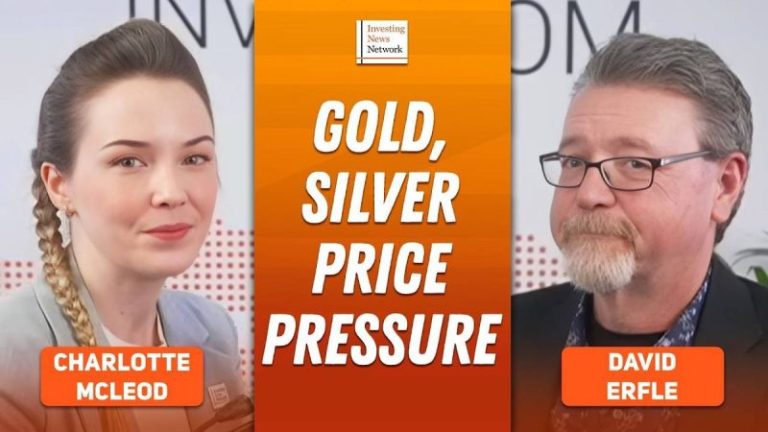
      David Erfle, editor and founder of Junior Miner Junky, explains why gold and silver prices took a hit not long after war in the Middle East was announced.

      While the near term could be volatile, he said the long-term outlook for precious metals is strong.

      Securities Disclosure: I, Charlotte McLeod, hold no direct investment interest in any company mentioned in this article.

      This post appeared first on investingnews.com