Author

admin

Browsing

Precious metals prices continued to face downward pressure this week as investors took strong US economic data and a changing geopolitical landscape into consideration.

After climbing to fresh all-time highs at the start of 2026, a myriad of factors in February have seemingly taken the sails out gold, silver and platinum prices. However, the underlying fundamentals for the precious metals remain strong, resulting in a resiliency that lends optimism to higher price points to come in 2026.

Let’s take a look at what got spot prices moving over the past week.

Gold price

Gold hit a record high of close to US$5,600 per ounce at the end of January before sliding into one of the largest price drops in decades, dipping as low as US$4,400 as February kicked off.

Over the past week, the metal has oscillated between slumps and cautious recovery. The spot price lost the battle to remain above the key US$5,000 mark in morning trading on February 12, falling to an intraday low of US$4,907.41. February 13 saw gold rebound slightly and trade in a tight range between US$5,000 and US$5,040.

Gold couldn’t hold that level on Monday (February 16), and the next day it began sliding below the US$4,900 support level. Wednesday (February 18) brought some relief, with gold once again fighting to stay above US$5,000.

Gold price chart, February 12, 2026 to February 18, 2026.

The primary drivers for gold this past week are:

      • Seasonal liquidity is also at play this week as the Lunar New Year holiday, which runs from February 16 to 23, typically results in lower trading volumes.

      In other gold news, the 2026 TSX Venture 50 list was released on Wednesday, with several gold companies named as top performers. The top five gold stocks on the list are: 1911 Gold (TSXV:AUMB,OTCQB:AUMBF), TDG Gold (TSXV:TDG,OTCQX:TDGGF), Omai Gold Mines (TSXV:OMG,OTCQB:OMGGF), Prospector Metals (TSXV:PPP,OTCQB:PMCOF) and Goldgroup Mining (TSXV:GGA,OTCQX:GGAZF).

      Silver price

      Silver has broadly tracked gold’s price movements over the past week.

      However, the white metal has exhibited significantly higher volatility, and the silver spot price is far outside of striking range of its all-time high of more than US$121 per ounce, which it reached on January 29.

      Silver fell by more than 9 percent on February 12 as it followed gold on the downtrend, falling from around US$83 to US$75. On Friday the 13th, silver managed not to scare investors as it traded mostly sideways at the US$77 level.

      For most of Monday and Tuesday (February 17), silver continued to limp along this trend line, but has managed to gain ground, rising from the US$75 level to an intraday high of US$78.24 as of 11:00 a.m. PST on Wednesday.

      Silver price chart, February 12, 2026 to February 18, 2026.

      In addition to the macro factors influencing gold, volatility in the silver market has also come from the ups and downs in the artificial intelligence (AI) sector. Silver, the most electrically and thermally conductive metal on the planet, is considered a key material for AI tech, particularly in data centers and high-performance computing.

      Over the past week, the Global X Artificial Intelligence & Technology ETF (NASDAQ:AIQ) has slid from approximately US$50.55 to US$49.94 as of midday on Wednesday, reflecting broader weakness in the sector.

      In other silver news, in its latest annual outlook, published on February 10, the Silver Institute reported that it expects macroeconomic and geopolitical conditions to remain broadly supportive for silver in 2026.

      Platinum price

      On February 12, platinum was trading as high as US$2,136 per ounce in early morning trading, but soon followed its precious metals sisters on a downward slide to an intraday low of US$1,982.50. The metal was back above US$2,070 the next day, and for the first part of this week it’s managed to trade above the US$2,000 level.

      Wednesday was a recovery day for platinum as it reached an intraday high of US$2,122.90 as of 11:00 a.m. PST.

      Platinum price chart, February 12, 2026 to February 18, 2026.

      Platinum is one of the top-performing metals over the past year, reaching 12 year highs in recent weeks. Demand is being driven by the metal’s essential role in the emerging hydrogen economy. It’s also still seeing robust demand from the auto sector despite the emergence of electric vehicles and uneasy consumer confidence in the economy.

      On the supply side, global platinum reserves remain critically low, especially as the world’s biggest producer, South Africa, continues to be plagued by power shortages and operational disruptions.

      This week, Johnson Matthey (LSE:JMAT,OTCPL:JMPLF), Sibanye-Stillwater (NYSE:SBSW) and Valterra Platinum (LSE:VALT,JSE:VAL,OTCPL:AGPPF) launched a multimillion-dollar partnership to develop new platinum-group metals clean energy and industrial technologies outside of the auto sector.

      Palladium price

      Palladium has been the black sheep of the precious metals family for the past few years, remaining well below its March 2022 all-time record of US$3,440.76 per ounce.

      On February 12 it followed the precious metals pack down from US$1,741 to as low as US$1,664.

      After a rebounding above to US$1,783 level on Monday, the following trading today brought much volatility to the metal, which traded in the US$1,670 to US$1,720 range. Platinum managed to to make gains to the upside on Wednesday with an intraday high of US$1,774 as of 11:00 a.m. PST.

      Palladium price chart, February 12, 2026 to February 18, 2026.

      The palladium price is being held down by a slump in demand for electric vehicles and a looming oversupply situation. Analysts at Heraeus Precious Metals predict that the palladium market may move into a surplus in 2026 as secondary supply from recycling increases by 10 percent.

      On that note, an announcement shaping the outlook for palladium on the supply side this past week came from the US Department of Commerce, which issued a preliminary statement of support for anti-dumping duties of approximately 133 percent on unwrought Russian palladium imports.

      This follows a petition from Sibanye-Stillwater over allegations that Russian metal is being sold in the US at less than fair value. A final decision is expected in the case by June of this year.

      Securities Disclosure: I, Melissa Pistilli, hold no direct investment interest in any company mentioned in this article.
      This post appeared first on investingnews.com

      The Commodity Futures Trading Commission (CFTC) is stepping in to stop what it calls an “onslaught” of state-level regulation of prediction markets.

      CFTC Chairman Michael Selig said Tuesday in a video posted on X that the agency has filed a “friend of the court brief” in support of Crypto.com in its escalating legal battle with regulators in Nevada.

      The move is significant because it marks the first time under Selig that the CFTC has taken sides in what is shaping up to be an epic fight between regulators and prediction markets, platforms that allow users to trade contracts tied to a wide range of events, from local elections to the Super Bowl.

      By intervening, Selig’s CFTC is effectively arguing that prediction markets are federally regulated and not subject to state-level gambling laws.

      “Over the past year, American prediction markets have been hit with an onslaught of state-led litigation,” Selig said in the video.

      “The CFTC will no longer sit idly by while overzealous state governments undermine the agency’s exclusive jurisdiction over these markets by seeking to establish statewide prohibitions on these exciting products,’ said Selig.

      The debate over how the platforms should be regulated comes as they explode in popularity. Kalshi said Super Bowl 60 generated more than $1 billion in total trading volume — a 2,700% increase from last year.

      It’s a fight with broad implications and high stakes. Over the past year, several states including Massachusetts and Nevada have moved to restrict prediction markets, filing lawsuits, issuing cease-and-desist letters and arguing that the platforms amount to unlicensed gambling.

      Utah’s Republican governor, Spencer Cox, said in a post on X Tuesday that he will use “every resource” within his disposal to “beat” Selig in court.

      “These prediction markets you are breathlessly defending are gambling—pure and simple,” he said. “They are destroying the lives of families and countless Americans, especially young men. They have no place in Utah.”

      Meanwhile, Cox’s fellow Republican, Sen. Bernie Moreno of Ohio, issued his support of Selig’s announcement on X. “Clear lines of delineation and clarity on regulations is essential for American led innovation,’ he said.

      Selig’s move comes days after a group of Democratic senators led by Nevada’s Catherine Cortez Masto sent the chairman a letter urging the CFTC to ‘abstain from intervening in pending litigation involving contracts tied to sports, war, or other prohibited events.’

      As states attempt to rein in these fast-growing platforms, the question is no longer simply whether these products amount to gambling. It’s who gets to decide that question.

      Industry advocates argue that the platforms aren’t gaming, which is traditionally regulated by states. Instead, they claim the prediction markets are financial exchanges that fall under the CFTC’s purview, where users trade contracts with one another. and don’t bet against a “house.” The exchanges don’t set odds or take the opposite side of trades. Instead, they collect transaction fees, similar to a brokerage.

      In the video, Selig said prediction markets allow Americans to “hedge commercial risks like increases in temperature and energy price spikes,” and they act as “an important check on our news media and our information screens.”

      He ended the video with a warning directed at the state attorneys general who are on the front lines of the legal fights to regulate prediction markets: “To those who seek to challenge our authority in this space, let me be clear: We will see you in court.”

      This post appeared first on NBC NEWS

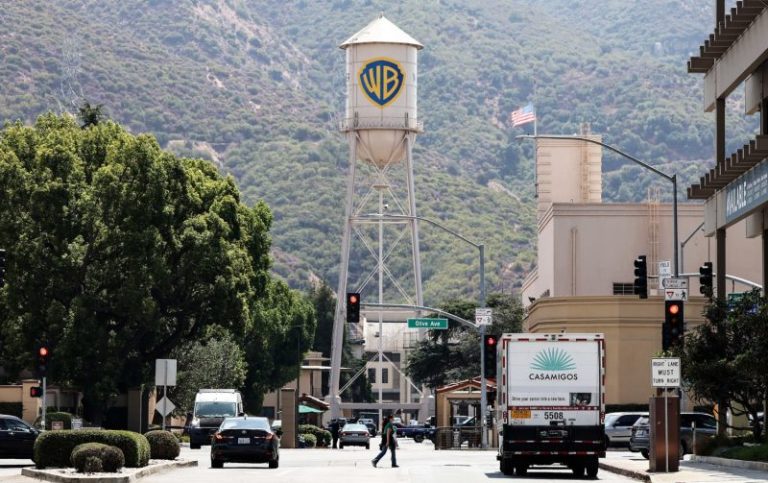
      Warner Bros. Discovery said Tuesday that it was reopening talks with Paramount Skydance, giving the studio a week to rival Netflix in its bid to take over the streaming and cable giant.

      In a statement, Warner Bros. Discovery said it had rejected the latest $30-a-share offer from Paramount but would give the company until Monday ‘to make its best and final offer.’

      It also said a ‘senior representative’ of Paramount had indicated that the CBS owner would be willing to meet an even higher price, $31 a share, seemingly enticing the board back to the table.

      At the same time, Warner Bros. is still recommending its shareholders vote at a special meeting March 20 to approve the $82.7 billion deal it reached in December to sell its streaming service, studio and HBO cable channel to Netflix.

      Paramount is seeking to buy the entirety of Warner Bros. Discovery.

      ‘Every step of the way, we have provided [Paramount Skydance] with clear direction on the deficiencies in their offers and opportunities to address them,’ David Zaslav, CEO of Warner Bros. Discovery, said in the statement.

      In a letter to the Paramount board — chaired by David Ellison, also the company’s CEO and controlling shareholder — Warner Bros. said that while Paramount had indicated it would address ‘unfavorable terms and conditions,’ these had not yet been removed from the proposed merger agreement.

      Warner Bros. has repeatedly rejected previous bids from Paramount, citing the ‘insufficient value’ offered.

      In a separate statement, Netflix hit out at what it called Paramount’s ‘antics.’

      ‘Throughout the robust and highly competitive strategic review process, Netflix has consistently taken a constructive, responsive approach with WBD, in stark contrast to Paramount Skydance,’ it said.

      Netflix said that it was ‘confident that our transaction provides superior value and certainty’ but also recognized ‘the ongoing distraction for WBD stockholders and the broader entertainment industry caused by’ Paramount. The company said it granted Warner Bros. the one-week window to reopen talks with Paramount to ‘fully and finally resolve this matter.’

      Netflix also took aim at the regulatory process required for either company to complete a takeover.

      It said that Paramount has ‘repeatedly mischaracterized the regulatory review process by suggesting its proposal will sail through.’

      ‘WBD stockholders should not be misled into thinking that PSKY has an easier or faster path to regulatory approval — it does not,’ Netflix said.

      In a statement, Paramount Skydance reiterated its existing offer to Warner Bros. Discovery of $30 per share. The company did not indicate if it would submit a higher bid.

      Paramount called the one-week negotiating window ‘unusual’ but said it ‘is nonetheless prepared to engage in good faith and constructive discussions.’

      The Ellison-backed media giant also said it would continue advocating against the Netflix deal and submit a slate of directors for Warner Bros.’ board at the upcoming shareholder meeting, as it previously planned to.

      President Donald Trump, whose administration approved Ellison’s takeover of Paramount last year, said early in the bidding process he would be involved in approving a deal with Warner Bros.

      But earlier this month, Trump changed his tune. ‘I’ve been called by both sides, it’s the two sides, but I’ve decided I shouldn’t be involved,’ he told ‘NBC Nightly News’ anchor Tom Llamas.

      Trump still hinted that one company looked problematic to him. ‘I mean, there’s a theory that one of the companies is too big and it shouldn’t be allowed to do it,’ he said.

      ‘They’re beating the hell out of each other and there’ll be a winner,’ Trump said.

      Warner Bros. has an archive of storied movies, as well as a diverse portfolio of brands including CNN and HBO.

      The bidding war for the media empire comes at a pivotal time for the entertainment industry, with traditional broadcasters and studios facing serious challenges from digital newcomers Netflix, Apple and Amazon.

      Since Netflix announced its deal to buy parts of Warner Bros. Discovery, its shares have tumbled nearly 25%.

      This post appeared first on NBC NEWS

      Investor Insight

      Earthwise Minerals is a data-driven Canadian gold explorer advancing the fully permitted Iron Range gold project in southeastern British Columbia. Backed by more than $8 million in historical data and a 51.6 million-share structure, the company offers strong leverage to discovery. A staged earn-in and defined drill targets position Earthwise for efficient, high-impact exploration.

      Overview

      Earthwise Minerals (CSE:WISE,FSE:966) is a Vancouver-based exploration company focused on advancing the Iron Range Gold Project in southeastern British Columbia. The project lies within the Purcell Supergroup along the Iron Mountain Fault Zone, a major regional structure in the same metallogenic belt as the historic Sullivan deposit, providing a strong geological context for structurally hosted gold-dominant mineralization.

      The company’s strategy centers on integrating historic datasets with modern exploration technologies to efficiently generate drill-ready targets. More than $8 million in historical exploration work — including airborne geophysics, soil geochemistry and drilling — gives Earthwise a significant technical head start and reduces early-stage exploration risk.

      Earthwise controls its flagship project through an option agreement with Eagle Plains Resources, allowing it to prioritize exploration spending over acquisition costs. This staged structure provides a disciplined pathway toward discovery while preserving capital.

      Company Highlights

      • Tight Capital Structure:51.6 million shares fully diluted, providing strong leverage to exploration success without excessive dilution
      • District-Scale Flagship Asset: The Iron Range Gold Project spans 21,437 hectares along a major regional structure with more than 50 kilometres of strike length
      • Extensive Historic Database: Over $8 million in past geophysics, geochemistry and drilling creates a robust dataset for modern targeting
      • Low-Cost Earn-In: Option to earn 70 percent interest over four years through staged payments and exploration totaling $4 million, plus a further 10 percent (to 80 percent) for a $1-million payment within 120 days
      • Infrastructure Advantage: Property is road accessible, crossed by Highway 3 and serviced by rail, power, natural gas and water
      • Advanced Permitting: Multi-year area-based permit allows drilling, trenching, geophysics and road access without annual approvals
      • Experienced Leadership: Management and board combine technical discovery experience, capital markets expertise and digital strategy capabilities

      Key Project

      Iron Range Gold Project

      The Iron Range Gold Project is Earthwise’s flagship asset, covering 21,437 hectares just northeast of Creston, British Columbia. The property is underlain by the Iron Mountain Fault Zone and hosts structurally controlled mineralization associated with a key stratigraphic horizon known as the Lower–Middle Aldridge Contact. Infrastructure is exceptional, with Highway 3 crossing the project, rail access via Canadian Pacific, power supplied by BC Hydro and nearby natural gas and water.

      Historic exploration has outlined multiple mineralized zones supported by geophysical and geochemical anomalies. A 2004 VTEM survey identified conductive trends coincident with the fault zone, while soil surveys defined multi-element anomalies including arsenic, lead, zinc and gold. Induced polarization surveys completed in 2017 outlined a down-plunge chargeability anomaly at the Talon/Canyon Zone, later confirmed by drilling in 2018.

      Mineralization styles are polymetallic but gold dominant, occurring within brittle shear and breccia zones ranging from one metre to several tens of metres wide. Historic drill intercepts include:

      • 56.5 m grading 1.9 g/t gold, 0.44 percent lead, 0.59 percent zinc and 19.7 g/t silver
      • 14.0 m grading 5.1 g/t gold, 1.86 percent lead, 2.1 percent zinc and 75.3 g/t silver
      • 2.0 m grading 12.8 g/t gold, 4.18 percent lead, 5.06 percent zinc and 122.5 g/t silver

      Recent fieldwork has also returned surface samples grading up to 13.4 g/t gold, 27.2 g/t silver and 2.7 percent lead, supporting the project’s discovery potential. Mineralization remains open along strike and at depth, with overlapping geophysical and geochemical vectors indicating potential for additional shoots.

      Project Highlights

      • 21,437 hectare district-scale land package
      • More than 50 km of prospective structural strike
      • Over $8 million in historical exploration data
      • Fully permitted for multi-year drilling and exploration
      • Phase 1 drill program (~2,500 m) planned to test down-plunge extensions and parallel structures
      • Earn-in to 80 percent ownership with only a 1 percent NSR retained on part of the property

      Management Team

      Mark Luchinski — Chief Executive Officer and Corporate Director

      Mark Luchinski is an entrepreneur and capital markets specialist with two decades of experience managing public companies and advancing exploration assets. He has guided multiple firms through financings, acquisitions, exploration programs and listings. He also serves as a director of Aeonian Resources.

      Mateo Arcila — Director

      Mateo Arcila is an engineer with over 10 years of experience in business development and digital strategy. He oversees corporate outreach, digital initiatives and investor engagement for Earthwise. His background includes marketing analytics, data strategy and international business.

      Karen Mate – Director

      Karen Mate is a senior capital markets professional with more than 30 years of experience in the Canadian investment industry, specializing in institutional equity sales and capital markets advisory. She has held senior roles at leading investment banks, including Director of Global Institutional Equity Sales at Scotia Capital, as well as leadership positions at Casimir Capital, Dundee Capital Markets, Marleau Lemire Securities and National Bank Financial. Known as a trusted advisor to institutional investors and corporate management teams, she has guided clients across multiple market cycles with strategic market insight and execution expertise.

      Ikavinder Deol — Chief Financial Officer

      Ikavinder Deol is a CPA with more than six years of experience in financial reporting and compliance for junior mining companies. She specializes in IFRS reporting and regulatory filings. She is also affiliated with Cross Davis & Company, which focuses on public resource issuers.

      Andy Randell – Geological Advisor

      Andy Randell, P.Geo, is a professionally registered geoscientist with more than 20 years of experience spanning mineral exploration, technical leadership, consulting and industry governance. He has held senior geological roles on gold-focused projects in Canada and internationally, including project geologist and chief geologist positions, and brings expertise from grassroots through advanced-stage exploration. His work emphasizes structural geology, disciplined target generation and responsible exploration practices.

      This post appeared first on investingnews.com

      (TheNewswire)

      Vancouver, British Columbia TheNewswire – February 16th, 2026 Prismo Metals Inc. (the ‘Company’) (CSE: PRIZ,OTC:PMOMF) (OTCQB: PMOMF) is pleased to invite investors and other interested parties to attend the Company’s upcoming live webinar presentation and audience Q&A on February 26th at 1:00 pm PST (4:00 pm EST).

      CEO Alain Lambert and Chief Exploration Officer Dr. Craig Gibson will discuss Prismo’s upcoming drill program at its Silver King project located near the town of Superior, Arizona.

      The webinar will be a live, interactive online event where attendees can ask the presenters questions following management’s presentation. A recording will be available for those who cannot join the live event.

      Presentation Date & Time: Thursday February 26th, @ 1 PM PST / 4 PM EST

      Webcast Link: https://us06web.zoom.us/j/82341038966?pwd=QL8lbCPybL9SPLOPy7b8YWOdeack2u.1

      Passcode: 821459

      Recent Management Interviews

      Consistent with its desire to keep investors informed of the latest developments of the Company, Prismo is pleased to share the latest interviews with management which were published on the last couple days:

      Interview with Martin Gagel of Radius Research:

      Interview with Cory Fleck of Korelin Economics Report:

      https://www.kereport.com/2026/02/16/prismo-metals-silver-kings-project-upcoming-maiden-drill-program-overview/

      Alain Lambert, CEO of Prismo commented: ‘Following our announcement on February 12th that we have received formal permit approval from the U.S. Forest Service to proceed with our fully funded drill program at Silver King, Craig and I did two interviews in which we explain in detail the upcoming drill program. We are pleased to share these interviews with our shareholders and potential investors as we feel it will give them a clear picture of the drill plan and expectations regarding assay results and next steps.’

      On February 12th, the Company also announced that it had engaged Godbe Drilling LLC to conduct this Phase 1 drilling program. Godbe Drilling LLC is a Colorado-based family-owned diamond core drilling and mineral exploration business with extensive operating experience in the southwestern United States, including Arizona. Finally, the financing announced in the Company’s January 16th, 2026 news release has been completed for an amount of $147,500 as per the terms and conditions detailed in that news release.

      About Silver King

      Discovered in 1875, the Silver King mine is one of Arizona’s most important historical producers, yielding nearly 6 million ounces of silver at grades of up to 61 oz/t. Selected samples from small-scale production in the late 1990s returned historical grades as high as 644 oz/t silver (18,250 g/t) and 0.53 oz/t gold (15 g/t). Additionally, the presence of freibergite (AgCuSbS) suggests a potential for antimony, a critical mineral with growing strategic demand.

      Strategic Location

      The Silver King mine sits only 3 km from the main shaft of the Resolution Copper project — a joint venture between Rio Tinto and BHP and recognized as one of the world’s largest unmined copper deposits.(1) This unique land position is fully surrounded by Resolution Copper’s claim block, offering strategic upside.

      The Silver King mine was discovered in 1875 and produced as much as 10,000 ounces per ton silver in near surface workings.(2) Underground production through 1889 is estimated at almost 6 million ounces of silver at grades of between 61 and 21 ounces per ton. During a second period of production from 1918 to 1928, 230,000 ounces were produced at a grade of 18.7 ounces per ton.  No significant production has occurred after 1928.  

      Silver King is a steeply west-dipping pipelike stockwork and breccia zone that was mined on eight levels to about 300 meters depth below a glory hole at the surface. The pipe is described as a dense stockwork with local breccia zones and a quartz core, and that due to variations in mineralogy, much of the upper portion of the body has not been mined(3). The current owners from whom the Company has optioned the project rehabilitated the main shaft in the late 1990s, opened the upper levels of the mine and produced a small tonnage. Assay certificates from this period show selected samples with 400 to 600 ounces per ton silver with 0.2-0.5 oz/t gold and some base metals. Virtually no modern exploration has been carried out at the mine providing significant exploration upside and multiple drill targets.  

      With respect to the Resolution deposit, the QP has been unable to verify the information, and the information is not necessarily indicative to the mineralization on the Silver King property.

      1. (2)Galbraith, F, 1935, Geology of the Silver King area, Superior, Arizona, Univ. of Arizona thesis, 153p plus plates. 

      2. (3)Blake, W.P., 1883, Description of the Silver King Mine, Arizona, New Haven, 48p plus plates. 

      3. (5)Briggs, D. 2015, Superior, Arizona: An old mining camp with many lives, Ariz. Geol Survey Contributed Report CR-15-D, 13p. 

      Qualified Person

      Dr. Craig Gibson, PhD., CPG., a Qualified Person as defined by NI-43-01 regulations and Chief Exploration Officer and a director of the Company, has reviewed and approved the technical disclosures in this news release.  The historic data presented in this press release was obtained from public sources, should be considered incomplete and is not qualified under NI 43-101, but is believed to be accurate. The Company has not verified the historical data presented and it cannot be relied upon, and it is being used solely to aid in exploration plans.

      About Prismo Metals Inc.

      Prismo (CSE: PRIZ,OTC:PMOMF) is a mining exploration company focused on advancing its Silver King, Ripsey and Hot Breccia projects in Arizona and its Palos Verdes silver project in Mexico.

      Please follow @PrismoMetals on , , , Instagram, and

      Prismo Metals Inc.

      1100 – 1111 Melville St., Vancouver, British Columbia V6E 3V6

      Phone: (416) 361-0737


      Contact:

      Alain Lambert, Chief Executive Officer alain.lambert@prismometals.com

      Gordon Aldcorn, President gordon.aldcorn@prismometals.com  


      Cautionary Note Regarding Forward-Looking Information

      This release includes certain statements and information that may constitute forward-looking information within the meaning of applicable Canadian securities laws. Forward-looking statements relate to future events or future performance and reflect the expectations or beliefs of management of the Company regarding future events. Generally, forward-looking statements and information can be identified by the use of forward-looking terminology such as ‘intends’ or ‘anticipates’, or variations of such words and phrases or statements that certain actions, events or results ‘may’, ‘could’, ‘should’, ‘would’ or ‘occur’. This information and these statements, referred to herein as ‘forward‐looking statements’, are not historical facts, are made as of the date of this news release and include without limitation, statements regarding discussions of future plans, estimates and forecasts and statements as to management’s expectations and intentions with respect to, among other things: the timing, costs and results of drilling at Hot Breccia.

      These forward‐looking statements involve numerous risks and uncertainties, and actual results might differ materially from results suggested in any forward-looking statements. These risks and uncertainties include, among other things: delays in obtaining or failure to obtain appropriate funding to finance the exploration program at Silver King.

      In making the forward-looking statements in this news release, the Company has applied several material assumptions, including without limitation, that: the ability to raise capital to fund the drilling campaign at Silver King and the timing of such drilling campaign.

      Although management of the Company has attempted to identify important factors that could cause actual results to differ materially from those contained in forward-looking statements or forward-looking information, there may be other factors that cause results not to be as anticipated, estimated or intended. There can be no assurance that such statements will prove to be accurate, as actual results and future events could differ materially from those anticipated in such statements. Accordingly, readers should not place undue reliance on forward-looking statements and forward-looking information. Readers are cautioned that reliance on such information may not be appropriate for other purposes. The Company does not undertake to update any forward-looking statement, forward-looking information or financial out-look that are incorporated by reference herein, except in accordance with applicable securities laws. We seek safe harbor.


      Copyright (c) 2026 TheNewswire – All rights reserved.

      News Provided by TheNewsWire via QuoteMedia

      This post appeared first on investingnews.com

      Corcel Exploration Inc. (CSE: CRCL,OTC:CRLEF) (OTCQB: CRLEF) (the ‘Company’ or ‘Corcel’) today announced the appointment of Thy Truong to the Board of Directors, replacing Oliver Friesen effective immediately.

      Corcel would like to thank Mr. Friesen for his guidance and meaningful contributions during his tenure on the Board and wishes him every success in his future endeavors.

      Thy Truong is a Chartered Professional Accountant with more than ten years of experience in public accounting and the mining industry. Ms. Truong. currently serves as Director of FP&A, Tax, and Internal Controls at Vizsla Silver Corp. and CFO of Tarachi Gold Corp., where she supports financial planning, governance, and day-to-day decision-making across the organizations. She graduated Magna Cum Laude with a bachelor’s degree in business administration from Fairleigh Dickinson University, Vancouver and was a part of the Global Scholar Program (Academic Honours).

      ‘On behalf of the Board, I am pleased to welcome Thy to Corcel,’ commented Jon Ward, CEO and Director of Corcel Exploration Inc. ‘Thy brings a technical accounting background with a proven track record in financial planning, governance, and internal controls. Her experience in public accounting and supporting resource companies will be invaluable as we continue to advance the Yuma King copper-gold asset in Arizona.’

      The Company also announces that it has granted 200,000 incentive stock options exercisable at $0.22 for a period of 5 years, in accordance with its stock option plan.

      About Corcel Exploration Inc.

      Corcel is a mineral resource company engaged in the acquisition and exploration of precious and base metals properties throughout North America. The Company has entered a long-term lease agreement to acquire the Yuma King Copper-Gold project in Arizona, which spans a district-scale land position of 3,200 hectares comprising 515 unpatented federal mining claims in the Ellsworth Mining District, including the past-producing Yuma Mine which saw underground production of copper, lead, gold and silver between 1940 and 1963. The Company also holds an option to acquire a 100% undivided right, title, and interest in and to the Peak gold exploration project and holds a 100% interest in the Willow copper project. For more information, please visit our website at https://corcelexploration.com/.

      For further information contact:

      Jon Ward, CEO
      Email: info@corcelexploration.com
      Tel: (604) 355-0303

      Caution Regarding Forward-Looking Information

      This news release contains ‘forward‐looking information’ and ‘forward-looking statements’ under applicable Canadian and U.S. securities laws (collectively, ‘forward‐looking statements’). These statements relate to future events or the Company’s future performance, business prospects or opportunities that are based on forecasts of future results, estimates of amounts not yet determinable and assumptions of management made in light of management’s experience and perception of historical trends. Assumptions may prove to be incorrect and actual results and future events may differ materially from those anticipated. Any statements that express or involve discussions with respect to predictions, expectations, beliefs, plans, projections, objectives or future events or performance (often, but not always, using words or phrases such as ‘seek’, ‘anticipate’, ‘plan’, ‘continue’, ‘estimate’, ‘expect’, ‘may’, ‘will’, ‘project’, ‘predict’, ‘forecast’, ‘potential’, ‘target’, ‘intend’, ‘could’, ‘might’, ‘should’, ‘believe’ and similar expressions) are not statements of historical fact and may be ‘forward‐looking statements’.

      Forward-looking statements are subject to known and unknown risks, uncertainties and other factors that may cause actual results to materially differ from those expressed or implied by such forward-looking statements, including but not limited to: material adverse changes, unexpected changes in laws, rules or regulations, or their enforcement by applicable authorities; the failure of parties to contracts with the company to perform as agreed; social or labour unrest; changes in commodity prices; and the failure of exploration programs or studies to deliver anticipated results or results that would justify and support continued exploration, studies, development or operations. Although the Company has attempted to identify important factors that could cause actual results to differ materially from those contained in forward-looking statements, there may be other factors that cause results not to be as anticipated, estimated or intended. The Company believes that the expectations reflected in these forward‐looking statements are reasonable, but no assurance can be given that these expectations will prove to be correct and such forward‐looking statements included herein should not be unduly relied upon. These statements speak only as of the date hereof. The Company does not intend, and does not assume any obligation, to update these forward-looking statements, except as required by applicable laws.

      Neither the Canadian Securities Exchange nor the Market Regulator (as that term is defined in the policies of the Canadian Securities Exchange) accepts responsibility for the adequacy or accuracy of this release.

      To view the source version of this press release, please visit https://www.newsfilecorp.com/release/284116

      News Provided by TMX Newsfile via QuoteMedia

      This post appeared first on investingnews.com

      Silverco Mining (TSXV:SICO) is a production-stage silver company targeting opportunities in Mexico’s Sierra Madre Occidental belt. Its primary technical focus is optimizing the wholly owned Cusi Mining Complex in Chihuahua, an 11,665-hectare district-scale property. The site benefits from established, institutional-quality infrastructure—such as direct access to the national power grid and paved roads—significantly lowering the capital requirements for restarting operations.

      The company is undertaking a definitive transition toward mid-tier producer status through a binding agreement to acquire Nuevo Silver. This deal gives Silverco control of the La Negra mine in Querétaro, a currently producing asset that delivers immediate top-line revenue. By pairing the near-term restart of the Cusi 1,200 tpd mill with ongoing production at La Negra, Silverco is effectively bypassing the multi-year development cycle typically faced by junior miners.

      This “buy-and-build” strategy is driven by a technical team with specialized expertise in Mexican epithermal vein systems and complex underground mine engineering, positioning the company to accelerate growth while maintaining operational discipline.

      Company Highlights

      • The $62.5 million upsized bought deal financing (closing Q1 2026) and Eric Sprott’s $10 million lead order provide cornerstone validation from a legendary mining investor and the necessary liquidity to fast-track production restarts.
      • The updated Mineral Resource Estimate of 41.2 million ounces of silver equivalent (AgEq) in the Measured and Indicated category establishes a high-confidence geological foundation at Cusi, supporting long-term mine planning.
      • The dual-track growth strategy involving the Cusi restart and the Nuevo Silver/La Negra acquisition provides immediate production scale and a diversified cash-flow profile across two distinct Mexican mining jurisdictions.
      • Pure-play silver exposure with significant de-risking is achieved via the 1,200 tonne-per-day (tpd) Cusi mill, which was producing as recently as 2023, ensuring that surface infrastructure is ‘warm’ and capable of a rapid return to service.
      • Imminent exploration catalysts exist following the completion of a 15,000-metre drill program at Cusi; results are currently pending and are expected to define high-grade extensions at the San Miguel vein.

      This Silverco Mining profile is part of a paid investor education campaign.*

      Click here to connect with Silverco Mining (TSXV:SICO) to receive an Investor Presentation

      This post appeared first on investingnews.com

      Global central banks own about 17 percent of all the gold ever mined, with reserves topping 36,520.7 metric tons (MT) at the end of November 2025. They acquired the vast majority after becoming net buyers of the metal in 2010.

      Central banks purchase gold for a number of reasons: to mitigate risk, to hedge against inflation and to promote economic stability. Increased concerns over another global financial crisis have as expected led central banks once again to build up their gold reserves.

      In a mid-2025 survey, the World Gold Council (WGC) said that 95 percent of the central bankers it polled expect global gold reserves to increase over the next 12 months. The precious metal’s ‘performance during times of crisis’ was cited by 85 percent of respondents as highly or somewhat relevant to their decision, while 80 percent cited its long-term store of value.

      Central banks added 863.3 metric tons of gold to their vaults in 2025. While this was lower than the previous three years, which all topped 1,000 MT each, the reserve gains were still well above the 2010 to 2021 annual average of 473 MT.

      Yearly central bank gold purchases since 2019.

      Chart via the WGC.

      A record 95 percent of respondents to the WGC survey stated their belief that central banks will continue to grow their holdings, with 5 percent suggesting they would hold at current levels. For the second year in a row, no respondents expected reserves to decrease.

      The Council found that sentiment was consistent across advanced and emerging economies and reflected the strategic role of gold amid dynamic economic and geopolitical uncertainty.

      Which central banks hold the most gold?

      Read on to find out the 10 top countries by central bank gold holdings, as per data from the WGC, including recent Q4 2024 and full-year 2024 reports.

      1. United States

      Gold reserves: 8,133.46 metric tons

      When it comes to the largest gold depository in the world, the American central bank is number one with 8,133.46 metric tons of gold.

      A large percentage of US gold is held in “deep storage” in Denver, Fort Knox and West Point. As the US Treasury explains, deep storage is “that portion of the US Government-owned gold bullion reserve which the Mint secures in sealed vaults that are examined annually by the Treasury Department’s Office of the Inspector General and consists primarily of gold bars.”

      The rest of US-owned reserves are held as working stock, which the country’s mint uses as raw material to mint congressionally authorized coins.

      2. Germany

      Gold reserves: 3,350.3 metric tons

      The Bundesbank, Germany’s central bank, currently owns 3,351.53 metric tons of gold. Like many of the central banks on this list, the German national bank stores a significant portion of its gold in foreign central banks.

      Today, just over half of Germany’s gold holdings are stored within Frankfurt, while internationally 1,236 MT of gold is stored in the vaults of the New York Federal Reserve, and 12 percent of its holdings are in London.

      The Bundesbank’s foreign gold reserves came into question in 2012, when the German Federal Court of Auditors, the Bundesrechnungshof, was openly critical of the Bundesbank’s gold auditing. The German bank issued a public statement defending the security of foreign banks. Privately, the Bundesbank then began the arduous process of repatriating some of its gold stock back to German soil. By 2016, more than 583 MT of gold had been transferred back to Germany.

      The economic upheaval and geopolitical volatility brought about by US President Donald Trump’s tariff wars and adversarial posturing toward Europe has led to calls for Germany to consider further repatriating its gold, reported The Guardian in January 2026.

      3. Italy

      Gold reserves: 2,451.9 metric tons

      Banca d’Italia, the national bank of Italy, holds 2,451.84 metric tons of gold. The central bank began amassing its gold in 1893, when three separate financial institutions merged into one. From there, its 78 MT of holdings slowly grew into the large gold reserves it holds today.

      Like Germany, Italy stores parts of its reserves offshore. In total, 141.2 MT are located in the UK, 149.3 MT are in Switzerland and 1,061 MT are kept in the US Federal Reserve. Italy houses 1,100 MT of gold domestically.

      4. France

      Gold reserves: 2,437 metric tons

      The Banque de France has 2,437 metric tons of gold reserves, all of which it keeps on hand. The precious metal is stored in the bank’s secure underground vault, dubbed La Souterraine, which is located 27 meters below street level.

      La Souterraine’s gold vaults are one of the four designated gold depositories of the International Monetary Fund.

      According to Investopedia, the collapse of the Bretton Woods gold standard system was in part due to former French President Charles de Gaulle, who “called the U.S. bluff and began actually trading dollars in for gold from the Fort Knox reserves.” At the time, US President Richard Nixon “was forced to take the U.S. off the gold standard, ending the dollar’s automatic convertibility into gold.”

      5. Russia

      Gold reserves: 2,326.5 metric tons

      The Bank of Russia is the official central bank of the Russian Federation and owns 2,332.74 metric tons of gold. Like France, Russia’s central bank has opted to store all its physical gold domestically. The Bank of Russia stores two-thirds of its gold reserves in a bank building in Moscow, and the remaining one-third in Saint Petersburg.

      The majority of the yellow metal is in the form of large, variable-weight standard gold bars weighing between 10 and 14 kilograms. There are also smaller bars on site weighing as much as 1 kilogram each.

      Russia, which is the second largest gold producer by country, has been a steady purchaser of the precious metal since roughly 2007, with sales ramping up significantly between 2015 and 2020. However, Russia’s refineries were banned from selling gold bullion into the London market following the country’s invasion of Ukraine. Sanctions by the west also include a freeze on about half of Russia’s gold reserves.

      In early 2022, Russia tied its currency, the ruble, to the yellow metal. ‘The plan was to shift the currency away from a pegged value and into the gold standard itself so the ruble would become a credible gold substitute at a fixed rate,’ according to Robert Huish, an Associate Professor in International Development Studies at Dalhousie University.

      6. China

      Gold reserves: 2,306.3 metric tons

      The central bank for Mainland China is the People’s Bank of China (PBoC), located in Beijing. According to the WGC, the national financial institute stores 2,279.56 metric tons of gold, most which has been purchased since 2000. In 2001, the PBoC had 400 MT of gold in reserve, but in just a little more than two decades that total has climbed by 459 percent.

      The PBoC issues the Panda gold coin, which was first created in 1982. The Panda coin is now one of the top five bullion coins issued by a central bank. It is among the ranks of the American Eagle, Canadian Maple Leaf, South African Krugerrand and Australian Gold Nugget.

      The PBoC was one of the top gold buyers of the world’s central banks for 2024 and 2025, purchasing 44 MT and 27 MT of gold during the years respectively. April 2024 marked the 18th consecutive month of gold buying for China’s central bank, which paused its purchases afterward until picking them up again in November. As of January 2026, it has purchased gold for a further 15 consecutive months.

      7. Switzerland

      Gold reserves: 1,039.9 metric tons

      The Swiss National Bank (SNB) holds the seventh largest central bank gold reserves. Its 1,039.94 metric tons of gold are owned by the state of Switzerland, but the central bank manages and maintains the reserve. The Swiss constitution allows the SNB to buy and sell gold with market trends, but it is not required to report the sales.

      After years of opaqueness regarding the country’s golden treasure trove and increased selling in 2011 as prices rose, the Swiss Gold Initiative was launched in 2011.

      The initiative called for an amendment to the constitution to add three new points to it. The first was a mandate for all reserve gold to be held physically in Switzerland. The other two dealt with the central bank’s ability to sell its gold reserves, along with a decree that 20 percent of the Swiss bank’s assets be held in gold.

      This culminated in a national referendum in 2014 that failed to reach a majority of votes. However, the public conversation did prompt the bank to be more transparent.

      According to a 2013 release, the central bank reported that 70 percent of its gold reserve was held domestically, 20 percent was located at the Bank of England and 10 percent was stored with the Bank of Canada.

      8. India

      Gold reserves: 880.2 metric tons

      The Reserve Bank of India is another central bank that has fervently acted to increase its holdings in recent years. It began adding to its gold assets in 2017; however, the majority of its purchases have taken place in the past four years.

      Strikingly, after India’s central bank purchased 16 MT of gold in 2023, the institution scooped up another 72 MT of the precious metal in 2024. However, its 2025 purchases totaled just 4 MT, its lowest in eight years.

      While more than half of its gold is held overseas in safe custody with the Bank of England and the Bank of International Settlements, about a third of its gold is held domestically. In June 2024, India repatriated 100 MT of gold from the United Kingdom. This was the first time since 1991 that the Reserve Bank of India moved its overseas gold holdings back home.

      9. Japan

      Gold reserves: 846 metric tons

      The Bank of Japan currently holds 846 metric tons of gold. Public information about the Bank of Japan’s gold reserves is hard to come by.

      In 2000, the island nation was holding approximately 753 MT of the yellow metal, and by 2004, the Bank of Japan’s gold store had grown to 765.2 MT. Its gold reserves remained at that level until March 2021, when the country purchased 80.76 MT of gold, bringing it to its current total.

      10. Turkey

      Gold reserves: 613.7 metric tons

      The Central Bank of Turkey holds 613.7 metric tons of gold. Turkey has been a consistent gold buyer over the past several years, with its central bank adding 75 MT to its holdings in 2024. While the pace of the country’s buying slowed in 2025, the country accumulated another 27 metric tons through the end of November, making it the year’s fifth-largest gold buyer.

      *11. International Monetary Fund

      Gold reserves: 2,814 metric tons

      The gold reserve held by the International Monetary Fund is the third largest in terms of size at 2,814 metric tons. The large gold reserve was amassed primarily during the founding of the international organization in 1944.

      In that inaugural year, it was decided that “25 percent of initial quota subscriptions and subsequent quota increases were to be paid in gold.”

      Since 1944, the International Monetary Fund has added gold through the repayment of debts owed by member countries. Nations can also exchange gold for another member country’s currency.

      Securities Disclosure: I, Melissa Pistilli, hold no direct investment interest in any company mentioned in this article.

      Securities Disclosure: I, Dean Belder, hold no direct investment interest in any company mentioned in this article.
      This post appeared first on investingnews.com