Carbonxt Group (CG1:AU) has announced CG1 non-renounceable pro-rata entitlement offer
Download the PDF here.
This post appeared first on investingnews.com


Carbonxt Group (CG1:AU) has announced CG1 non-renounceable pro-rata entitlement offer
Download the PDF here.
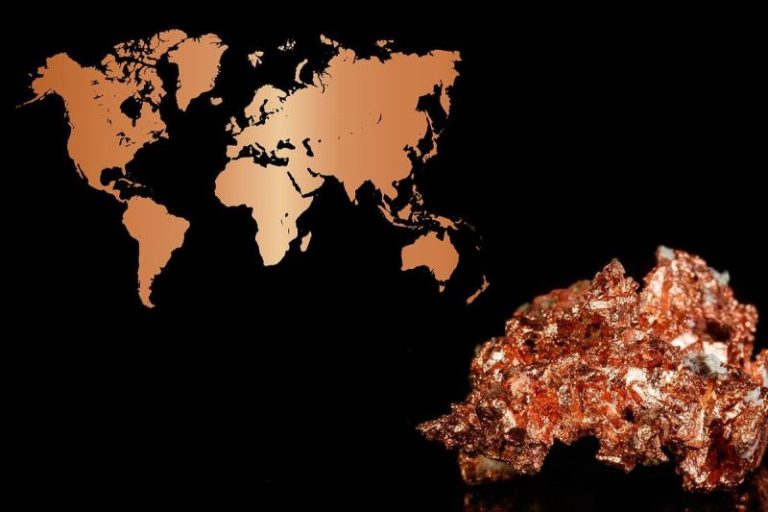
Copper has become a hot topic due to its role in the green energy transition and its necessity for urbanization. However, the lack of incoming supply in the long term has experts concerned.
Due to its importance in construction, energy transmission and new technologies, copper is a critical metal needed to power the future of our society. However, mined supply has not kept pace with demand, with few new operations coming online, and older mines facing decreasing grades and lower outputs.
The term “peak copper” was coined because some experts believe that copper reserves may be diminishing. According to the US Geological Survey (USGS), more than 700 million metric tons of copper have been mined throughout history, and current economic global copper reserves stand at 980 million metric tons.
Nearly all of that mined copper is still in circulation, as the red metal’s recycling rate is higher than that of any other engineering metal, but it is still not enough to keep up with escalating demand. As a result, it’s prudent to know the top copper reserves by country, especially when considering investing in the copper mining industry.
Reserve data for this article was sourced from the USGS’s 2025 Mineral Commodity Summary and supplemented with datasets from Mining Data Online (MDO) and the UN Comtrade Database.
The countries with the largest copper reserves are Chile, Australia, Peru, the Democratic Republic of Congo (DRC) and Russia. These five countries hold more than 55 percent of the world’s total copper reserves and will be critical to a world with soaring demand for copper.
Read on to learn about these copper kingpins.
Copper reserves: 190 million metric tons
Chile holds the largest copper reserves globally at 190 million metric tons, nearly as much as Australia and Peru hold combined. Additionally, Chile is also the world’s top copper producer, with its 5.3 million metric tons of copper in 2024 representing nearly a quarter of global output.
The mining industry is essential to the Chilean economy, making up more than 50 percent of the country’s exports and contributing US$40 billion of its GDP in 2023. Copper alone accounting for more than US$29 billion of that total.
Due to the sheer quantity of copper in the country, it should come as no surprise that Chile is home to the world’s largest copper mine, Escondida. According to MDO, Escondida produced 927,000 metric tons of copper in concentrate in 2024 and sits atop proven and probable copper reserves of 37.62 million metric tons. The mine is a 57.5/30/12.5 joint venture between BHP (ASX:BHP,NYSE:BHP,LSE:BHP), Rio Tinto (ASX:RIO,NYSE:RIO,LSE:RIO) and Japan’s JECO.
Copper reserves: 100 million metric tons
Australian copper reserves are pegged at 100 million metric tons, tying it for the second largest country by copper reserves. The resource industry is an essential sector in Australia, contributing AU$385 billion during the 2024/2025 fiscal year. Of that, copper was the sixth largest contributor with AU$13.2 billion, a AU$1.8 billion increase over 2023/2024.
While Australia hosts significant copper reserves, it lags the other countries on the list with similarly sized reserves in terms of production at 800,000 metric tons in 2024. More than a quarter of that came from BHP’s Olympic Dam mine in South Australia, which produced 216,000 metric tons of copper cathode. The polymetallic mine contains substantial proven and probable copper reserves totaling 10.68 million metric tons.
Another significant operation in Australia is Newmont’s (TSX:NGT,NYSE:NEM,ASX:NEM) Cadia Valley mine, which hosts probable reserves of 3.1 million metric tons of contained copper. Cadia Valley produced 87,000 metric tons of copper in concentrate in 2024.
Copper reserves: 100 million metric tons
Copper reserves in Peru stand at 100 million metric tons, tying it with Australia for the second largest copper country. Much like its neighbor Chile, copper is an essential part of Peru’s economy, accounting for 49 percent of the value of its US$47.7 billion in mining exports.
Peru is home to some of the world’s biggest mining operations, and produced 2.6 million metric tons of copper last year. Two mines accounted for a third of the country’s total output.
The top producer in the country is the Cerro Verde Complex, a 55/21/19.6 venture with Freeport-McMoRan (NYSE:FCX), Sumitomo Metal Mining (TSE:5713) and Minas Buenaventura (NYSE:BVN). Cerro Verde hosts hosts proven and probable reserves of 11.45 million metric tons of copper and produced 949 million pounds of copper metal in concentrate in 2024.
Not to be outdone, the second highest is Antamina, a 33.75/33.75/22.5/10 joint venture between BHP, Glencore (LSE:GLEN,OTC Pink:GLCNF), Teck Resources (TSX:TECK.B,TSX:TECK.A,NYSE:TECK) and Mitsubishi (TSE:8058). Last year, output at the mine fell just short of Cerro Verde’s at 941 million pounds of copper in concentrate. Antamina hosts a proven and probable reserve of 4.53 million metric tons of contained copper.
The mine with the largest copper reserves in Peru is Southern Copper’s (NYSE:SCCO) Toquepala mine, home to 13.79 million metric tons of copper in proven and probable reserves. The mine produced 496 million pounds of copper in concentrate last year.
Copper reserves: 80 million metric tons
Copper reserves in the Democratic Republic of Congo stood at 80 million metric tons in 2024, making it the fourth largest country by copper reserves. The DRC’s economic copper reserves have seen a staggering rise in recent years, climbing from an estimated 19 million metric tons in 2019.
The mining sector has been critical to GDP growth in the DRC, with copper being the largest contributor. World Bank reports that the extraction sector has outpaced other segments of the DRC’s economy, increasing 12.8 percent in 2024, while non-mining sectors grew by only 3.2 percent.
According to data from the United Nations, in 2023 the DRC exported US$17 billion in refined copper and unwrought alloys, a large jump from US$7.34 billion in 2019. The country’s copper ore exports contributed US$2.16 billion in 2023, nearly double the US$1.11 billion four years prior.
Among the contributing factors in the rise in mining and export activity has been the development of the Lobito Corridor, which connects mineral-rich regions in Zambia, the DRC and Angola to the port at Lobito in Angola.
This link allows greater access for large-scale operations like Ivanhoe Mines (TSX:IVN) and Zijin Mining’s (HKEX:2899,SHA:601899) Kamoa-Kakula complex in the Southern DRC. One of the largest copper operations in the world, Kamoa-Kakula hosts a probable reserve of 17.69 million metric tons of contained copper and produced 964 million pounds of copper in concentrate in 2024.
Copper reserves: 80 million metric tons
Russia’s copper reserves are estimated to be 80 million metric tons, tying it with the DRC. While commodities are important to the Russian economy, contributing US$417 billion in 2024, the metals sector represented 15 percent of that total at US$60 billion.
Russia has been under significant sanctions since it invaded Ukraine in February 2022. According to the UN Comtrade Database, Russia’s copper exports from in 2021 were valued at US$5.98 billion.
In 2024, Russia produced 930,000 metric tons of copper, an increase from the 890,000 metric tons produced in 2023. Among the main contributing factors was a ramp-up in production at Udokan Copper’s Udokan mine in Siberia, which was expected to produce 135,000 metric tons in 2024 and, according to the mine’s website, hosts a JORC-compliant copper resource of 26.7 million metric tons.
Securities Disclosure: I, Dean Belder, hold no direct investment interest in any company mentioned in this article.

NORTH KINGSTOWN, R.I. — The winged passenger ferry gliding over the surface of Narragansett Bay could be a new method of coastal transportation or a new kind of warship.
Its maker, Regent Craft, is betting on both.
Twelve quietly buzzing propellers line the 65-foot wingspan of Paladin, a sleek ship with an airplane’s nose. It looks nothing like the sailboats and fishing trawlers it speeds past through New England’s largest estuary.
“We had this vision five years ago for a seaglider — something that is as fast as an aircraft and as easy to drive as a boat,” said CEO Billy Thalheimer, jubilant after an hours-long test run of the new vessel.
On a cloudy August morning, Thalheimer sat in the Paladin’s cockpit and, for the first time, took control of his company’s prototype craft to test its hydrofoils. The electric-powered watercraft has three modes — float, foil and fly.
From the dock, it sets off like any motorized boat. Farther away from land, it rises up on hydrofoils — the same kind used by sailing ships that compete in America’s Cup. The foils enable it to travel more than 50 miles per hour — and about a person’s height — above the bay.
What makes this vessel so unusual is that it’s designed to soar about 30 feet above the water at up to 180 miles per hour — a feat that hasn’t quite happened yet, with the first trial flights off Rhode Island’s seacoast planned for the end of summer or early fall.
If successful, the Paladin will coast on a cushion of air over Rhode Island Sound, lifting with the same “ground effect” that pelicans, cormorants and other birds use to conserve energy as they swiftly glide over the sea. It could zoom to New York City — which takes at least three hours by train and longer on traffic-clogged freeways — in just an hour.
As it works to prove its seaworthiness to the U.S. Coast Guard and other regulators around the world, Regent is already lining up future customers for commercial ferry routes around Florida, Hawaii, Japan and the Persian Gulf.
Regent is also working with the U.S. Marines to repurpose the same vessels for island-hopping troops in the Pacific. Those vessels would likely trade electric battery power for jet fuel to cover longer journeys.
With backing from influential investors including Peter Thiel and Mark Cuban, Thalheimer says he’s trying to use new technology to revive the “comfort and refined nature” of 1930s-era flying boats that were popular in aviation’s golden age before they were eclipsed by commercial airlines.
This time, Thalheimer added, they’re safer, quieter and emission-free.
“I thought they made travel easier in a way that made total sense to me,” Cuban said by email this week. “It’s hard to travel around water for short distances. It’s expensive and a hassle. Regent can solve this problem and make that travel fun, easy and efficient.”
Co-founders and friends Thalheimer, a skilled sailor, and chief technology officer Mike Klinker, who grew up lobster fishing, met while both were freshmen at the Massachusetts Institute of Technology and later worked together at Boeing. They started Regent in 2020.
They’ve already tested and flown a smaller model. But the much bigger, 12-passenger Paladin — prototype of a product line called Viceroy — began foil testing this summer after years of engineering research and development. A manufacturing facility is under construction nearby, with the vessels set to carry passengers by 2027.
The International Maritime Organization classifies “wing-in-ground-effect” vehicles such as Regent’s as ships, not aircraft. But a database of civilian ships kept by the London-based organization lists only six around the world, all of them built before it issued new safety guidance on such craft in 2018 following revisions sought by China, France and Russia.
The IMO says it treats them as marine vessels because they operate in the vicinity of other watercraft and must use the same rules for avoiding collisions. The Coast Guard takes a similar approach.
“You drive it like a boat,” Thalheimer said. “If there’s any traffic on the harbor, you’ll see it on the screen. If you see a boat, you’d go around it. We’re never flying over boats or anything like that.”
One of the biggest technical challenges in Regent’s design is the shift from foiling to flying. Hydrofoils are fast for a seafaring vessel, but far slower than the speeds needed to lift a conventional airplane from a runway.
That’s where air blown by the 12 propellers comes in, effectively tricking the wing into generating high lift at low speeds.
All of this has worked perfectly on the computer simulations at Regent’s headquarters in North Kingstown, Rhode Island. The next step is testing it over the water.
For decades, the only warship known to mimic such a ground-effect design was the Soviet Union’s hulking ekranoplan, which was built to fly under radar detection but never widely used. Recently, however, social media images of an apparent Chinese military ekranoplan have caught the attention of naval experts amid increasingly tense international disputes in the South China Sea.
Regent has capitalized on those concerns, pitching its gliders to the U.S. government as a new method for carrying troops and cargo across island chains in the Indo-Pacific region. It could also do clandestine intelligence collection, anti-submarine warfare and be a “mothership” for small drones, autonomous watercraft or medical evacuations, said Tom Huntley, head of Regent’s government relations and defense division.
They fly below radar and above sonar, which makes them “really hard to see,” Huntley said.
While the U.S. military has shown increasing interest, questions remain about their detectability, as well as their stability in various sea states and wind conditions, and their “cost at scale beyond a few prototypes and maintainability,” said retired U.S. Navy Capt. Paul S. Schmitt, an associate research professor at the Naval War College, across the bay in Newport, Rhode Island.
Schmitt, who has seen Paladin from afar while sailing, said he also has questions about what kind of military mission would fit Regent’s “relatively short range and small transport capacity.”
The possibilities that most excite Cuban and other Regent backers are commercial.
Driving Interstate 95 through all the cities that span Florida’s Atlantic Coast can take the better part of a day, which is one reason why Regent is pitching Miami as a hub for its coastal ferry trips.
The Viceroy seagliders can already carry more passengers than the typical seaplane or helicopter, but a growing number of electric hydrofoil startups, such as Sweden’s Candela and California-based Navier, are trying to stake out ferry routes around the world.
Thalheimer sees his vehicles as more of a complement than a competitor to electric hydrofoils that can’t travel as fast, since they will all use the same docks and charging infrastructure but could specialize in different trip lengths.

Walmart on Thursday raised its full-year earnings and sales outlook as its online business posted another quarter of double-digit gains, even as the company said costs are rising from higher tariffs.
The big-box retailer topped Wall Street’s quarterly sales estimates but fell short of earnings expectations, the first time it missed on quarterly earnings since May 2022. The company said it felt pressure on profits for the period, including from some one-time expenses, such as restructuring costs, pricier insurance claims and litigation settlements.
Walmart said it now expects net sales to grow 3.75% to 4.75% for the fiscal year, up from its previous expectations of 3% to 4%. It raised its adjusted earnings per share outlook slightly to $2.52 to $2.62, up from a prior range of $2.50 to $2.60 per share.
In an interview with CNBC, Chief Financial Officer John David Rainey said the company is working hard to keep prices low — including speeding up imports from overseas and stepping up the number of Rollbacks, or limited-time discounts, in its stores.
“This is managed on an item-by-item and category-by-category basis,” he said. “There are certainly areas where we have fully absorbed the impact of higher tariff costs. There are other areas where we’ve had to pass some of those costs along.”
But he added “tariff-impacted costs are continuing to drift upwards.”
Even so, Rainey said Walmart hasn’t seen a change in customer spending. For example, sales of private label items, which typically cost less than national brands, were roughly flat year over year, he said.
“Everyone is looking to see if there are any creaks in the armor or anything that’s happening with the consumer, but it’s been very consistent,” he said. “They continue to be very resilient.”
Yet on the company’s earnings call, CEO Doug McMillon said middle- and lower-income households have been more sensitive to tariff-related price increases, particularly in discretionary categories.
“We see a corresponding moderation in units at the item level as customers switch to other items, or in some cases, categories,” he said.
Here’s what the big-box reported for the fiscal second quarter compared with what Wall Street expected, according to a survey of analysts by LSEG:
Walmart shares fell about 2% in premarket trading Thursday.
Walmart’s net income jumped to $7.03 billion, or 88 cents per share, in the three-month period that ended July 31, compared with $4.50 billion, or 56 cents per share, in the year-ago quarter.
Revenue rose from $169.34 billion in the year-ago quarter.
Comparable sales for Walmart U.S. climbed 4.6% in the second quarter, excluding fuel, compared with the year-ago period, as both the grocery and health and wellness category saw strong growth. That was higher than the 4% increase that analysts expected. The industry metric, also called same-store sales, includes sales from stores and clubs open for at least a year.
At Sam’s Club, comparable sales jumped 5.9% excluding fuel, higher than the 5.2% that analysts anticipated.
E-commerce sales jumped 25% globally and 26% in the U.S., as both online purchases and advertising grew. In the U.S., Walmart said sales through store-fulfilled delivery of groceries and other items grew nearly 50% year over year, with one-third of those orders expedited. The company charges a fee for some of those faster deliveries, and others are included as a benefit of its subscription-based membership program, Walmart+.
Its global advertising business grew 46% year over year, including Vizio, the smart TV maker it acquired for $2.3 billion last year. Its U.S. advertising business, Walmart Connect, grew by 31%.
As Walmart’s online business drums up more revenue from home deliveries, advertising and commissions from sellers on its third-party marketplace, e-commerce has become a profitable business. The company marked a milestone in May — posting its first profitable quarter for its e-commerce business in the U.S. and globally.
Rainey said on Thursday that Walmart doubled its e-commerce profitability in the fiscal second quarter from the prior quarter.
In the U.S., shoppers both visited Walmart more and spent more on those trips during the quarter. Customer transactions rose 1.5% year over year and average ticket increased 3.1% for Walmart’s U.S. business.
As the largest U.S. retailer, Walmart offers a unique window into the financial health of American households. As higher duties have come in fits and starts — with some getting delayed and others going into effect earlier this month — Wall Street has tried to understand how those costs will ripple through the U.S. economy.
Walmart warned in May that it would have to raise some prices due to higher levies on imports, even with its size and scale. The company’s comments drew the ire of President Donald Trump, who said in a social media post that Walmart should “EAT THE TARIFFS.”
About a third of what Walmart sells in the U.S. comes from other parts of the world, with China, Mexico, Canada, Vietnam and India representing its largest markets for imports, Rainey said in May.
According to an analysis by CNBC of about 50 items sold by the retailer, some of those price changes have already hit shelves. Items that rose in price at Walmart over the summer included a frying pan, a pair of jeans and a car seat.
Rainey on Thursday declined to specify items or categories where Walmart had increased prices, saying the company is “trying to keep prices as low as we can.”
He said one of the company’s strategies has been bringing in inventory early, particularly for Sam’s Club as it gets ready for the second half of the fiscal year and its crucial holiday season. At the end of the quarter, inventory was up about 3.5% at Sam’s Club, Rainey said. It was up 2.2% for Walmart U.S.
On the company’s earnings call, McMillon said the impact of tariffs has been “gradual enough that any behavioral adjustments by the customer have been somewhat muted.”
“But as we replenish inventory at post-tariff price levels, we’ve continued to see our costs increase each week, which we expect will continue into the third and fourth quarters,” he said.
Yet even with higher costs from tariffs, Walmart has fared better than its retail competitors as it has leaned into its reputation for value, competed on faster deliveries to customers’ homes and attracted more business from higher-income households.
The Arkansas-based retailer’s performance has diverged sharply from rival Target, which posted another quarter of sales declines on Wednesday and named the new CEO who will be tasked with trying to turn around the company.
Walmart has gained from Target’s struggles. It has followed the Target playbook by launching more exclusive and trend-driven brands, including grocery brand BetterGoods and activewear brand Love & Sports. It has also expanded its third-party marketplace to include prestige beauty brands and more.
Sales of general merchandise, items outside of the grocery department, were a bright spot for Walmart in the fiscal second quarter, Rainey said. That category struggled during peak inflation in recent years, as consumers spent less on discretionary items because of rising grocery bills.
Comparable sales for general merchandise rose by a low-single-digit percentage and accelerated throughout the quarter, Rainey told CNBC. He added clothing and fashion sales “really shined for us.”
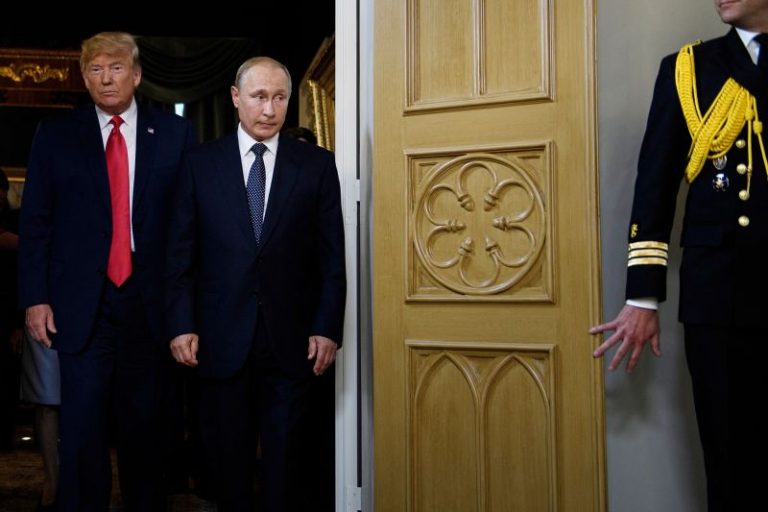
Is there a direct link between what US President Donald Trump says and what Russian President Vladimir Putin does?
Certainly, the harsh words and bitter violence of recent days in Ukraine suggest the answer is maybe.
First, President Trump vented his frustrations at the lack of commitment from his Russian counterpart to engage in a serious peace process.
“We get a lot of bullshit thrown at us by Putin, if you want to know the truth,” Trump blustered in a Cabinet meeting on Tuesday. “He’s very nice all of the time, but it turns out to be meaningless,” he complained.
The very next day, as if infuriated by the remarks, Russia launched its largest drone attack on Ukraine, sending 728 drones and 13 missiles to strike cities around the country in multiple waves.
It was a “telling attack,” observed Ukrainian President Volodymyr Zelensky, who condemned the strikes as timed to rebuff peace efforts.
There are apparent signs of a pattern.
Last week, after Trump publicly bemoaned that he had made “no progress” towards a ceasefire after a lengthy telephone call with the Kremlin leader, Russia unleashed yet another massive barrage on Ukraine. It rained down 539 drones and 11 missiles in what Ukrainian officials described as one of the worst attacks of the conflict.
You might be forgiven for thinking that every time President Trump expresses anger, frustration or even negativity about his Kremlin counterpart, the immediate response from Russia is to step up the ruthless punishment it metes out to its Ukrainian neighbor.
But it’s not as straightforward as that.
The problem is, Russia also carries out devastating strikes on Ukraine during periods when the US president is relatively silent about the conflict he notoriously vowed to end in a single day.
On June 29, for example, Moscow launched 477 drones and 60 missiles against Ukraine – at the time, the biggest Russian aerial assault of the war. Yet President Trump had made few significant public comments about Russia in the days before.
Furthermore, when President Trump told fellow G7 leaders of industrialized democracies that he essentially regretted the absence of Putin at the June summit, and criticized previous leaders for kicking Russia out of what was then the G8. Moscow went on to ratchet up attacks on Kyiv, killing at least 28 people in a single night of drone and missile strikes on the Ukrainian capital days later.
Even positive remarks from the US president, which you might reasonably expect to temper any simmering Russian anger at how it is spoken about in the White House, do not appear to act as a brake on the Kremlin’s excesses.
For its part, the Kremlin has played down any suggestion that President Trump’s recent critical outburst has had much impact.
“We are taking it quite calmly,” the Kremlin spokesman, Dmitry Peskov, told reporters on a daily conference call, adding that “Trump, in general, tends to use a fairly tough style and expressions.”
In reality, Russian military tactics are much more likely to be driven by its own unrelenting military objective of seizing as much territory as possible before the grinding conflict in Ukraine, now in its fourth year, ultimately comes to a halt.
Likewise, the terrifying increase in the use of Russian drones in recent weeks is more likely to be a reflection of missile shortages and increased drone production in Russia than any angry Putin retort to one of President Trump’s off-hand comments.
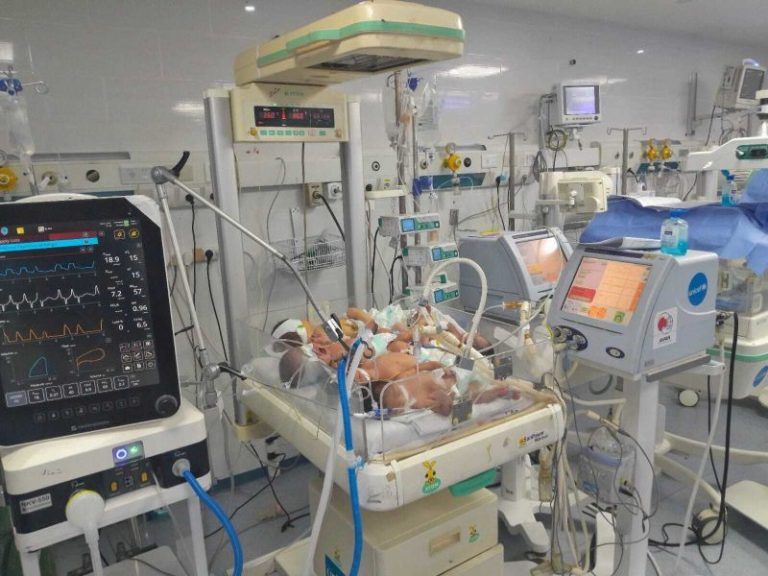
Doctors in Gaza say they were forced to cram multiple babies into one incubator as hospitals warned that fuel shortages are forcing them to shut off vital services, putting patients’ lives at risk.
The UN has warned that the fuel crisis is at a critical point, with the little supplies that are available running short and “virtually no additional accessible stocks left.”
“Hospitals are rationing. Ambulances are stalling. Water systems are on the brink. And the deaths this is likely causing could soon rise sharply unless the Israeli authorities allow new fuel in – urgently, regularly and in sufficient quantities,” the Office for the Coordination of Humanitarian Affairs (OCHA) said.
An 11-week Israeli blockade on humanitarian aid earlier in the year pushed the enclave’s population of more than 2 million Palestinians towards famine and into a deepening humanitarian crisis. Limited aid deliveries resumed into the besieged enclave in May but aid groups have said it is not nearly enough to meet the scale of the needs.
The director of the Al-Ahli Hospital, south of Gaza City posted a photo on social media Wednesday of multiple newborn babies sharing a single incubator which was taken at another facility, Al-Helou.
“This tragic overcrowding is not just a matter of missing equipment — it’s a direct consequence of the relentless war on Gaza and the suffocating blockade that has crippled the entire healthcare system,” Dr. Fadel Naim wrote in a post on X.
“The siege has turned routine care for premature babies into a life-or-death struggle. No child should be born into a world where bombs and blockades decide whether they live or die.”
The director of Al-Shifa Hospital in northern Gaza said the shortages were forcing them to close kidney dialysis sections so they could focus on intensive care and operating theatres.
Footage from inside the hospital showed doctors using flashlights as they treated patients.
Another facility, the Nasser Medical Complex, said it had 24 hours of fuel left and was concentrating on vital departments such as maternity and intensive care.
In addition to fuel shortages, difficulty finding replacement parts for the generators that power Gaza’s hospitals risks is forcing more to shut down.
The Al-Aqsa Martyrs Hospital in central Gaza issued an urgent statement that the facility’s main generator had broken down due to a lack of spare parts, forcing it to rely on a smaller backup unit.
“Fuel will run out within the coming hours, and the lives of hundreds of patients are at risk inside the hospital wards,” the statement said.
“The hospital’s shutdown threatens to disrupt healthcare services for half a million people in the Central Governorate.”
Beyond hospitals, fuel is essential to keep basic services running in Gaza. The territory relies heavily on imports for cooking, desalination and wastewater plants, and to power the vehicles used in rescue efforts.
Israel has restricted the entry of fuel throughout the conflict, and has previously claimed Hamas could use it to launch weapons.
The aid group Doctors Without Borders (MSF) warned of what it called “an unprecedented humanitarian crisis” unfolding in Gaza, in a statement Tuesday and called for a ceasefire and the entry of far greater levels of humanitarian aid.
“Our teams have worked to treat the wounded and supply overwhelmed hospitals as indiscriminate attacks and a state of siege threaten millions of men, women and children,” MSF said.
“We urge Israeli authorities and the complicit governments that enable these atrocities, including the UK Government, to end the siege now and take action to prevent the erasure of Palestinians from Gaza.”

Former South Korean President Yoon Suk Yeol is back in custody over an independent investigation into his declaration of martial law last year.
According to the independent counsel leading the probe, the Seoul Central District Court approved a warrant for Yoon’s re-arrest early Thursday morning, because of concerns over the destruction of evidence.
Yoon’s shocking December declaration plunged South Korea into a constitutional crisis and was widely condemned as striking at the heart of the nation’s democracy. He reversed course within six hours, after lawmakers forced their way into parliament and voted unanimously to block it.
Yoon was detained in January on charges of leading an insurrection, becoming the first president in South Korean history to be arrested while in office. He was released in March after the Seoul court canceled his arrest warrant for technical reasons.
In April, the Constitutional Court unanimously ruled to remove Yoon from office, calling his actions a “grave betrayal of the people’s trust.”
He has since faced multiple criminal investigations. According to the independent counsel, Yoon is now facing charges including abuse of power and obstruction of official duties.
In a leaked warrant request, the counsel alleged that Yoon declared martial law in an attempt to overcome political gridlock caused by the opposition party’s majority in the National Assembly and its impeachment of several senior officials.
He is accused of deploying troops to block lawmakers from entering the national assembly building to overturn the decree and of giving orders to “break down the doors” of parliament and “drag people out, even if it takes firing guns.” Yoon’s lawyers deny he ordered the use of firearms.
The counsel also alleges that Yoon instructed his commander to prioritize the arrest of key political figures, including the then opposition leader Lee Jae-myung, who is now the country’s president. He is further accused of ordering the presidential security service to obscure communication records from secure phones used afte the martial law was lifted.
In addition, Yoon is accused of obstructing warrant executions by the Corruption Investigation Office (CIO) in December and January by mobilizing the presidential security detail and authorizing the use of force.
Yoon’s lawyers said the warrant request was “rushed and unjustified” and called the investigation “flawed and politically motivated.” They said the independent counsel’s questions during Yoon’s investigation were only at a basic level regarding the allegations, and that the warrant request did not include any treason charges.
They added that most individuals involved have already been detained and are standing trial, so all relevant evidence has been secured and there is no risk of evidence being destroyed.
Independent counsel teams were established to investigate Yoon following his removal from office, and the election of Lee in a snap presidential election in June.
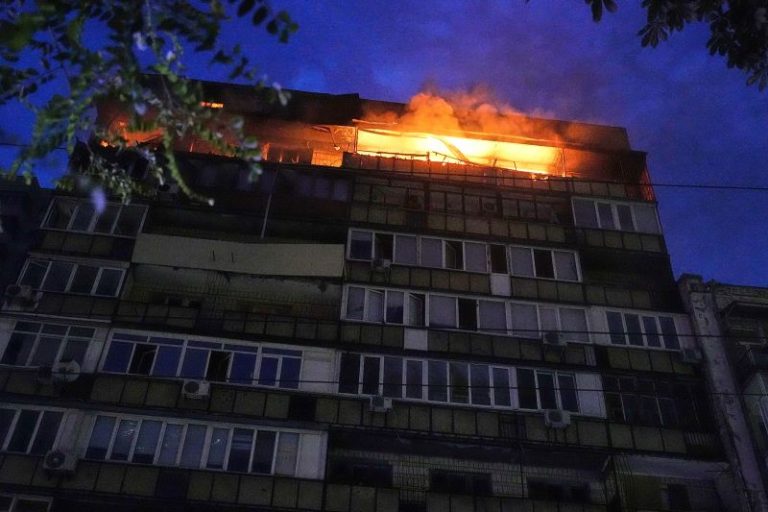
Russia launched a large-scale aerial assault on Ukraine’s capital Kyiv in the early hours of Thursday, marking a second consecutive night of ferocious attacks on the country, as Russia ramps up its bombardment more than three years into the war.
At least two people were killed and more than a dozen were wounded in Thursday’s attacks, which involved multiple drones and cruise missiles, according to Kyiv authorities.
The offensive comes one night after Russia conducted its largest drone assault since the start of its full-scale invasion, launching 728 drones and 13 missiles in strikes that killed at least one person, according to Ukrainian officials.
The damage on Thursday morning appeared to be substantial. Residential buildings, cars, warehouse facilities, offices and other buildings were on fire across the city, Tymur Tkachenko, head of Kyiv’s military administration, said.
Tkachenko urged residents to stay in shelters and avoid windows and balconies, as Ukraine’s air defense systems worked to repel the attack.
“Property can be restored, but human life cannot,” Tkachenko said.
Russia has significantly scaled up its air attacks on Ukraine in recent weeks, launching near-nightly assaults involving hundreds of drones and missiles.
Work towards a peace deal has simultaneously slowed down, triggering frustration in the White House, where US President Trump on Tuesday took aim at Russia’s leader Vladimir Putin.
“We get a lot of bullsh*t thrown at us by Putin, if you want to know the truth,” Trump said in a Cabinet meeting. “He’s very nice all of the time, but it turns out to be meaningless.”
Russia’s sustained assault in recent days has injected new urgency into questions surrounding Washington’s commitment to defending Ukraine, as the Trump administration pledged to send additional defensive weaponry to Kyiv in an apparent policy reversion.
Moscow downplayed Trump’s harsh words in a press briefing Wednesday. A Kremlin spokesperson said it is reacting “calmly” to Trump’s criticism of Putin. “Trump in general tends to use a fairly tough style and expressions,” Dmitry Peskov said, adding Moscow hopes to continue dialogue with Washington.
US Secretary of State Marco Rubio is expected to meet his Russian counterpart Sergey Lavrov on the sidelines of the ASEAN summit in Malaysia on Thursday.
Following Wednesday’s record drone attack, Ukraine’s President Volodymyr Zelensky said there had been “so many attempts to achieve peace and cease fire, but Russia rejects everything.”
Thursday’s attack on Kyiv follows a landmark ruling by Europe’s top human rights court Wednesday, which found that Russia committed major international law violations in Ukraine.
The European Court of Human Rights (ECHR) ruled on four cases concerning Russian military operations in Ukraine since 2022, as well as the conflict in eastern Ukraine which began in 2014 and includes the downing of Malaysia Airlines flight MH17.
It found that Russia had committed a pattern of human rights violations in Ukraine since the start of its full-scale invasion in February 2022.
The ECHR also ruled Russia was responsible for the downing of flight MH17 in 2014. Moscow has repeatedly denied responsibility for MH17’s destruction, which killed 298 people.
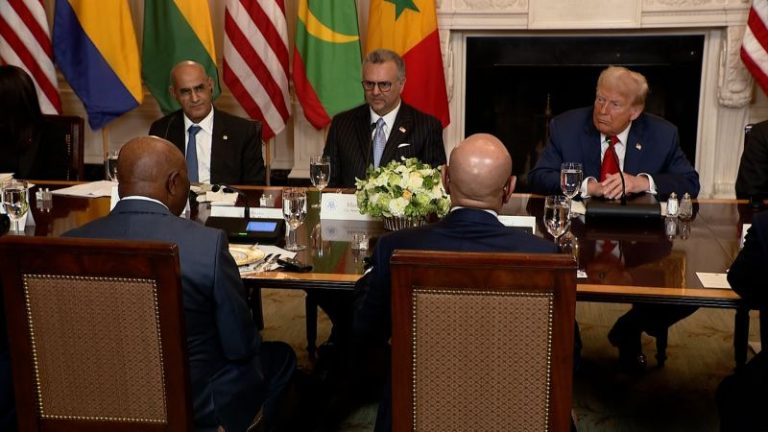
US President Donald Trump praised Liberian President Joseph Boakai for his strong grasp of the English language on Wednesday. But the African leader was educated in Liberia, where English is the official language.
As he hosted five African leaders at the White House, Trump asked Boakai: “Such good English, it’s beautiful. Where did you learn to speak so beautifully?”
Boakai informed Trump of his place of education, prompting Trump to express his curiosity. “That’s very interesting,” he said, “I have people at this table who can’t speak nearly as well.”
Liberia was founded in 1822 by the American Colonization Society whose goal was to resettle freed slaves in Africa. The country declared independence from the American Colonization Society in 1847, and a variety of languages are spoken in the country today, with English being the official language.
Several Liberians voiced their offense over Trump’s comment to Boakai, given the US president’s past remarks on African countries and the colonial legacy left by the US organization in Liberia.
“For him to ask that question, I don’t see it as a compliment. I feel that the US president and people in the west still see Africans as people in villages who are not educated.”
Veronica Mente, a South African politician, questioned on X: “what stops [Boakai] from standing up and leav[ing]?”
The White House Press Office defended Trump’s statement on Wednesday.
White House deputy press secretary Anna Kelly said that Trump’s comment was a “heartfelt compliment” and that “reporters should recognize that President Trump has already done more to restore global stability and uplift countries in Africa and around the world than Joe Biden did in four years.”
“What President Trump heard distinctly was the American influence on our English in Liberia, and the Liberian president is not offended by that,” Nyanti said.
“We know that English has different accents and forms, and so him picking up the distinct intonation that has its roots in American English for us was just recognizing a familiar English version,” she continued.
Trump has previously applauded the English language abilities of other leaders during diplomatic meetings. During a press conference with German Chancellor Friedrich Merz, Trump complimented his “good English” and asked if it was as good as his German.
Merz laughed and noted that he tries to “understand almost everything” and said he makes an effort “to speak as good as I can.”
The US president has centered the English language as part of this “America First” platform. During a 2015 presidential debate, Trump asserted that the US is “a country where we speak English.” In March, he signed an executive order making English the official language of the US.
Trump has previously landed in hot water for things he has said about the African nations. In 2018, the president referred to migrants from African countries and other nations as coming from “shithole countries.”
In May, he lectured South African President Cyril Ramaphosa on false claims that White South African farmers are the victims of a genocide.
Trump struck a different tone on Wednesday as he met with the leaders of Gabon, Guinea-Bissau, Liberia, Mauritania, and Senegal, praising their countries as “all very vibrant places with very valuable land, great minerals, great oil deposits, and wonderful people.”
In turn, he was met with approval from the African leaders, who heaped praise on the president as they urged him to invest in their countries and develop their plentiful natural resources.
Boakai even remarked that Liberia “(believes) in the policy of making America great again.”
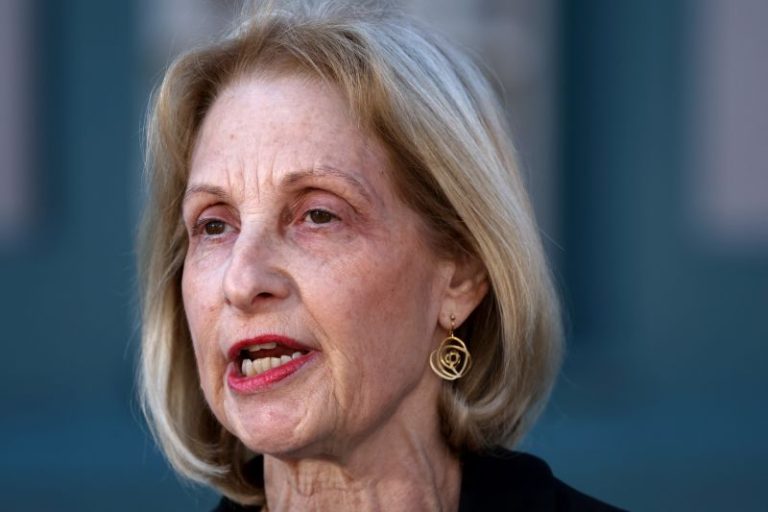
Australian universities may lose funding if they’re not judged to be doing enough to address anti-Jewish hate crimes, according to new measures proposed by the country’s first antisemitism envoy.
Jillian Segal was appointed to the role a year ago in response to a surge in reports of attacks against Jewish sites and property in Australia, following Israel’s invasion of Gaza, and was tasked with combating antisemitism in the country.
Standing alongside Prime Minister Anthony Albanese Thursday, Segal released a report nine months in the making proposing strong measures, including the university funding threats and the screening of visa applicants for extremist views.
“The plan is not about special treatment for one community; it is about restoring equal treatment,” Segal said. “It’s about ensuring that every Australian, regardless of their background or belief, can live, work, learn and prosper in this country.”
Like in the United States, Australian campuses were once the hub of pro-Palestinian protests led by students who pitched tents demanding action to stop Israel’s assault on Gaza.
The campus protests dwindled after restrictions were tightened and some protesters were threatened with expulsion, a move condemned by the activists as an infringement on free speech.
Segal’s report said antisemitism had become “ingrained and normalised” within academia and university courses, as well as on campuses, and recommended universities be made subject to annual report cards assessing their effectiveness in combating antisemitism.
Universities Australia chief executive Luke Sheehy said the organization had been working “constructively” with the special envoy and its members would “consider the recommendations.”
“Academic freedom and freedom of expression are core to the university mission, but they must be exercised with responsibility and never as a cover for hate or harassment,” he said in a statement.
Antisemitic attacks in Australia surged 300% in the year following Israel’s invasion of Gaza in October 2023.
In the past week alone, the door of a synagogue was set on fire in Melbourne, forcing 20 occupants to flee by a rear exit, as nearby protesters shouting “Death to the IDF” – using the initials of the Israeli military – stormed an Israeli-owned restaurant.
A man is facing arson charges over the synagogue attack, and three people were charged Tuesday with assault, affray, riotous behavior and criminal damage over the restaurant raid.
The Executive Council of Australian Jewry, which Segal once led and is the umbrella organization for hundreds of Jewish community groups, said the report’s release “could not be more timely given the recent appalling events in Melbourne.”
However, the Jewish Council of Australia, which opposes Israel’s war in Gaza, voiced concerns about Segal’s plan, saying it carried the overtones of US President Donald Trump’s attempts to use funding as a means of control over institutions.
In a statement, the council criticized the plan’s “emphasis on surveillance, censorship, and punitive control over the funding of cultural and educational institutions,” adding that they were “measures straight out of Trump’s authoritarian playbook.”
Max Kaiser, the group’s executive officer, said: “Any response that treats antisemitism as exceptional, while ignoring Islamophobia, anti-Palestinian racism, and other forms of hate, is doomed to fail.”
The envoy’s 20-page plan includes sweeping recommendations covering schools, immigration, media, policing and public awareness campaigns.
Segal wants Holocaust and antisemitism education baked into the national curriculum “as a major case study of where unchecked antisemitism can lead,” according to the report.
Arts organizations could be subject to the same restrictions as universities, with threats to pull public funding if they’re found to have engaged in, or facilitated, antisemitism.
“While freedom of expression, particularly artistic expression, is vital to cultural richness and should be protected, funding provided by Australian taxpayers should not be used to promote division or spread false/ distorted narratives,” the report said.
Under the recommendations, tougher immigration screening would weed out people with antisemitic views, and the Migration Act would enable authorities to cancel visas for antisemitic conduct.
Media would be monitored to “encourage accurate, fair and responsible reporting” and to “avoid accepting false or distorted narratives,” the report added.
During Thursday’s press conference, Albanese pointed to an interview on the country’s national broadcaster with a protester, saying the interviewee tried to justify the Melbourne restaurant attack.
“There is no justification for that whatsoever,” he said. “The idea that somehow the cause of justice for Palestinians is advanced by behavior like that is not only delusional, it is destructive, and it is not consistent with how you are able to put forward your views respectfully in a democracy,” he said.
Asked if the country had become less tolerant of different views and had, perhaps, lost the ability to have a debate, Albanese pointed to social media.
“I think there is an impact of social media, where algorithms work to reinforce people’s views,” he said. “They reinforce views, and they push people towards extremes, whether it be extreme left, extreme right. Australians want a country that is in the center.”
His comments came as Grok, X’s AI chatbot, was called out for spreading antisemitic tropes that the company said it was “actively working to remove.”
Albanese said, regarding antisemitic views, “social media has a social responsibility, and they need to be held to account.”
Asked whether anti-Israel protests were fueling the antisemitic attacks, the prime minister said people should be able to express their views without resorting to hate.
“In Israel itself, as a democracy, there is protest against actions of the government, and in a democracy, you should be able to express your view here in Australia about events overseas,” he said. “Where the line has been crossed is in blaming and identifying people because they happen to be Jewish.”