
Author

admin

Browsing

Freegold Ventures Limited ( TSX : FVL,OTC:FGOVF ) (OTCQX: FGOVF ) is pleased to provide a project update. Drilling at Golden Summit is advancing steadily, with five drill rigs currently active on site. The focus for this year has been directed at infill drilling to upgrade inferred resources to indicated status—an essential step for the upcoming Pre-Feasibility Study (PFS). As inferred resources cannot be included in the PFS, this work is critical for the project’s advancement.

2025 PROGRAM

  • Drilling is continuing with five drill rigs
  • Conversion of inferred resources into indicated & further exploration drilling and geotechnical drilling.

  • 37 holes (~24,000m completed to date: 5 holes reported (~3030m)
  • Ongoing metallurgical work, focusing on flowsheet optionality with sulphide oxidation, is a key part of our strategy to maximize the potential of the resource.
  • Commencement of Pre-Feasibility Study (PFS)

Focus is also on defining the limits of mineralization in the Dolphin/Cleary area, as well as conducting further exploration drilling and completing essential geotechnical drill holes.

Drilling Progress and Timeline

To date, a total of 37 drill holes, amounting to ~24,000 meters, have been completed. Additionally, five more drill holes are currently in progress. Assay results are pending for a significant number of holes. Drilling activities are scheduled to continue through mid-December, after which the program will pause for the winter and resume in February 2026 . The results from the 2025 drilling will be incorporated into a revised mineral resource estimate, which will be utilized for the upcoming Pre-Feasibility Study (PFS).

Resource Enhancement and Pre-Feasibility Study Preparation

In addition to efforts to upgrade the resource base through a combination of infill and geotechnical drilling, additional geochemical and metallurgical testing is also being undertaken. Preparatory work for the PFS also encompasses:

  • Installation of vibrating wire piezometers (VWPs) in drill holes for groundwater monitoring
  • Collection of surface water samples
  • Organising mammal and habitat surveys to establish baseline environmental data
  • Conducting cultural resource assessments, including paleontological studies, for review by the State Historic Preservation Office (SHPO) and federal agencies, and developing mitigation plans as needed
  • Mapping of wetlands, with mitigation strategies being formulated where required
  • Continuing geological mapping and sampling to identify new exploration targets for future development

Metallurgical Test Work
Metallurgical testing is currently underway at BaseMet Labs in Kamloops, BC . A master composite sample, weighing over 1,500 kilograms and derived from twelve drill holes, forms the basis for this work. As part of the PFS, several trade-off studies are planned, including a comparison of the added benefits of further sulphide oxidation with a simpler Gravity-CIL flowsheet.

Oxidation Process Optimization
During the current phase of metallurgical testing, a sulphide concentrate is being produced to enable optimization of oxidation processes. Three commercially available oxidation methods, all of which have demonstrated effectiveness with Golden Summit materials, are under evaluation:

  • Pressure Oxidation (POX): Achieved over 92% total gold recovery in testwork to date.
  • BIOX: Achieved over 91% total gold recovery in testwork to date.
  • Albion Process: Achieved over 93% total gold recovery in testwork to date.

Solid residues resulting from these oxidation processes have been subjected to environmental characterization and waste testing in accordance with EPA guidelines. The Toxicity Characteristic Leaching Procedure (TCLP) was applied to all residues, with leachate levels for metals remaining below regulatory limits.

Flotation Test Results and Environmental Assessment
Flotation testing continues for the master composite. Initial locked-cycle tests have shown gold recovery rates exceeding 95%, utilizing gravity and cleaner flotation with the sulphide concentrate accounting for less than 5% of the total mass, thereby minimizing the volume that needs further oxidation. These results support building a small pilot plant at BaseMet to produce a substantial amount of concentrate for upcoming oxidation optimisation studies. These studies will be ongoing over the next several months.

Flotation tailings from this process have also passed the EPA TCLP procedure 1311, with all leachate concentrations for metals falling below maximum allowable limits, confirming environmental compliance. Further investigations are ongoing to understand better and characterize the environmental impact of all flowsheet products and tailings.

Additional Project Information
Golden Summit currently hosts an Indicated Primary Mineral Resource: 17.2 Moz at 1.24 g/t Au and an Inferred Primary Mineral Resource: 11.9 Moz at 1.04 g/t Au, using a 0.5 cut-off grade and a gold price of $2,490 .

A plan map detailing the locations of drill holes—both completed and in progress can be found here:

https://freegoldventures.com/site/assets/files/6287/nr_2025_drilling_v2_20251003.png

The qualified person responsible for the scientific and technical information in this update is Alvin Jackson , P.Geo., Vice President of Exploration and Development for Freegold.

About Freegold Ventures Limited
Freegold Ventures Limited is a TSX-listed company focused on mineral exploration in Alaska .

Caution Regarding Forward-Looking Statements
This update contains forward-looking statements, including, but not limited to, information regarding planned expenditures, exploration programs, potential mineralization and resources, exploration results, the completion of an updated NI 43-101 technical report, and other future plans. Such statements involve known and unknown risks, uncertainties, and other factors that may cause actual results to differ materially from those expressed or implied. These factors include, but are not limited to, the completion of planned expenditures, the ability to complete exploration programs on schedule, and the success of those programs. For a comprehensive discussion of risk factors, refer to Freegold’s Annual Information Form for the year ended 2024-12-31, available at www.sedar.com .

SOURCE Freegold Ventures Limited

View original content to download multimedia: http://www.newswire.ca/en/releases/archive/October2025/07/c8111.html

News Provided by Canada Newswire via QuoteMedia

This post appeared first on investingnews.com

Here’s a quick recap of the crypto landscape for Monday (October 6) as of 9:00 p.m. UTC.

Get the latest insights on Bitcoin, Ether and altcoins, along with a round-up of key cryptocurrency market news.

Bitcoin and Ether price update

Bitcoin (BTC) was priced at US$125,434, up by 2.3 percent in 24 hours. Its lowest valuation of the day was US$124,565, and its highest was US$126,080. Bitcoin achieved its strongest weekly close at US$123,400 on October 3, affirming entry into a new price discovery phase, before hitting new highs on Monday.

Bitcoin price performance, October 6, 2025.

Chart via TradingView.

Bitcoin’s market cap briefly surpassed US$2.5 trillion, driving a record US$5.95 billion into digital assets.

Bitcoin dominance in the crypto market now stands at 54.49 percent.

On-chain data indicates that Bitcoin is entering a renewed accumulation phase, marked by reduced selling pressure from long-term holders and stabilization among short-term investors. Strong institutional exchange-traded fund (ETF) inflows, increased on-chain transfer volumes and healthy derivatives market indicators form a strong structural base for potential further gains, but tight Bollinger Bands point to impending short-term volatility and price consolidation.

Bitcoin researcher Axel Adler Jr. highlights that Bitcoin is trading near the upper boundary of the 21 day Donchian channel. The Bitcoin futures flow index reading of 96 percent signals sustained bull pressure.

Adler also points out that the short-term holder MVRV ratio is nearing resistance around US$133,000, indicating potential near-term profit taking. Scenarios include momentum-driven consolidation between US$122,000 and US$124,000, or a mean reversion pullback to US$118,500 to US$120,000, supported by key moving averages.

Ether (ETH) has exceeded Bitcoin’s upward price movement, rising by roughly 5.2 percent in the last 24 hours to US$4,725.31, its highest valuation of the day. Its lowest valuation was US$4,589.41.

Ether continues to hold firm above its US$4,500 support, with market watcher Ted Pillows highlighting US$4,750 as the next major resistance level for the cryptocurrency. However, he also warned that a drop below the US$4,250 to US$4,060 zone would shift momentum back to the bears.

Altcoin price update

  • Solana (SOL) was priced at US$235.40, an increase of 3.7 percent over the last 24 hours. Its lowest valuation on Monday was US$233.70, and its highest was US$237.29.
  • XRP was trading for US$3.03, up by 2.5 percent over the last 24 hours. Its lowest valuation of the day was US$2.99, and its highest was US$3.05.

ETF data and derivatives trends

The Fear & Greed Index currently reads 59, remaining firmly in neutral territory since the tail end of last week.

Last week, the cumulative net flow for spot Bitcoin ETFs was predominantly positive, with several days of inflows. According to data from the week of September 29 to October 3, spot Bitcoin ETFs had inflows on all five days, with October 3 recording the highest inflows at US$985.08 million. The inflows were led by BlackRock’s iShares Bitcoin Trust (NASDAQ:IBIT) and the Fidelity Wise Origin Bitcoin Fund (BATS:FBTC).

Cumulative total inflows for spot Bitcoin ETFs stood at US$60.05 billion as of October 3.

The derivatives landscape reflects cautiously bullish sentiment, with the perpetual funding rate holding steady at 0.01, indicating balanced positioning between longs and shorts in the perpetual swap markets.

The session saw US$27.76 million in liquidations over the last four hours, predominantly impacting short positions, a signal of aggressive short covering as price momentum accelerated. Open interest retreated by 0.44 percent in the same span, to US$94.83 billion, suggesting some deleveraging or profit-taking after the day’s strong rally.

Despite the slight pullback in open interest, the notional value in major futures and options contracts remains near record levels, underscoring persistent institutional and speculative engagement. Implied volatility stands at 40.9, reflecting a moderate risk premium amid heightened spot activity and brisk rotation across both futures and options venues. With options open interest surging to historic highs and spot/volatility correlations positive, traders are leaning on structured call spreads rather than outright longs to manage term premiums and risk.

Today’s crypto news to know

Grayscale launches first US spot crypto ETPs with staking

Grayscale Investments has launched the first US-listed spot crypto exchange-traded products (ETPs), enabling staking for its Grayscale Ethereum Trust ETF (ARCA:ETHE), Grayscale Ethereum Mini Trust ETF (ARCA:ETH) and Grayscale Solana Trust (OTCQX:GSOL), the last of which is awaiting regulatory approval to uplist as an ETP.

Traditional brokerage investors can now earn passive staking rewards, which have been limited to native crypto platforms, through regulated funds, providing exposure to the Ethereum and Solana networks.

“Staking in our spot Ethereum and Solana funds is exactly the kind of first mover innovation Grayscale was built to deliver,” said Grayscale CEO Peter Mintzberg in a press release.

“As the #1 digital asset-focused ETF issuer in the world by AUM, we believe our trusted and scaled platform uniquely positions us to turn new opportunities like staking into tangible value potential for investors.”

Grayscale will manage staking via institutional custodians and diversified validator networks to reduce risks. The launch represents a milestone in crypto product sophistication and regulatory acceptance, and is expected to attract institutional capital and deepen investor participation in staking rewards.

Morgan Stanley endorses Bitcoin allocation for client portfolios

Morgan Stanley’s (NYSE:MS) Global Investment Committee has formally advised clients to include digital assets in their portfolios, marking a significant policy shift for one of Wall Street’s most established banks.

In a note dated Sunday (October 5), the firm recommends up to 4 percent crypto exposure in “opportunistic growth” portfolios and up to 2 percent for “balanced growth” accounts. The report also emphasizes Bitcoin’s role as a “scarce, digitally native asset” with increasing institutional relevance.

While many investors view the move as validation of Bitcoin’s maturing status and the formal ushering of crypto’s ‘mainstream era,’ some traders called it “too late” given prior gains.

Morgan Stanley also confirmed that its E*Trade platform will soon allow trading in Bitcoin, Ether and Solana via a partnership with ZeroHash.

Coinbase seeks national trust charter to expand payment services

Coinbase Global (NASDAQ:COIN) has applied for a national trust company charter from the US Office of the Comptroller of the Currency, a move designed to expand its payments and custody operations under unified federal oversight.

In an October 3 blog post, Vice President Greg Tusar clarified that Coinbase “has no intention of becoming a bank,” but aims to streamline regulation for new financial products.

Approval would enable Coinbase to scale its recently launched Coinbase Payments platform, which facilitates stablecoin transactions for merchants on Shopify (NYSE:SHOP) and eBay (NASDAQ:EBAY).

Coinbase has also deepened partnerships with JPMorgan Chase (NYSE:JPM), enabling direct account links between Chase customers and Coinbase wallets through API integration.

Similar Office of the Comptroller of the Currency charter applications have been filed by other platforms as digital payment infrastructure moves further into mainstream finance.

Plume Network registers as transfer agent

Plume Network, a layer-2 blockchain focused on tokenizing real-world assets (RWAs), announced it has registered as a transfer agent with the US Securities and Exchange Commission (SEC).

The move allows Plume to manage tokenized securities under US law, automating traditional transfer agent functions like shareholder registry management and corporate action reporting onchain.

This development comes amid efforts to integrate traditional finance with blockchain technology, specifically through the issuance and management of tokenized securities. Institutional involvement in the RWA market is still in its early stages, primarily focusing on low-risk instruments like US treasury bills.

Potential exists for expanding into new fundraising and investor engagement methods.

Securities Disclosure: I, Meagen Seatter, hold no direct investment interest in any company mentioned in this article.

Securities Disclosure: I, Giann Liguid, hold no direct investment interest in any company mentioned in this article.

This post appeared first on investingnews.com

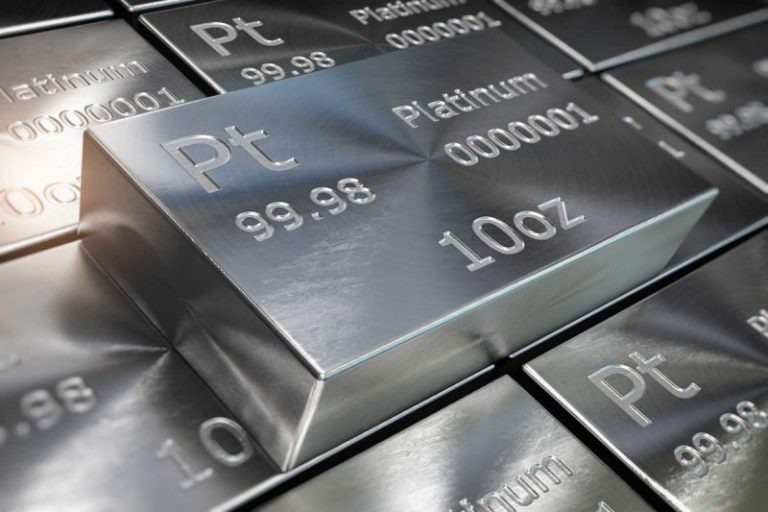
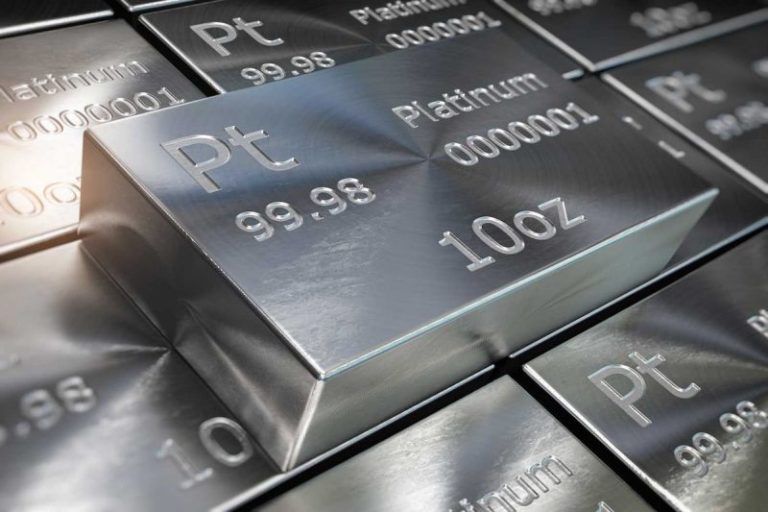
The platinum price broke US$1,600 per ounce on Monday (September 29), its highest level since April 2013.

What’s moving the platinum price? A number of factors are at play in this notoriously volatile market.

As a precious metal, nearly a quarter of demand for platinum comes from the jewelry sector. When the gold price is high, as it is now at nearly US$3,900 per ounce, platinum jewelry becomes an attractive, lower-cost alternative.

With more than 70 percent of demand for platinum metal coming from the industrial and automotive sectors, the market is highly price sensitive to economic cycles. However, despite the current economic uncertainty that’s driving gold higher, the platinum price is being buoyed by stable demand in the auto sector, emerging demand in the hydrogen fuel cell industry and persistent supply challenges out of major platinum-producing nations like South Africa.

Platinum supply under pressure

Supply constraints are an ongoing trend in the platinum market and a major driver of prices in 2025.

In its Q2 Platinum Quarterly, the World Platinum Investment Council (WPIC) predicts that global platinum mine supply will drop by 6 percent to 5.43 million ounces for this year.

Heavy rainfall and flooding in top producer South Africa in the first quarter of the year had a major impact on an industry already reeling from high-cost electricity and dwindling reserves.

In late August, Paul Dunne, CEO of Northam Platinum Holdings (JSE:NPH) in South Africa, told Reuters that a higher platinum price in 2025 will likely not do much to alleviate the pressures facing production in the country.

“Recent price appreciation is offering some relief to the (platinum-group metals) sector,” he said in a statement. “However, it is still not yet at levels that will support sustainable mining across the industry and certainly not the much-needed development of new operations.”

Suffice it to say that problems in the supply side will continue to support platinum over the longer term.

Platinum demand seen as sustainable

As for platinum demand, Mykuliak sees a few key important drivers, including autocatalysts for hybrid vehicles, increased hydrogen adoption for industrial uses and Chinese demand for platinum jewelry as an alternative to gold.

In the automotive industry, platinum is used in catalytic converters for vehicle exhaust systems for emissions control. The rise of electric vehicles (EVs), which do not require catalytic converters to control emissions, is expected to cut into platinum demand over time.

However, high costs and range anxiety are leading auto buyers to choose hybrids over battery EVs. Because hybrid engines still require catalytic converters, the auto sector continues to be a reliable source for platinum demand.

In the hydrogen sector, platinum has a role as a catalyst in the proton exchange membrane electrolyzers used for green hydrogen production and in hydrogen fuel cells. The WPIC has noted that the hydrogen market be ‘a meaningful component of global demand by 2030 and potentially the largest segment by 2040.’

As for jewelry demand, the WPIC is predicting an increase of 11 percent year-on-year to 2.23 million ounces in 2025. China is expected to represent more than one quarter of that growth as the fabrication of platinum jewelry in the region is expected to grow by 42 percent to 585,000 ounces.

Platinum price outlook

The platinum price has since pulled back from the US$1,600 level, coming in at US$1,558 in midday trading on Thursday (October 2). But a correction is expected in the short term, explained Mykuliak, who believes the fundamental outlook for the precious metal is still positive.

“Looking ahead, I expect volatility. My base case is a US$1,650-US$1,750 range by the year-end, with possible dips toward US$1,450 if profit-taking intensifies,” she said. “On the upside, if South African power disruptions worsen or hydrogen policies accelerate, US$1,850-US$1,950 is realistic, with US$2,000 also within reach.”

Securities Disclosure: I, Melissa Pistilli, hold no direct investment interest in any company mentioned in this article.

This post appeared first on investingnews.com

Questcorp Mining Inc. (CSE: QQQ,OTC:QQCMF) (OTCQB: QQCMF) (FSE: D910) (the ‘Company’ or ‘Questcorp’) announces that it has revised the terms of its previously announced non-brokered private placement (the ‘Offering’). The Company will now offer up to 7,500,000 units (each, an ‘AI Unit’) at a price of $0.20 per AI Unit for gross proceeds of up to $1,500,000 pursuant to the accredited investor exemption (the ‘Accredited Investor Exemption’) under Section 2.3 of National Instrument 45-106 – Prospectus Exemptions (‘NI 45-106’). In addition, the Company will also offer up to 11,111,112 units (each, a ‘LIFE Unit’) at a price of $0.18 per LIFE Unit for gross proceeds of up to $2,000,000 pursuant to the listed issuer financing exemption under Part 5A of NI- 45-106 (the ‘Listed Issuer Financing Exemption’).

Each AI Unit will consist of one common share of the Company (each, a ‘Share‘) and one-half-of-one share purchase warrant (each whole warrant, an ‘AI Warrant‘). Each AI Warrant will entitle the holder to acquire an additional common share of the Company at a price of $0.30 for a period of twenty-four months following closing of the Offering, subject to accelerated expiry in the event the closing price of the Shares is $0.50 or higher for ten consecutive trading days.

Each LIFE Unit will consist of one Share and one-half-of-one share purchase warrant (each whole warrant, an ‘LIFE Warrant‘). Each LIFE Warrant will entitle the holder to acquire an additional common share of the Company at a price of $0.24 for a period of twenty-four months following closing of the Offering.

The Company expects to utilize the proceeds of the Offering for advancement of ongoing exploration and drill work at the La Union Gold and Silver Project, upcoming exploration work at the North Island Copper Property, and for general working capital purposes. The Company anticipates that UK-based institutional investor, Sorbie Bornholm LP, will participate in a portion of the Offering.

There is an offering document related to the Offering that will be made available under the Company’s profile on SEDAR+ at www.sedarplus.ca and on the Company’s website at: www.questcorpmining.ca. Prospective investors should read this offering document before making an investment decision.

In connection with completion of the Offering, the Company will pay finders’ fees to eligible third-parties who have introduced subscribers to the Offering. All securities issued in connection with the Accredited Investor Exemption will be subject to restrictions on resale for a period of four-months-and-one-day in accordance with applicable securities laws. All securities issued in connection with the Listed Issuer Financing Exemption will not be subject to a hold period. Completion of the Offering remains subject to receipt of regulatory approvals.

About Questcorp Mining Inc.

Questcorp Mining Inc. is engaged in the business of the acquisition and exploration of mineral properties in North America, with the objective of locating and developing economic precious and base metals properties of merit. The Company holds an option to acquire an undivided 100% interest in and to mineral claims totaling 1,168.09 hectares comprising the North Island Copper Property, on Vancouver Island, British Columbia, subject to a royalty obligation. The Company also holds an option to acquire an undivided 100% interest in and to mineral claims totaling 2,520.2 hectares comprising the La Union Project located in Sonora, Mexico, subject to a royalty obligation.

Contact Information

Questcorp Mining Corp.

Saf Dhillon, President & CEO

Email: saf@questcorpmining.ca
Telephone: (604) 484-3031

This news release includes certain ‘forward-looking statements’ under applicable Canadian securities legislation. Forward-looking statements include, but are not limited to, statements with respect to the intended use of proceeds from the Offering. Forward-looking statements are necessarily based upon a number of estimates and assumptions that, while considered reasonable, are subject to known and unknown risks, uncertainties, and other factors which may cause the actual results and future events to differ materially from those expressed or implied by such forward-looking statements. Such factors include, but are not limited to: the ability of Riverside to secure geophysical contractors to undertake orientation surveys and follow up detailed survey to confirm and enhance the drill targets as contemplated or at all, general business, economic, competitive, political and social uncertainties, uncertain capital markets; and delay or failure to receive board or regulatory approvals. There can be no assurance that the geophysical surveys will be completed as contemplated or at all and that such statements will prove to be accurate, as actual results and future events could differ materially from those anticipated in such statements. Accordingly, readers should not place undue reliance on forward-looking statements. The Company disclaims any intention or obligation to update or revise any forward-looking statements, whether as a result of new information, future events or otherwise, except as required by law.

To view the source version of this press release, please visit https://www.newsfilecorp.com/release/269182

News Provided by Newsfile via QuoteMedia

This post appeared first on investingnews.com

Here’s a quick recap of the crypto landscape for Friday (October 3) as of 9:00 a.m. UTC.

Get the latest insights on Bitcoin, Ether and altcoins, along with a round-up of key cryptocurrency market news.

Bitcoin and Ether price update

Bitcoin (BTC) was priced at US$120,724, trading 13 percent higher over the past 24 hours. Its lowest valuation of the day was US$118,777, while its highest was US$121,044.

Bitcoin price performance, October 3, 2025.

Chart via TradingView

Over the next five years, Bitcoin could realistically reach US$200,000 to US$500,000 per coin, according to an emailed note from Bitget Chief Analyst Ryan Lee. Lee sees sustained institutional inflows and broader mainstream adoption as key drivers, with more than 20 percent of global financial institutions expected to integrate Bitcoin exposure.

Emerging markets, in addition, may increasingly use it as a hedge against inflation, although risks such as geopolitical tensions or technological vulnerabilities could still trigger sharp 30 to 50 percent drawdowns.

Lee also stressed that, ‘regulatory clarity, particularly from bodies like the SEC and EU’s MiCA framework, will be pivotal in reducing uncertainty and encouraging wider participation, potentially unlocking trillions in sidelined capital if frameworks remain innovation-friendly.’

Bitcoin dominance in the crypto market is at 56.53 percent, showing a slight week-on-week dip.

Ether (ETH) is also performing well, up 2.8 percent over 24 hours to US$4,469.84. Ether’s lowest valuation on Friday was US$4,358.45, and its highest was US$4,549.77.

Momentum indicators are reinforcing the bullish case for ETH. Both the 25-day and 50-day moving averages are acting as resistance, and analysts see a decisive close above US$4,500 as the next trigger. From there, projections point to an 80–100 percent rally into 2026, with Ether’s recent low now looking like a confirmed floor.

Altcoin price update

  • Solana (SOL) was priced at US$220.16, an increase of 5.4 percent over the last 24 hours. Its lowest valuation on Wednesday was US$217.81, and its highest valuation was US$220.69.
  • XRP was trading for US$2.96, up by 3.2 percent over the last 24 hours, and its highest valuation of the day. Its lowest valuation of the day was US$2.92.

ETF data and derivatives trends

Spot Bitcoin exchange-traded funds (ETFs) continued to see institutional demand this week. U.S. spot Bitcoin ETFs recorded roughly US$2.25 billion in weekly inflows, led by BlackRock’s iShares Bitcoin Trust (IBIT) (NASDAQ:IBIT), which accounted for the largest single-fund purchases (IBIT bought roughly US$400–470 million on heavy flow days).

Total assets under management across US Bitcoin spot ETFs are now estimated at about US$155 billion, up from roughly US$100 billion earlier in the year, with major funds such as Fidelity’s (TSX:FBTC) and ARK 21Shares (BATS:ARKB) also posting notable inflows during the same stretch.

Today’s crypto news to know

Stablecoin market passes US$300 billion

The stablecoin market has climbed past US$300 billion for the first time, but analysts caution that current momentum may not be enough to meet future targets.

Coinbase projects the market will reach US$1.2 trillion by 2028, while Standard Chartered pegs it closer to US$2 trillion and Citi expects more than US$4 trillion by 2030.

Growth this year has averaged about US$10 billion in new issuance each month — a pace that would take over five years to meet the lower end of forecasts. Tether’s USDT remains the clear leader, holding 58 percent of supply and adding USD$2.6 billion in circulation this week.

Circle’s USDC and Ethena’s USDe also expanded, while BlackRock’s USD and PayPal’s PYUSD posted some of the strongest percentage gains.

The growth streak marks the fastest since early 2021, when the sector ballooned nearly 300 percent in half a year.

Sanctioned rouble stablecoin draws attention at Token2049

A rouble-pegged stablecoin, already under US and UK sanctions, surfaced as a sponsor of the Token2049 conference in Singapore, according to a Reuters report.

The token, known as A7A5, was launched in January by a Russian defense-linked lender and a Kyrgyz payments firm, and has been flagged by Western officials as a tool for sanctions evasion.

Despite this, the company behind A7A5 held a booth at the conference, was listed as a platinum sponsor, and even saw one of its executives speak on stage before references were removed following media inquiries.

Trading in the token has surged, reflecting rising demand from Russian users locked out of traditional banking systems.

Strategy’s Bitcoin holdings reach record US$77.4 billion

Corporate Bitcoin pioneer Strategy has disclosed that its BTC holdings are now worth US$77.4 billion, the highest in its history.

The company first began buying Bitcoin in 2020, when its position was worth about US$2.1 billion, a move initially seen as radical.

Since then, its treasury has ridden multiple market cycles, growing to US$5.7 billion by 2021, falling back to US$2.2 billion during the 2022 crash, and then steadily building through consistent purchases.

By 2023, Strategy’s holdings were valued at US$8 billion, and by 2024 they had reached US$41.8 billion. The 2025 rally, which has pushed Bitcoin above US$124,000, has nearly doubled the value of its stack in less than a year.

Separately, Strategy secured relief from a looming tax liability after the IRS ruled that unrealized crypto gains will not count toward the 15 percent corporate minimum tax.

Securities Disclosure: I, Meagen Seatter, hold no direct investment interest in any company mentioned in this article.

Securities Disclosure: I, Giann Liguid, hold no direct investment interest in any company mentioned in this article.

This post appeared first on investingnews.com

Minera Alamos (TSXV:MAI,OTCQX:MAIFF) announced that it has completed its purchase of the Pan gold mine and two development-stage projects in Nevada from Equinox Gold (TSX:EQX,NYSEAMERICAN:EQX).

The Toronto-based company said Wednesday (October 1) that it closed the previously announced transaction to acquire the Pan mine, along with the Gold Rock and Illipah projects in White Pine County.

Under the terms, Minera Alamos paid Equinox Gold roughly US$88 million in cash and issued nearly 97 million shares, leaving Equinox with a 9.15 percent stake in the company.

The company also secured a US$25 million gold prepayment facility with Auramet International, structured as a 24-month loan repayable in 7,830 ounces of gold.

Minera Alamos Chief Executive Darren Koningen said the acquisition provides both immediate production and a pipeline of late-stage assets.

“We are excited to close this transformational acquisition for Minera Alamos,” Koningen said. “The addition of the Pan gold mine, along with the Gold Rock and Illipah projects, provides immediate production and cash flow while significantly expanding our late-stage project development pipeline.”

Pan is a heap leach operation that has been producing around 40,000 ounces of gold annually. Combined with development plans at Copperstone, Cerro de Oro, and Gold Rock, Minera Alamos expects to eventually scale production to more than 175,000 ounces a year, according to earlier preliminary assessments.

Meanwhile, the sale allows Equinox Gold to retain exposure to the Nevada assets through its minority equity stake in Minera Alamos.

Equinox, which operates multiple mines across the Americas, said earlier it was looking to streamline its portfolio and recycle capital into core projects.

For Minera Alamos, the addition of the Pan mine provides steady cash flow, while Gold Rock and Illipah add long-term optionality. Both development projects are in Nevada’s Battle Mountain–Eureka trend, a region known for its high concentration of producing gold mines.

The Nevada acquisition represents the second major financing effort for Minera Alamos in less than two months.

The company expects near-term contributions from Pan while advancing development work at Gold Rock and Illipah. Construction and permitting activities are underway, with timelines tied to gold market conditions and project economics.

Securities Disclosure: I, Giann Liguid, hold no direct investment interest in any company mentioned in this article.

This post appeared first on investingnews.com

The platinum price broke above US$1,600 per ounce on September 29 (Monday), its highest level since April 2013.

What’s moving the platinum price? A number of factors are at play in this notoriously volatile market.

As a precious metal, nearly a quarter of demand for platinum comes from the jewelry sector. When gold prices are high, as they are now at nearly US$3,900 an ounce, platinum jewelry becomes an attractive, lower cost alternative.

With more than 70 percent of demand for the metal coming from the industrial and automotive sectors, the platinum market is highly price sensitive to economic cycles. However, despite the current economic uncertainty that’s driving gold higher, platinum prices are being buoyed by stable demand in the auto sector, emerging demand in the hydrogen fuel cell industry, and persistent supply challenges out of major platinum producing nations like South Africa.

Platinum supply under pressure

Supply constraints are an ongoing trend in the platinum market and a major driver of prices for the metal in 2025.

In its Q2 2025 Platinum Quarterly, the World Platinum Investment Council (WPIC) predicts that global platinum mine supply will drop by 6 percent to 5.43 million ounces for this year.

Heavy rainfalls and flooding in top producer South Africa in the first quarter of the year had a major impact on an industry already reeling from high-cost electricity and dwindling reserves.

In late August, Paul Dunne, CEO of Northam Platinum (JSE:NPH) in South Africa told Reuters that higher platinum prices in 2025 will likely not do much to alleviate the pressures facing platinum group metals (PGM) production in the country.

“Recent price appreciation is offering some relief to the PGM sector,” he said in a statement. “However, it is still not yet at levels that will support sustainable mining across the industry and certainly not the much-needed development of new operations.”

Suffice it to say that problems in the supply side of the market will continue to support platinum prices over the longer-term.

Platinum demand seen as sustainable

As for platinum demand, Mykuliak sees a few key important drivers including auto catalysts for hybrid vehicles, increased hydrogen adoption for industrial uses and Chinese demand for platinum jewelry as an alternative to gold.

In the automotive industry, platinum is used in catalytic converters for vehicle exhaust systems for emissions control. The rise of electric vehicles (EVs), which do not require catalytic converters to control emissions, is expected to cut into platinum demand over time.

However, high costs and range anxiety are leading auto buyers to choose hybrids over battery EVs. Because hybrid engines still require catalytic converters, the auto sector continues to be a reliable source for platinum demand.

In the hydrogen sector, platinum has a role as a catalyst in the proton exchange membrane electrolyzers used for green hydrogen production and in hydrogen fuel cells. The WPIC has noted that the hydrogen market be ‘a meaningful component of global demand by 2030 and potentially the largest segment by 2040.’

As for jewelry demand, the WPIC is predicting an increase of 11 percent year-on-year to 2.23 million ounces in 2025. China is expected to represent more than one quarter of that growth as the fabrication of platinum jewelry in the region is expected to grow by 42 percent to 585,000 ounces.

Platinum price outlook

The platinum price has since pulled back from the US$1,600 level to US$1,558 per ounce in midday trading on Thursday (October 2). But a correction is expected in the short-term, explained Mykuliak, who believes the fundamental outlook for platinum is still a positive one.

“Looking ahead, I expect volatility. My base case is a US$1,650-US$1,750 range by the year-end, with possible dips toward US$1,450 if profit-taking intensifies,” she said. “On the upside, if South African power disruptions worsen or hydrogen policies accelerate, US$1,850-US$1,950 is realistic, with US$2,000 also within reach.”

Securities Disclosure: I, Melissa Pistilli, hold no direct investment interest in any company mentioned in this article.

This post appeared first on investingnews.com

The European Central Bank (ECB) has signed a framework agreement with security technology firm Giesecke+Devrient (G+D) and its partners Nexi and Capgemini to deliver offline payment capabilities for the digital euro.

The trio, led by Munich-based security firm G+D, ranked first among tenderers for the contract to design, implement and partially operate the system that will allow users to make digital euro payments without internet or power connections.

Offline functionality has been positioned as a defining feature of the digital euro. From the outset, the ECB has emphasized that a central bank digital currency must provide privacy and resilience comparable to cash.

Payments under the offline model are stored directly on user devices such as smartphones, cards or other compatible tools, and are settled locally between devices without passing through banks, payment providers, or the central bank itself.

According to the ECB, this structure ensures transactions remain private and reliable, extending the reach of the euro in digital form while preserving the characteristics of physical cash.

The digital euro is also intended as a complement to banknotes and coins, available to anyone across the euro area and functioning as a universal means of payment.

“We are proud to lead this pan-European cooperation, working together with our partners Nexi and Capgemini to bring the digital euro’s offline capabilities to life,” said Dr. Wolfram Seidemann, CEO of G+D Currency Technology. “This milestone underscores our commitment to innovation and security in digital payment solutions while preserving the privacy and resilience that citizens expect from cash.”

Under the new agreement, G+D and its partners will work with the ECB to finalize the design, integration and development of the Digital Euro Service Platform (DESP). The Governing Council of the ECB will oversee the process in line with European legislation, ensuring the solution is consistent with current monetary and financial policy goals.

G+D brings longstanding expertise in currency technology and security systems to the project. Its partners, Nexi and Capgemini, will contribute specialized knowledge in payment infrastructure and technology integration.

Nexi, a major European payments company, is tasked with ensuring that the digital euro integrates seamlessly with existing point-of-sale systems.

Capgemini on the other hand will support development and testing of the offline interfaces, drawing on its background in technology consulting and digital transformation.

The digital euro project remains in its preparation phase. The ECB will spearhead the evaluation of technical solutions, legal frameworks and user experience considerations before any decision on issuance is made.

Securities Disclosure: I, Giann Liguid, hold no direct investment interest in any company mentioned in this article.

This post appeared first on investingnews.com

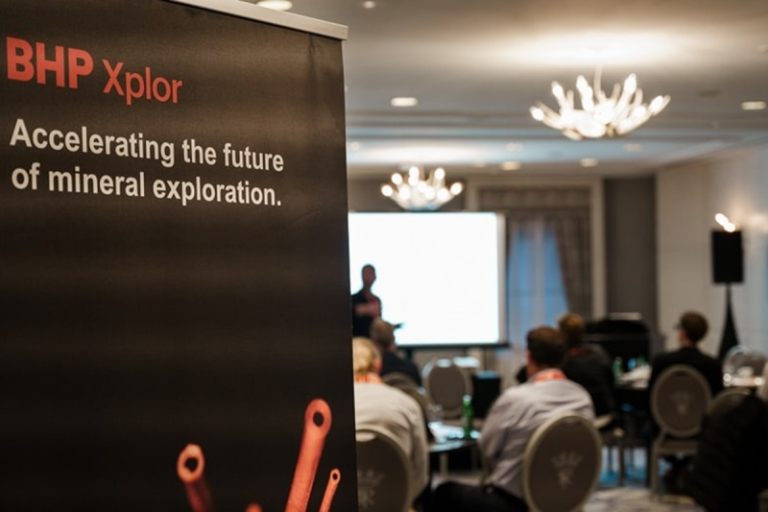
Mining giant BHP (ASX:BHP,NYSE:BHP,LSE:BHP) has begun accepting applications for the 2026 edition of its Xplor Critical Minerals Accelerator Program.

Now in its fourth edition, Xplor currently holds an alumni network of 21 companies, including the likes of Cobre (ASX:CBE) and Hamelin Gold (ASX:HMG).

“Xplor has quickly become a recognised pathway for early-stage explorers who want to scale faster and think more boldly,” said BHP Group Exploration Officer Tim O’Connor.

“The program provides not only capital, but access to the knowledge, networks, and technical depth that can fundamentally change the trajectory of a company,” he added.

As in previous cohorts, Xplor 2026 participants can receive up to US$500,000 in equity-free funding, mentorship and access to BHP’s global network of suppliers and service providers.

Early-stage explorers are encouraged to apply, as long as they arededicated to uncovering new sources of critical minerals essential for a sustainable future.”

In 2025, eight junior mining companies targeting copper and other critical minerals were selected by BHP. These included Canadian company Viridian Metals (CSE:VRDN) and ASX-listed German company GreenX Metals (ASX:GRX,LSE:GRX).

Current participant Electrum Discovery (TSXV:ELY,OTC:ELDCF) said that being part of BHP Xplor is invaluable.

“The program has given us access to expertise and resources that have helped sharpen our strategy and move our projects forward more quickly,” said CEO Elena Clarici.

“It has also opened doors to networks and opportunities that would have been much harder to access on our own. Xplor is already making a real difference in how we grow as a company.”

Xplor was launched in 2022 to assist companies in accelerating exploration opportunities and developing new critical minerals sources. It is split into three tracks: technical readiness, business readiness and operations readiness.

“As the world’s demand for critical minerals intensifies, building strong partnerships between majors and juniors will be essential,” O’Connor added.

“Xplor is about more than accelerating exploration projects, it’s about shaping a new way of working together to unlock the resources needed for the future.”

The deadline for 2026 submissions is October 15, 11:59 PM AEST.

Securities Disclosure: I, Gabrielle de la Cruz, hold no direct investment interest in any company mentioned in this article.

This post appeared first on investingnews.com